Clear Sky Science · en
Mechanistic insights into SOCS5-related DNA damage and cellular senescence in diabetic retinopathy
Why this research matters for people with diabetes
Diabetic retinopathy is a common cause of vision loss in people with long standing diabetes, yet current treatments mostly slow damage instead of preventing it. This study looks inside the cells of the retina to uncover how high blood sugar triggers DNA injury and early aging of tiny blood vessels in the eye. By tracing a specific chain of molecules that drive this damage, the authors point to new ways drugs might one day protect sight before vision is lost.
A closer look at damage in the diabetic eye
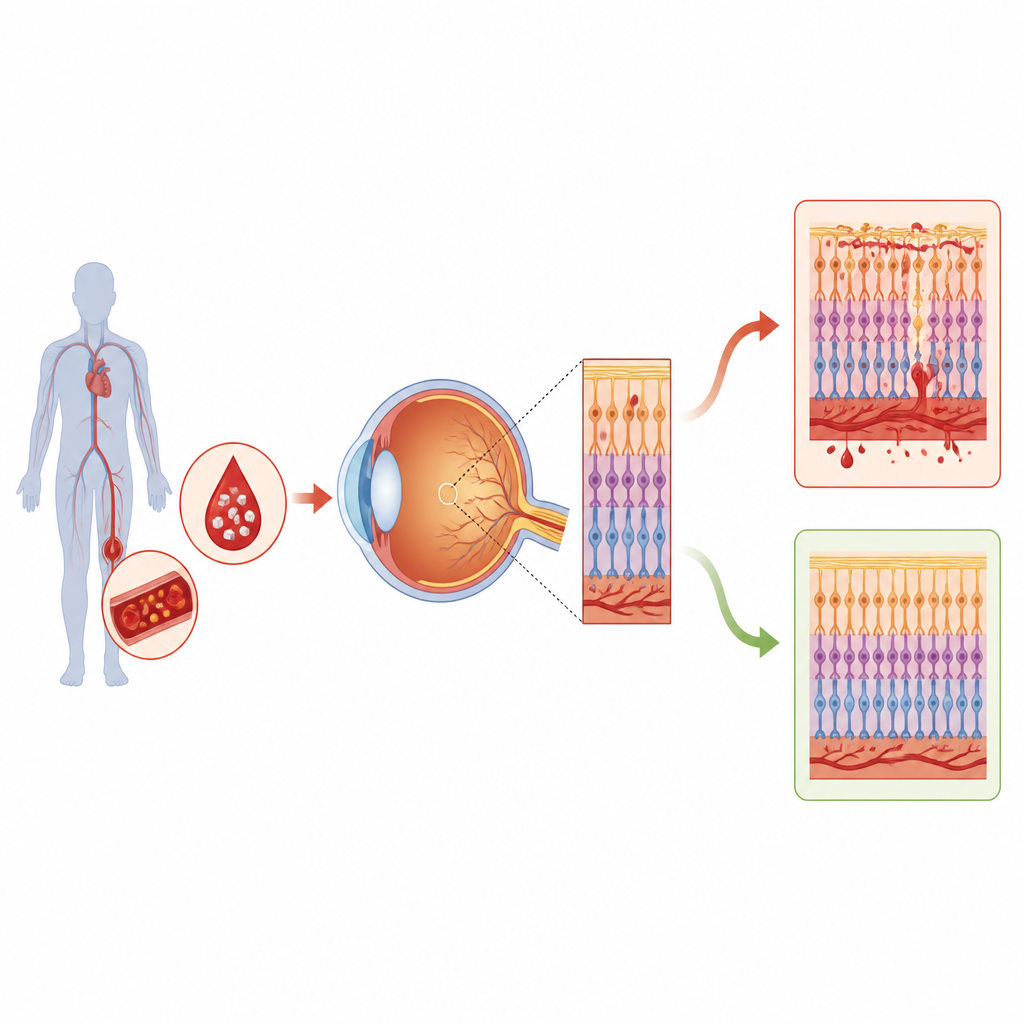
In diabetic retinopathy, years of high blood sugar slowly harm the fine network of vessels that nourish the light sensing tissue at the back of the eye. The authors focus on human retinal microvascular endothelial cells, which line these vessels and help keep the blood retina barrier tight. When exposed to high glucose, these cells show more DNA breaks, more signs of cellular aging, and a stronger tendency to form abnormal vessel like tubes linked with disease progression. Similar changes appear in mice that are fed a high fat diet and given a diabetes inducing drug, which develop thickened retinal layers, leaky vessels, and cell death.
A molecular switch called SOCS5
Using large scale analysis of blood samples from people at different stages of diabetic eye disease, the team searched for genes whose activity tracks with disease severity. One gene, called SOCS5, stood out as steadily rising from healthy volunteers through early and advanced retinopathy. The researchers confirmed that SOCS5 is higher in the retina of diabetic mice and in human retinal cells grown in high glucose. When they dialed down SOCS5 in cells or mouse eyes, blood vessels leaked less, retinal structure was better preserved, and markers of DNA damage, inflammation, and cell aging were reduced.
How cell aging ties into vision loss
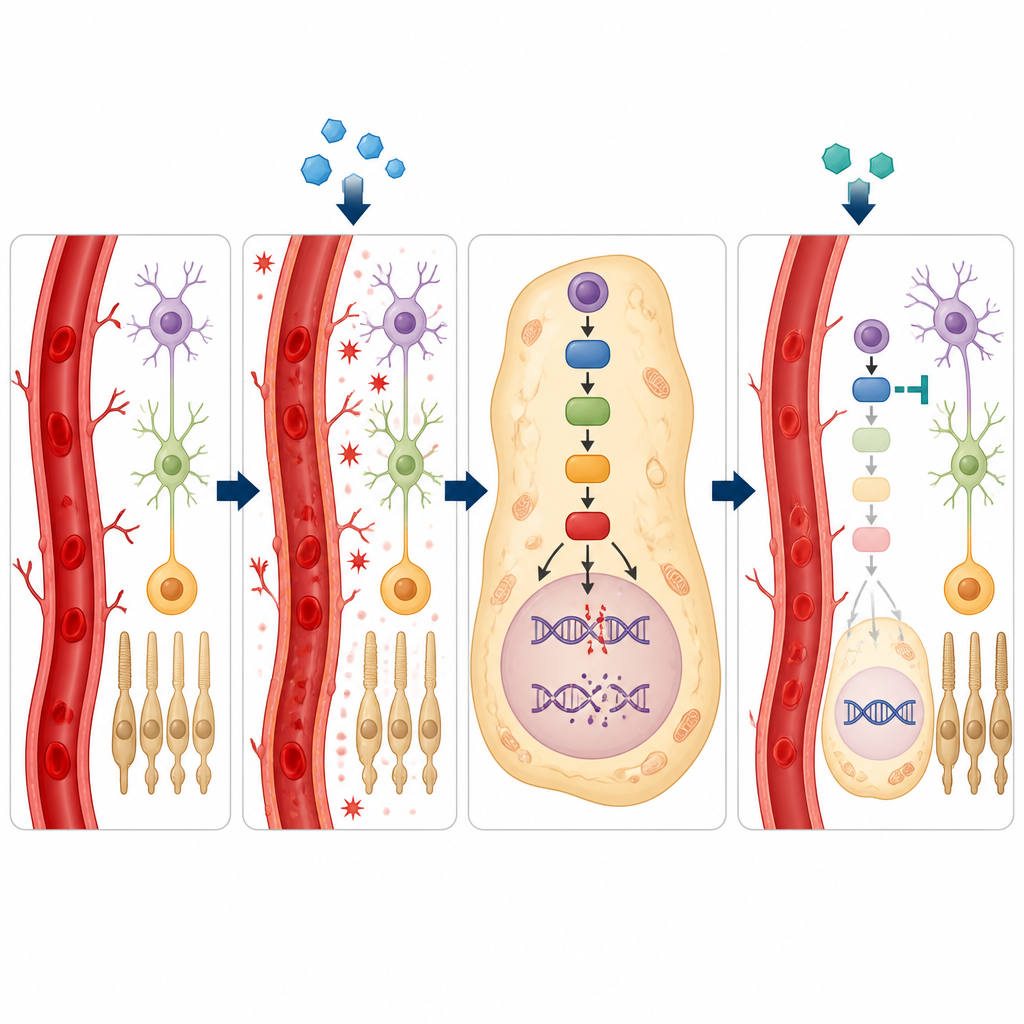
The study links SOCS5 to a classic regulator of cell cycle arrest and aging known as CDKN1A. In both diabetic mouse retinas and sugar stressed human retinal cells, CDKN1A levels were elevated. The proteins SOCS5 and CDKN1A were found to bind each other, and SOCS5 slowed the breakdown of CDKN1A, allowing it to accumulate. When CDKN1A was blocked, many of the harmful effects of SOCS5 overactivity, including excess vessel sprouting, cell death, DNA damage, and visible aging of cells, were largely reversed. Turning this around, boosting CDKN1A could cancel out the benefit of lowering SOCS5, underscoring how closely the two act together.
The upstream controller that starts the chain
To understand what switches SOCS5 on, the authors examined a transcription factor called POU2F1, a protein that binds DNA and controls which genes are turned on. They found that POU2F1 levels are also higher in diabetic retinas and sugar exposed retinal cells. Detailed tests showed that POU2F1 attaches to a specific region of the SOCS5 gene and increases its activity. When POU2F1 was reduced in cells or in the eyes of diabetic mice, SOCS5 and CDKN1A levels fell, vessel leakage and DNA damage decreased, and retinal cells showed fewer signs of aging and inflammation.
What this means for future treatments
Put together, the findings outline a POU2F1 SOCS5 CDKN1A chain that turns high blood sugar into DNA injury and premature aging of retinal blood vessel cells, helping drive diabetic retinopathy. For non specialists, this can be viewed as a harmful relay inside the eye that slowly wears out the tiny vessels needed for clear vision. By interrupting this relay at one or more points, for example with drugs that inhibit POU2F1 or SOCS5, it may be possible to protect retinal cells from damage and aging, and thereby preserve sight in people living with diabetes.
Citation: Yang, D., Lu, S., Liu, H. et al. Mechanistic insights into SOCS5-related DNA damage and cellular senescence in diabetic retinopathy. Cell Death Discov. 12, 212 (2026). https://doi.org/10.1038/s41420-026-03011-3
Keywords: diabetic retinopathy, retinal blood vessels, cellular senescence, DNA damage, molecular pathway