Clear Sky Science · en
TRIM28 orchestrates SUMO-ubiquitin crosstalk to stabilize PPARG and drive bladder cancer progression
Why bladder cancer metabolism matters
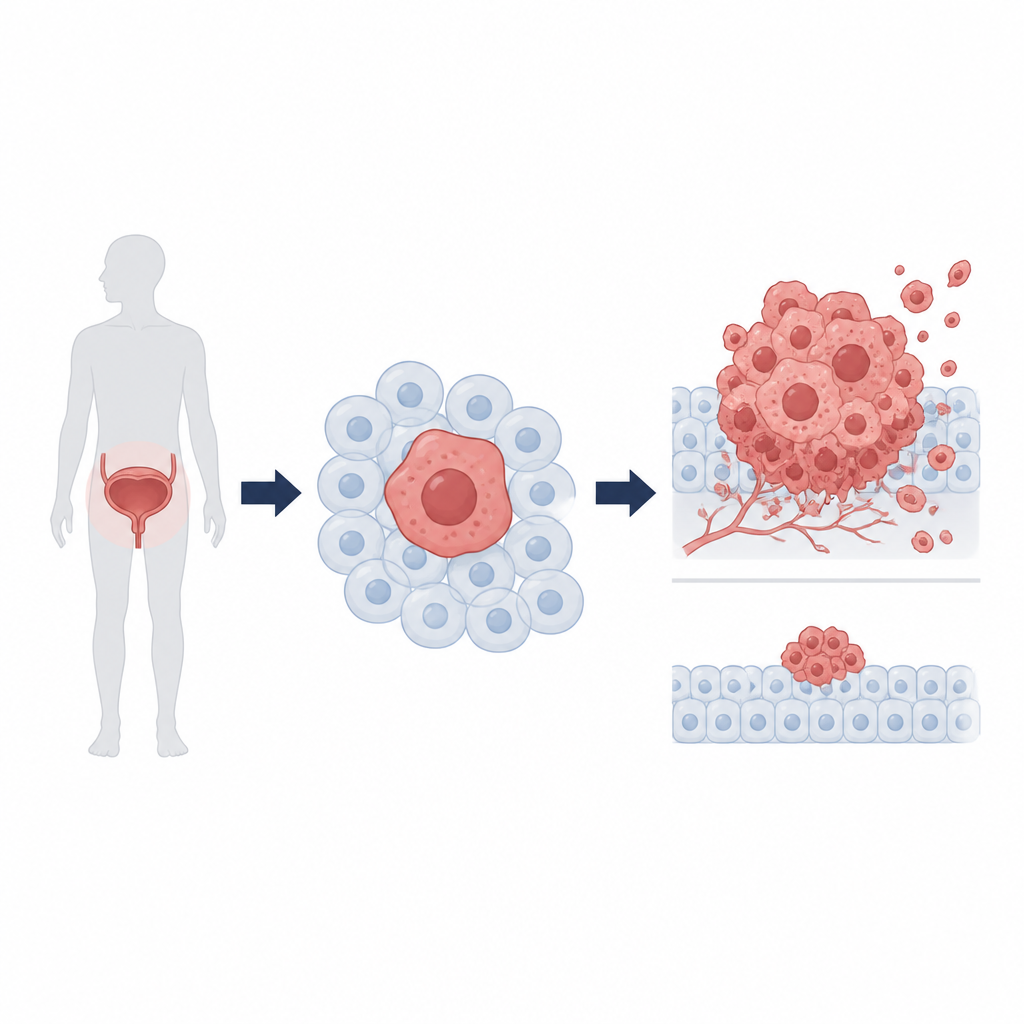
Bladder cancer is common, often comes back after treatment, and many patients do not respond well to standard chemotherapy or new immunotherapies. This study looks under the hood of cancer cells to understand how changes in a single control protein can shift the way these cells handle fats and cholesterol, and how that shift helps tumors grow. By mapping this hidden circuitry, the work suggests new ways to slow tumor growth by targeting cancer cell metabolism rather than only killing fast-dividing cells.
A closer look at a protein troublemaker
The researchers focused on a large family of cellular “tool” proteins called TRIM proteins, which help tag other proteins for destruction or for fine-tuning. Using data from four independent patient groups, they systematically compared the activity of many TRIM genes in healthy and cancerous bladder tissue. One member, TRIM28, stood out: it was consistently higher in tumors than in normal tissue and was especially elevated in more aggressive, muscle-invasive disease. Patients whose tumors had more TRIM28 tended to have worse survival, and computer models showed that TRIM28 levels could help distinguish early from advanced bladder cancers.
How TRIM28 fuels tumor growth
To test whether TRIM28 merely marks dangerous tumors or actively drives them, the team altered its levels in bladder cancer cells. When they reduced TRIM28, cells grew more slowly, formed fewer colonies, and were more likely to undergo programmed cell death. When they boosted TRIM28, the opposite happened: growth and colony formation increased. In mice, tumors built from cells lacking TRIM28 were smaller and contained fewer dividing cells. Together, these experiments show that TRIM28 is not just a bystander but a key engine of tumor growth.
Cholesterol and a master metabolic switch
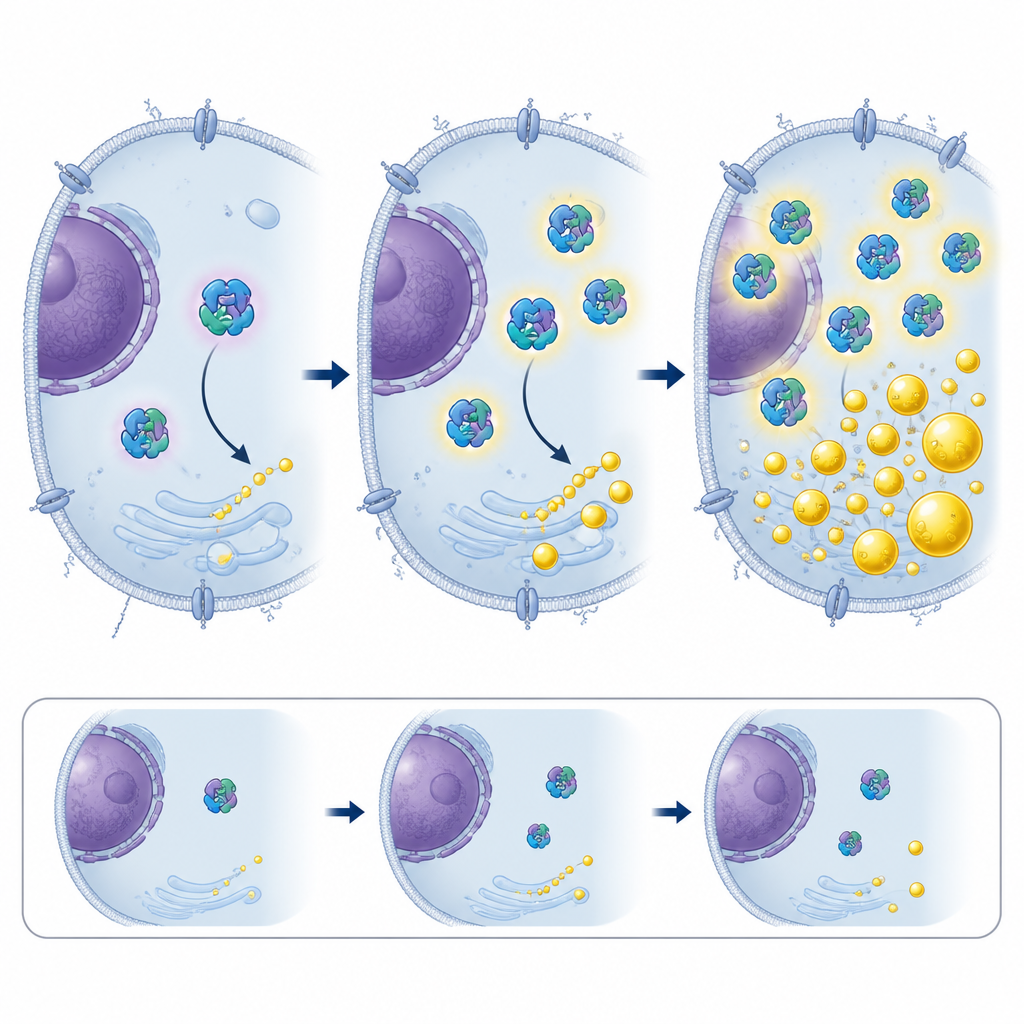
Gene activity profiles revealed that high TRIM28 goes hand in hand with overactive cholesterol and fat metabolism. When TRIM28 was silenced, many genes involved in making cholesterol were turned down, especially two enzymes called DHCR7 and DHCR24, which are already known to aid bladder cancer progression. Cancer cells with less TRIM28 had lower cholesterol content, while those with extra TRIM28 had more. Adding back cholesterol rescued much of the growth slowdown and increased cell survival, showing that the metabolic change was a major part of TRIM28’s effect. In mice, combining TRIM28 loss with the cholesterol-lowering drug simvastatin shrank tumors more than either strategy alone.
A protein shield that prevents breakdown
The scientists then asked how TRIM28 switches cholesterol pathways on. They found that TRIM28 physically binds to another protein, PPARG, a master regulator that turns on many fat and cholesterol genes. TRIM28 did not increase the genetic instructions for PPARG, but it did increase the PPARG protein itself and extended its lifetime inside cells. Normally, PPARG can be marked with a molecular “trash tag” that sends it to the cell’s protein recycling system. TRIM28 counteracts this by attaching a different small tag to PPARG at a specific site, which acts like a protective shield. This shield keeps another protein, STUB1, from tagging PPARG for destruction, so PPARG accumulates and remains active, driving cholesterol production.
What this means for patients
In simple terms, the study uncovers a three-part chain: TRIM28 protects PPARG, PPARG boosts cholesterol-making genes, and the resulting cholesterol-rich environment helps bladder cancer cells thrive. Tumors with high TRIM28 are more aggressive partly because they are better at rewiring their metabolism to support rapid growth. By identifying this specific control point, the work suggests that blocking TRIM28’s protective action on PPARG, or combining cholesterol-lowering drugs with therapies that target TRIM28, could offer new options for treating bladder cancer that has been hard to control with existing methods.
Citation: Fan, X., Li, Z., Gao, Q. et al. TRIM28 orchestrates SUMO-ubiquitin crosstalk to stabilize PPARG and drive bladder cancer progression. Cell Death Dis 17, 475 (2026). https://doi.org/10.1038/s41419-026-08745-7
Keywords: bladder cancer, cholesterol metabolism, TRIM28, PPARG, tumor growth