Clear Sky Science · en
Omega-3 fatty acid DHA induces ferroptosis in colorectal cancer patient-derived organoids and drug-tolerant cells
Fish fats and colon cancer
Many people have heard that eating oily fish may help protect against cancer, but human studies have given mixed answers. This research looks closely at one particular fish oil component, the omega-3 fat DHA, and asks a simple question: can this molecule directly push colon cancer cells toward a special kind of cell death while sparing healthy tissue? Using tiny three-dimensional replicas of patient tumors grown in the lab, the scientists explore how DHA behaves inside cancer cells and how it might work alongside standard chemotherapy.
How a special kind of cell death works
The team focused on ferroptosis, a form of cell death fueled by iron and the build-up of damaged fats in cell membranes. Unlike the better-known suicide program called apoptosis, ferroptosis is driven by runaway chemical reactions that “rust” the fats making up cell walls. Long-chain omega-3 and omega-6 fats are especially easy to damage in this way, which makes them powerful drivers of ferroptosis. The researchers wanted to know whether supplying extra DHA from outside the cell could tip colon cancer cells over the edge into this fatal process.
Testing DHA on cancer cells and mini-tumors
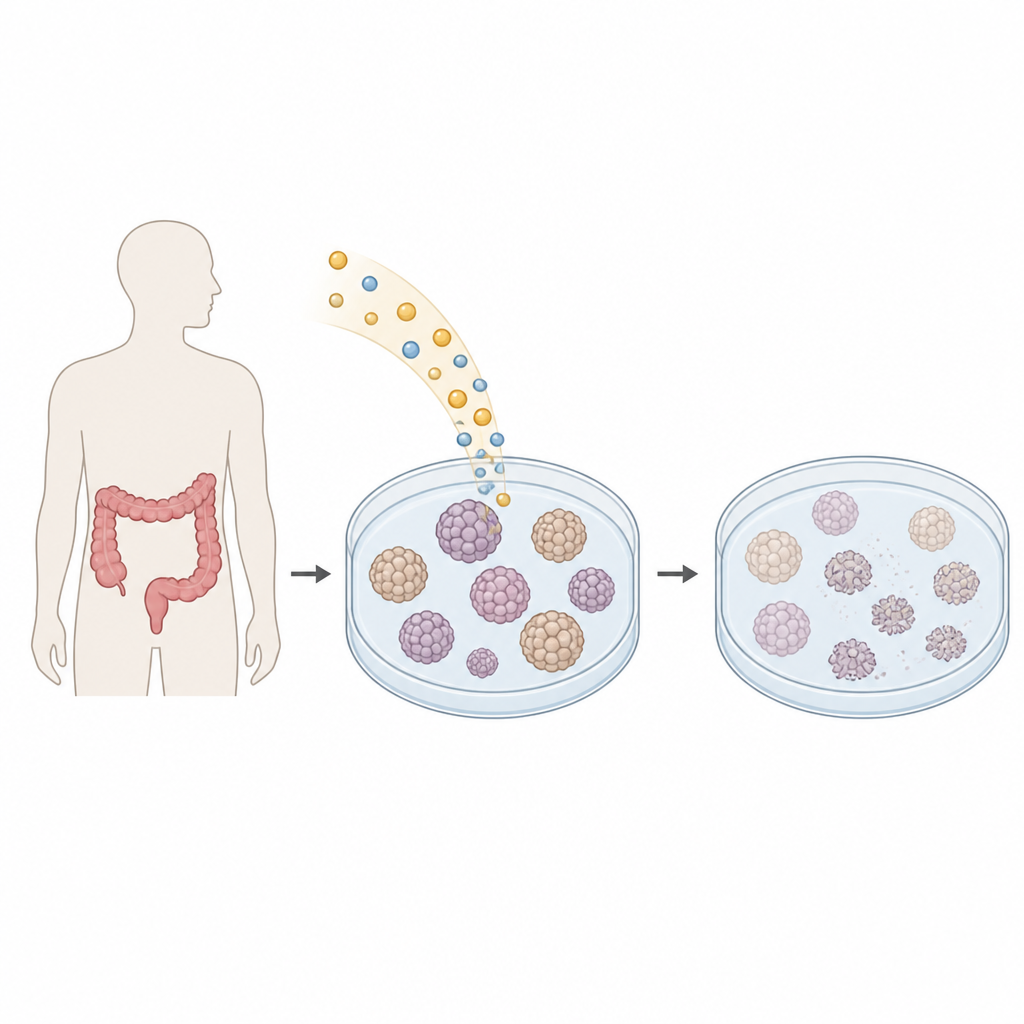
First, the scientists treated a standard colon cancer cell line with several types of fats. Saturated fat and a common mono-unsaturated fat had little effect, but DHA sharply reduced cell survival once it reached a certain concentration and exposure time. This loss of viability did not follow the usual pattern of programmed cell suicide, suggesting a different death route. The group then moved to patient-derived tumor organoids, tiny ball-like structures that preserve many features of real colorectal tumors, including their genetic changes and varied cell types. Across a large panel of these organoids, DHA proved even more effective than in flat cell cultures, shrinking and damaging many tumor mini-structures, while organoids grown from healthy colon tissue were noticeably less affected.
Following DHA inside the cell
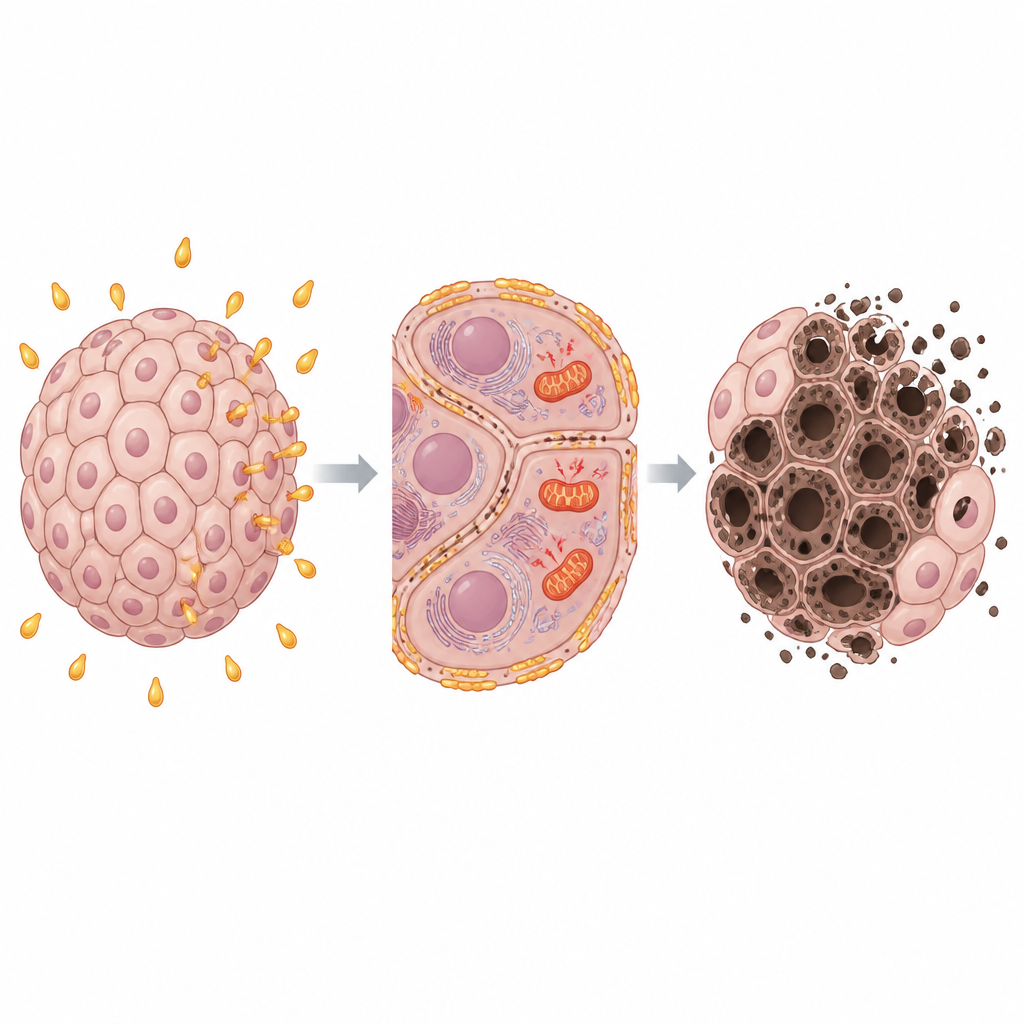
To see how DHA behaves once it enters cells, the researchers used a fluorescent version of the molecule that can be tracked under the microscope. They found that DHA does not stay in the outer membrane but accumulates in internal structures such as the endoplasmic reticulum and mitochondria, as well as certain storage compartments. In mitochondria, which act as cellular power plants, DHA was linked with changes in shape and higher levels of reactive molecules that signal oxidative stress. At the same time, several tests showed a strong rise in damaged fats throughout the cell, and drugs known to block ferroptosis partly rescued the cells from death. When DHA was combined with other agents that promote ferroptosis, the harmful effects on tumor cells increased further.
Going after drug-tolerant cancer cells
Standard chemotherapy for advanced colorectal cancer often includes the drug oxaliplatin, which can shrink tumors but usually leaves behind small pockets of drug-tolerant cells. These survivors can later drive tumor regrowth. The team used their organoid models to mimic this situation: after oxaliplatin treatment halted organoid growth, some structures resumed growing once the drug was removed, revealing a pool of persister cells. When DHA was added after chemotherapy, however, regrowth was strongly reduced or nearly eliminated, even at lower doses. This suggests that cells that endure chemotherapy may be particularly vulnerable to the oxidative stress and fat damage triggered by DHA.
What this could mean for patients
Overall, the study shows that DHA can directly push colorectal cancer cells and patient-derived mini-tumors into ferroptosis by building up in key cell structures, driving oxidative stress, and damaging cell membranes. Healthy colon organoids are less sensitive, hinting at a degree of tumor selectivity. While more work is needed in animals and people to confirm dosing, safety, and long-term effects, the findings support the idea that DHA, provided through diet or as a supplement, might one day be used to gently stress cancer cells, boost chemotherapy, and help clear the stubborn cells that escape initial treatment.
Citation: di Blasio, L., Vara-Messler, M., Peracino, B. et al. Omega-3 fatty acid DHA induces ferroptosis in colorectal cancer patient-derived organoids and drug-tolerant cells. Cell Death Dis 17, 464 (2026). https://doi.org/10.1038/s41419-026-08744-8
Keywords: omega-3 fatty acids, DHA, colorectal cancer, ferroptosis, patient-derived organoids