Clear Sky Science · en
Hypoxia-induced BTN3A2 promotes glioma progression and chemoresistance via AKT/SP1/RAD51-mediated DNA damage
Why this brain cancer study matters
Gliomas are among the deadliest brain tumors, often returning even after surgery, radiation, and chemotherapy. This study looks at how glioma cells learn to survive in a low-oxygen environment inside the brain and become less sensitive to the standard drug temozolomide. By uncovering a hidden survival switch inside tumor cells, the work suggests new ways to predict which patients may do poorly and how future treatments might make chemotherapy work better.
A hidden helper for tumor growth
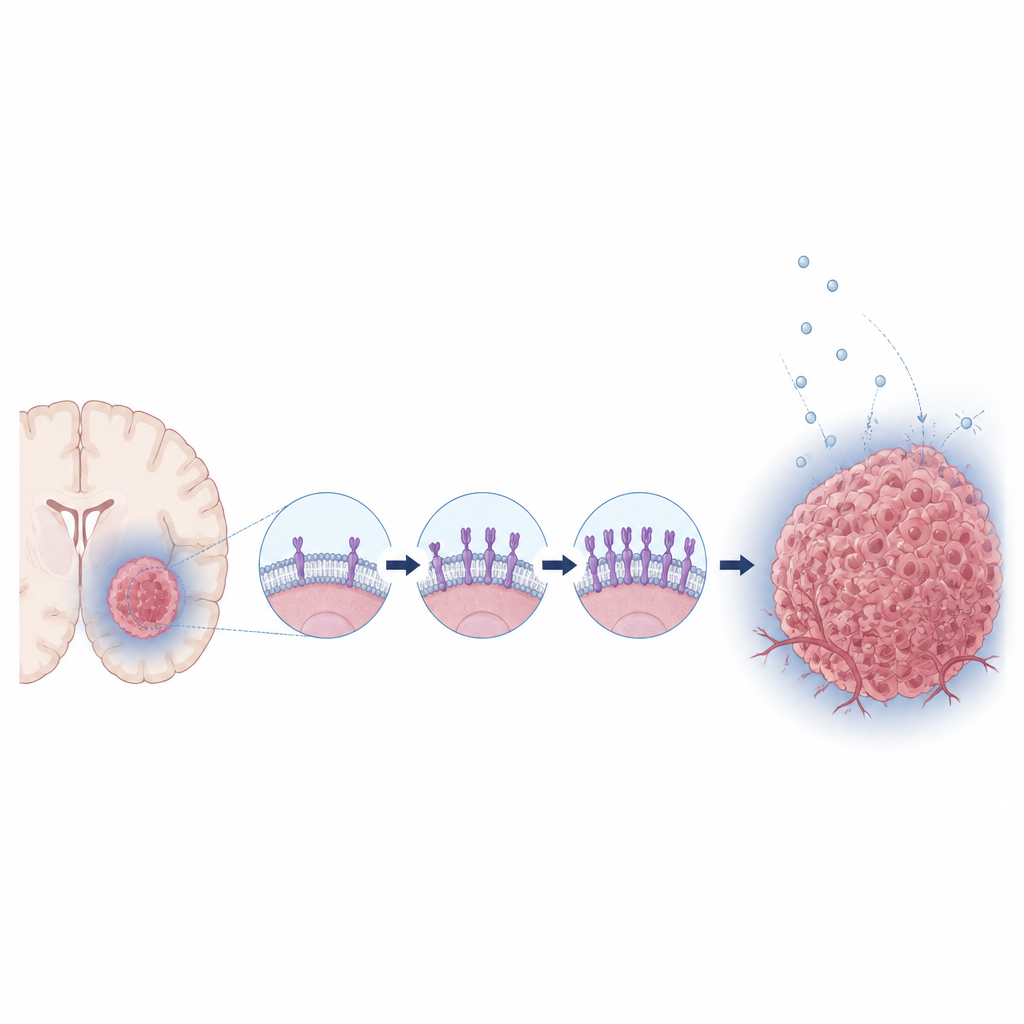
The researchers focused on a protein called BTN3A2, previously known for its role in the immune system, not in cancer cells themselves. Using large public cancer databases, they found that BTN3A2 levels were much higher in brain tumors than in normal brain tissue, and especially high in more aggressive, high-grade gliomas. Patients whose tumors had more BTN3A2 tended to live for a shorter time, even after accounting for other risk factors. This suggested that BTN3A2 is not just a bystander but an active supporter of tumor growth and a useful marker of poor prognosis.
How BTN3A2 boosts tumor behavior
To test BTN3A2’s role directly, the team reduced its levels in multiple glioma cell lines grown in the lab. When BTN3A2 was knocked down, tumor cells multiplied more slowly, formed fewer colonies, and showed reduced ability to migrate and invade through artificial barriers, all signs of a weaker, less aggressive cancer. In mice implanted with human glioma cells, lowering BTN3A2 led to smaller tumors, fewer cells actively dividing, and more signs of cell death. Together, these experiments show that BTN3A2 behaves like an internal “on switch” for glioma cell survival and spread, even in the absence of an active immune system.
Oxygen shortage turns the switch on
Glioma tissue often contains pockets with very low oxygen, a stressful condition called hypoxia. The scientists discovered that hypoxia directly increases BTN3A2 production. They showed that a master stress sensor protein, HIF-1α, latches onto a specific site in the BTN3A2 gene and turns it on more strongly when oxygen is scarce. In both patient tumor samples and lab-grown cells, high HIF-1α and high BTN3A2 appeared together. When HIF-1α was blocked, hypoxia could no longer raise BTN3A2 levels. This places BTN3A2 squarely in a chain of events where low oxygen triggers a protective response that helps tumor cells adapt and survive.
Shielding tumor DNA from chemotherapy
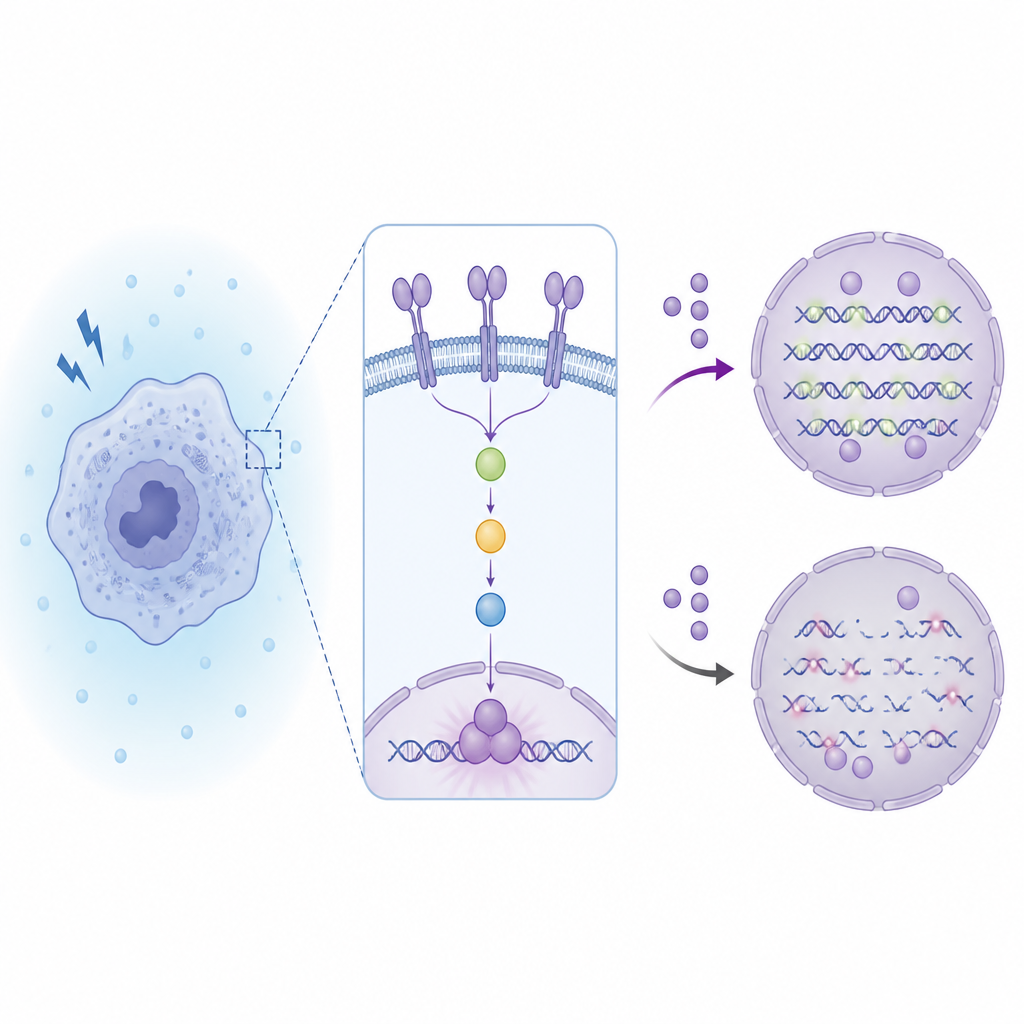
Temozolomide works mainly by damaging the DNA of tumor cells, pushing them toward self-destruction. The study found that high BTN3A2 helps glioma cells repair this DNA damage. When BTN3A2 was reduced, chemotherapy caused more DNA breaks, which persisted longer, and tumor cells were more likely to undergo cell death. The researchers traced this effect to a chain of signals inside the cell that runs through a well-known survival pathway and ends at RAD51, a core DNA repair protein. BTN3A2 boosted a signaling protein called AKT, which in turn supported another protein, SP1, that enhances RAD51 production. Disrupting BTN3A2 lowered active AKT, reduced SP1 and RAD51, and left tumor DNA more vulnerable to damage from temozolomide.
Making existing treatments work harder
In mice with brain tumors, combining temozolomide with BTN3A2 knockdown shrank tumors more effectively and extended survival compared with either approach alone. Tumors in these animals showed fewer dividing cells, more DNA damage, and more dying cells. To a layperson, this means that blocking BTN3A2 made standard chemotherapy hit harder and for longer. The authors conclude that BTN3A2 is a hypoxia-driven survival factor that helps glioma cells fix their DNA and resist treatment. Targeting BTN3A2 or its linked repair pathway could, in the future, make existing drugs more effective and help doctors better predict which patients are at higher risk of treatment failure.
Citation: Xu, Z., Pu, S., Wu, J. et al. Hypoxia-induced BTN3A2 promotes glioma progression and chemoresistance via AKT/SP1/RAD51-mediated DNA damage. Cell Death Dis 17, 469 (2026). https://doi.org/10.1038/s41419-026-08729-7
Keywords: glioma, temozolomide resistance, hypoxia, DNA repair, BTN3A2