Clear Sky Science · en
ARID1A deficiency-driven reprogramming of polyamine metabolism promotes endometrial cancer malignancy and immune escape
Why this cancer study matters
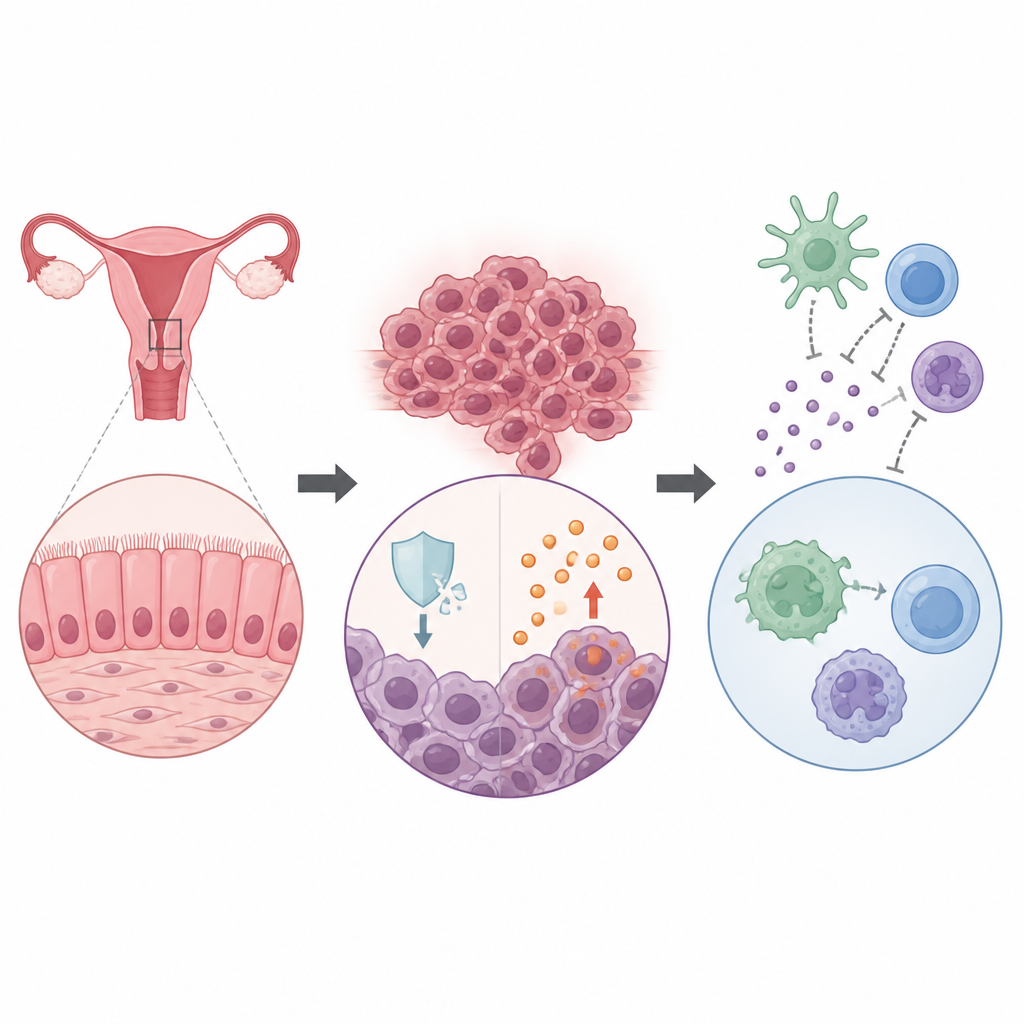
Endometrial cancer, which affects the lining of the uterus, is becoming more common and more deadly, yet treatment progress has been slow. This study uncovers how a frequently damaged gene in these tumors rewires cell chemistry to both speed cancer growth and weaken immune attack. Understanding this hidden fuel line and its impact on immune cells points toward a new, druggable weak spot in a hard-to-treat cancer.
A broken safety lock in uterine cells
Many endometrial cancers carry faults in a gene called ARID1A, which normally acts like a safety lock on cell growth. The researchers confirmed that this gene is often mutated or silenced in patient tumors and in several laboratory cell lines, and that low levels of its product are linked with worse outcomes. When they removed ARID1A from cancer cells, the cells multiplied faster, invaded more easily, formed more three-dimensional clusters, and grew larger tumors in mice. Putting ARID1A back into these cells largely reversed these aggressive behaviors, reinforcing its role as a key brake on tumor development.
Cancer cells tap a chemical growth booster
To find out how loss of ARID1A changes tumor behavior, the team looked broadly at which genes and small molecules were altered. They saw a strong shift in metabolic pathways, with one standing out in particular: the production of polyamines, a family of small, positively charged molecules that help cells grow and divide. In ARID1A-deficient cells, levels of polyamines such as putrescine and spermidine rose sharply, and many of the enzymes that make these molecules were more active. Restoring ARID1A pushed polyamine levels back down, and patient data showed that tumors with less ARID1A tended to have higher expression of these metabolic enzymes.
A molecular relay from gene damage to growth control
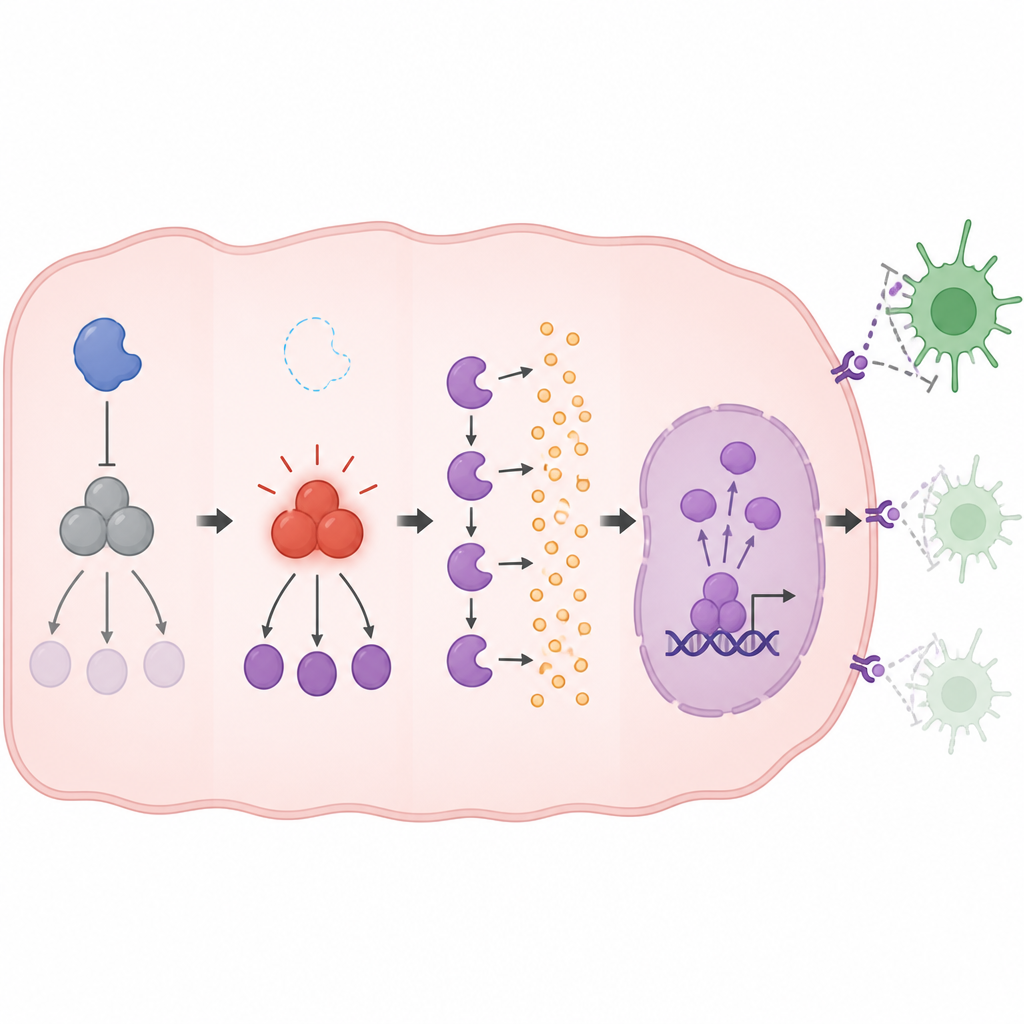
The study then traced how the loss of ARID1A leads to this metabolic surge. Inside the cell nucleus, ARID1A directly interacts with YAP, a powerful growth-promoting switch. With ARID1A present, YAP is kept partly in check and has less chance to partner with its usual helper proteins that turn on growth genes. When ARID1A is lost, YAP more readily teams up with these partners and binds the control regions of polyamine-making genes, boosting their activity. Genetic and drug-based blocking of YAP reduced polyamine levels and curbed the extra growth seen in ARID1A-deficient cells, showing that this signaling link is required for the metabolic change.
How extra polyamines strengthen cancer and blunt defenses
High spermidine levels had a second, more subtle effect. Spermidine modifies a translation factor called eIF5A in a unique way, allowing cells to more efficiently build certain proteins. In ARID1A-deficient cells, this modification increased and selectively boosted production of LSD1, an enzyme that reshapes how DNA is read and supports malignant gene programs. Blocking polyamine synthesis or this specific modification reduced LSD1 protein without changing its gene activity, revealing a direct chemical shortcut from altered metabolism to altered protein output. At the same time, tumors with high polyamine levels attracted fewer killer T cells and those that did arrive produced less of the molecules and enzymes needed to attack cancer cells, indicating that polyamines help tumors hide from the immune system.
Turning a hidden weakness into a treatment angle
Together, the findings outline a chain of events in which loss of ARID1A frees YAP, which ramps up polyamine production, which in turn enhances cancer-driving protein synthesis and dampens immune attack. The encouraging news is that polyamine production can be blocked by existing drugs such as eflornithine (DFMO). In laboratory and animal models, this drug lowered polyamine levels, slowed tumor growth, and restored the activity of CD8+ T cells. For patients whose tumors carry ARID1A mutations, targeting this metabolic circuit may offer a way to both starve cancer cells of a key growth aid and reawaken the body’s own immune defenses.
Citation: Tao, H., Wang, X., Hu, Z. et al. ARID1A deficiency-driven reprogramming of polyamine metabolism promotes endometrial cancer malignancy and immune escape. Cell Death Dis 17, 484 (2026). https://doi.org/10.1038/s41419-026-08722-0
Keywords: endometrial cancer, ARID1A, polyamine metabolism, YAP signaling, tumor immunity