Clear Sky Science · en
Everolimus destabilizes thymidylate synthase via suppressing its O-GlcNAcylation and sensitizes HER2-negative breast cancer to fluorouracil
Making an Old Cancer Drug Work Better
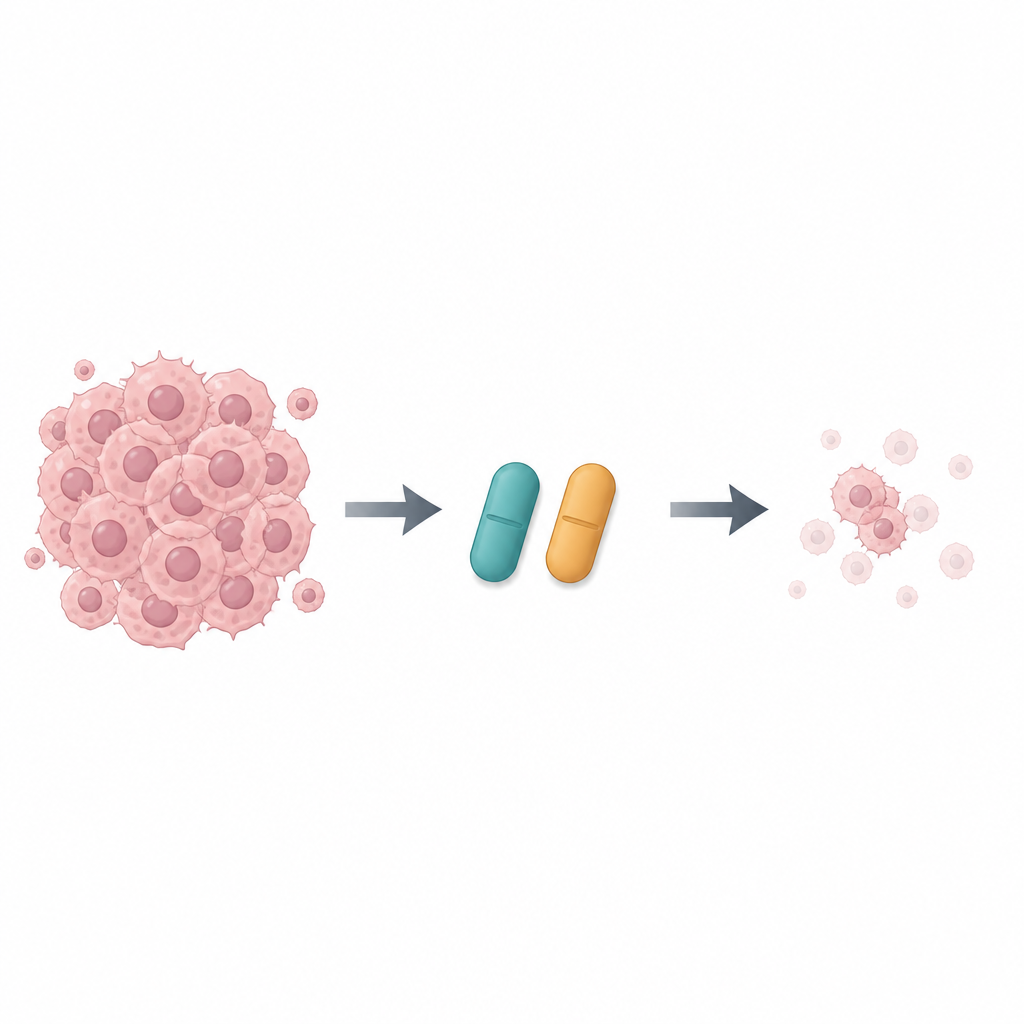
Many people with advanced breast cancer receive chemotherapy pills based on an old drug called fluorouracil. These medicines can slow tumors, but they often stop working, forcing patients to switch to harsher treatments. This study asks a simple question with big practical impact: can adding a modern targeted pill help these time-tested chemotherapies work better and longer, especially for women whose tumors lack the HER2 marker?
Two Pills, One Goal
The researchers focused on HER2-negative breast cancers, which make up the majority of cases. Patients with this type of disease often receive fluorouracil or its pill form, capecitabine. These drugs damage DNA in fast-growing cells, but many tumors learn to cope and continue growing. At the same time, a cell-growth control system called mTORC1 is known to help cancers resist many therapies. Everolimus, an approved drug that blocks mTORC1, is already used in breast cancer in other combinations. The team wondered whether pairing everolimus with fluorouracil-like drugs could tip the balance back in favor of treatment.
Why One Enzyme Matters So Much
At the core of this work is a single protein inside cells called thymidylate synthase, or TYMS. This enzyme supplies building blocks for DNA and is the direct target of fluorouracil. When tumors make a lot of TYMS, they tend to shrug off fluorouracil, survive treatment, and are linked with poorer patient survival. By mining large cancer databases, the scientists confirmed that breast tumors usually have higher TYMS levels than healthy tissue and that patients with more TYMS in their tumors fare worse, particularly in HER2-negative subtypes. They also found that cancer cells with more TYMS needed higher doses of fluorouracil to be killed in the lab, underscoring TYMS as a powerful marker of resistance.
How Everolimus Weakens the Tumor’s Shield
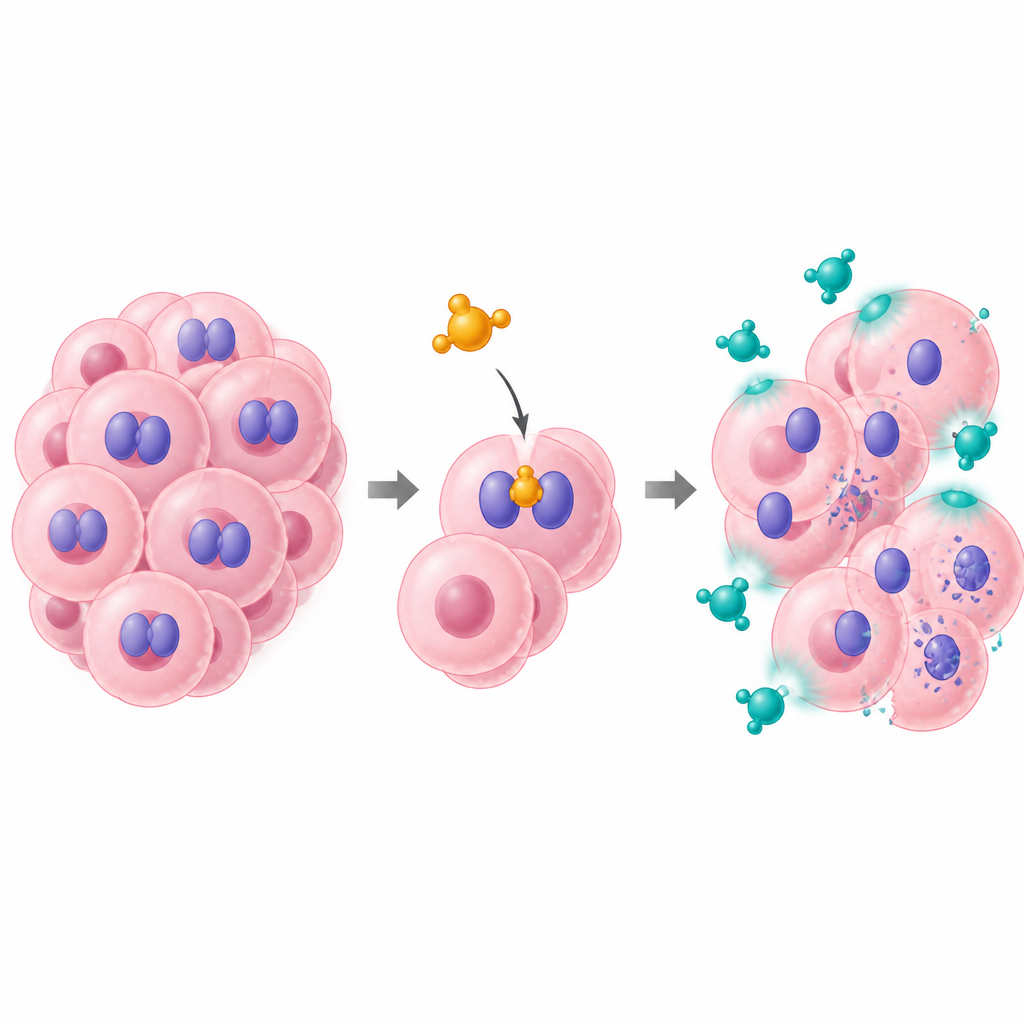
The key discovery is that everolimus quietly undermines the tumor’s main defense against fluorouracil. In breast cancer cell lines and in mice, everolimus reduced TYMS protein levels without changing the gene’s activity. The enzyme itself became less stable and was cleared away more quickly by the cell’s protein recycling machinery. The team showed that this breakdown did not follow the classic “tag with waste flags” route used for many proteins. Instead, everolimus changed chemical decorations on TYMS that normally help two copies of the enzyme lock together in a stable pair. When these decorations were lost, the pairs fell apart, the single units became fragile, and the cell’s shredding system destroyed them.
A Sugar Tag at the Heart of the Mechanism
These chemical decorations are tiny sugar-like tags called O-GlcNAc marks. The enzyme that adds them is O-GlcNAc transferase, or OGT. The researchers found that everolimus lowered OGT protein levels, which in turn reduced the sugar tagging of TYMS. Using advanced mass spectrometry, they pinpointed how specific tagged sites on TYMS lost these sugar groups after everolimus treatment. This loss made TYMS dimers less stable and increased the ratio of single to paired forms. Knocking down OGT alone lowered TYMS, while forced OGT expression could rescue TYMS from everolimus, tying the whole chain of events together: everolimus dampens OGT, TYMS loses its sugar tags, falls apart, and is then destroyed.
From Lab Dishes to Mice and Patients
In breast cancer cell lines that lacked HER2, combining everolimus with fluorouracil or capecitabine consistently pushed more cells into a stressed state where DNA copying stalls and damage builds up, leading to cell death. The combo sharply reduced the drug dose needed to slow growth and cut down long-term colony formation. In mice with HER2-negative breast tumors grown in the mammary fat pad, daily oral everolimus plus capecitabine shrank tumors more than either drug alone without obvious extra side effects. Tumors from these animals showed lower TYMS and OGT levels, matching the cellular mechanism. In a small group of heavily pretreated patients, adding everolimus to capecitabine led to encouraging responses and tumor samples taken after treatment showed decreased TYMS and OGT.
What This Means for Patients
Put simply, this study shows that everolimus can make certain breast cancers more vulnerable to fluorouracil-like chemotherapy by stripping away a key protective enzyme. By reducing the stability of TYMS through changes in its sugar tagging, everolimus weakens the tumor’s ability to repair DNA damage caused by chemotherapy. For people with HER2-negative breast cancer, especially those with tumors rich in TYMS, this pill-based combination could offer a way to get more benefit from existing drugs without dramatically increasing toxicity. The work also highlights TYMS as a potential test to help doctors identify patients most likely to gain from this strategy.
Citation: Jiang, XT., Gan, H., Wang, S. et al. Everolimus destabilizes thymidylate synthase via suppressing its O-GlcNAcylation and sensitizes HER2-negative breast cancer to fluorouracil. Cell Death Dis 17, 456 (2026). https://doi.org/10.1038/s41419-026-08715-z
Keywords: HER2-negative breast cancer, everolimus, capecitabine, thymidylate synthase, chemotherapy resistance