Clear Sky Science · en
Nuclear hexokinase 2 couples hyperglycemia to MYC-driven glycolytic and stemness programs in bladder cancer
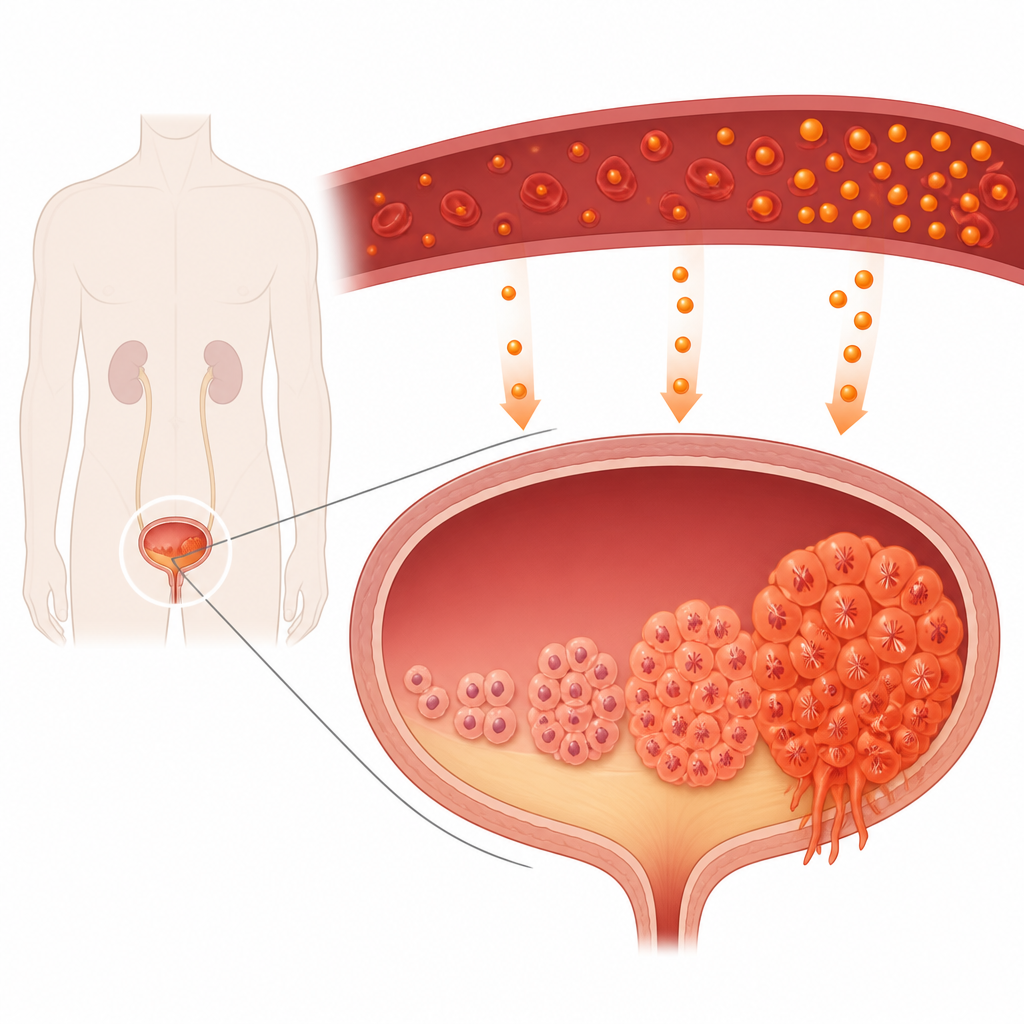
Why blood sugar and bladder cancer are linked
People with diabetes or long-lasting high blood sugar often face a higher risk of many cancers, including bladder cancer, but the biological connection has been unclear. This study explores how excess sugar in the bloodstream can directly fuel bladder tumors, not just by feeding them energy but by switching on genes that make cancer cells tougher, more aggressive, and harder to treat.
A key sugar-handling enzyme steps into the nucleus
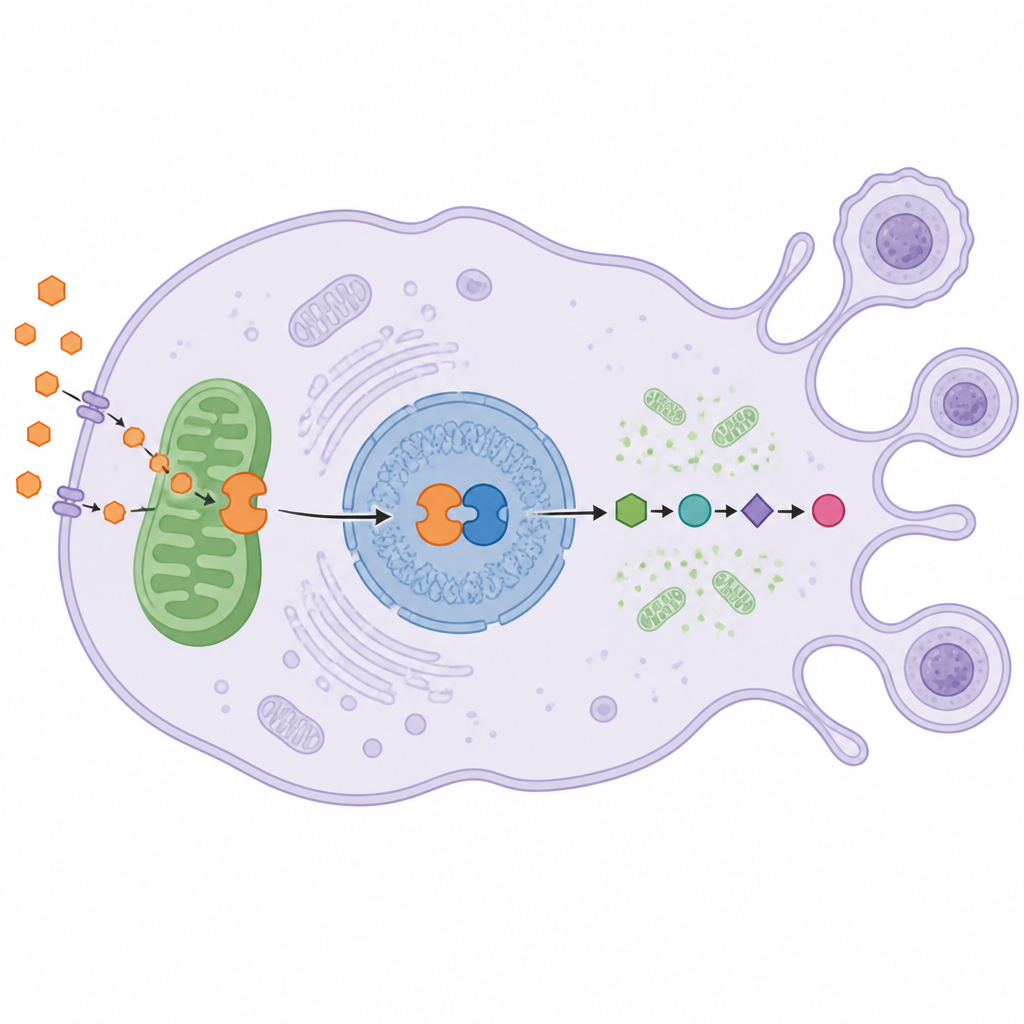
Inside our cells, an enzyme called hexokinase 2 normally lives near tiny power plants called mitochondria, where it helps convert sugar into usable fuel. The researchers discovered that in bladder cancer cells exposed to high glucose, much of this enzyme moves into the cell’s control center, the nucleus. There, its levels rise and fall depending on how much sugar is around, showing that the cell’s genetic machinery is directly sensing the sugar-rich environment.
A partnership that pushes cancer metabolism
Once in the nucleus, hexokinase 2 does more than process sugar. It physically binds to a powerful gene regulator known as MYC, forming a tight complex. This pair settles on stretches of DNA that control genes involved in breaking down glucose, including those that encode hexokinase 2 itself and another enzyme called LDHA. Together, they crank up the activity of these genes, boosting acid production, energy output, and glucose uptake, all signs that the cancer cells are shifting into a fast-burning, sugar-hungry mode.
Fueling stem-like cancer cells and rapid growth
High blood sugar did not just make the tumor cells burn more fuel; it also made them behave more like stem cells, the self-renewing seeds of many cancers. Markers linked with stem-like behavior, such as CD44, CD133, and OCT4, increased when hexokinase 2 piled up in the nucleus. When the team reduced hexokinase 2 or blocked its activity with a drug called lonidamine, these stemness markers fell and cancer cell growth slowed, even under high-glucose conditions. In mice, a sugary diet sped up tumor growth, while lowering blood sugar with metformin or blocking hexokinase 2 with lonidamine both held tumor size in check.
Evidence from patient samples
The scientists also examined human bladder tumors and large cancer databases. They found that tumors generally had more hexokinase 2 in both the cytoplasm and the nucleus than nearby normal tissue. High levels of this enzyme tended to go hand in hand with higher MYC and LDHA levels and with stronger signs of glycolysis, the sugar-burning pathway that cancer cells often favor. Patients whose tumors had more hexokinase 2 usually had worse survival, especially when they also had high blood sugar, suggesting that this sugar–enzyme–gene axis matters in real-world disease.
What this means for patients and treatment
The work shows that in bladder cancer, high blood sugar can reshape tumor behavior by sending hexokinase 2 into the nucleus, where it teams up with MYC to turn on genes that power rapid growth and stem-like traits. To a layperson, this means that excess sugar does not just “feed” cancer cells; it helps them rewire themselves to become more aggressive. The findings suggest that tightly managing blood sugar and directly targeting hexokinase 2, possibly alongside standard chemotherapy or immune therapies, could offer a more focused way to slow bladder cancer in people living with diabetes or chronic hyperglycemia.
Citation: Liu, S., Liu, X., Liu, G. et al. Nuclear hexokinase 2 couples hyperglycemia to MYC-driven glycolytic and stemness programs in bladder cancer. Cell Death Dis 17, 493 (2026). https://doi.org/10.1038/s41419-026-08714-0
Keywords: bladder cancer, hyperglycemia, hexokinase 2, MYC signaling, cancer metabolism