Clear Sky Science · en
ANP32E drives lung adenocarcinoma progression via GSK3β-mediated glycolytic reprogramming
Why this lung cancer study matters
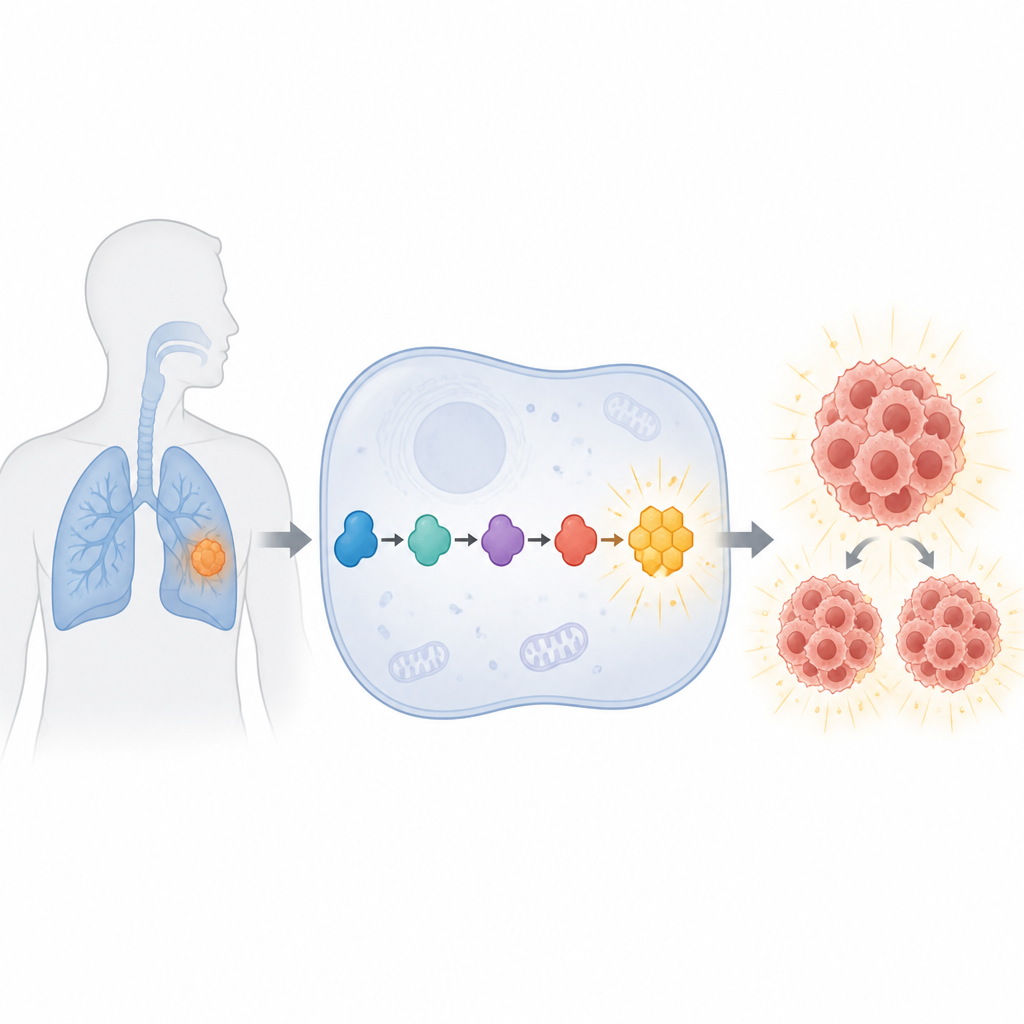
Lung adenocarcinoma is one of the deadliest forms of cancer, in part because its cells find clever ways to fuel their growth. This study reveals how a little-known protein, ANP32E, helps lung tumor cells rewire how they use sugar, and shows that a plant-derived compound can interrupt this wiring in cells and in mice. Understanding this hidden fuel line may open new paths for therapies that slow tumor growth by cutting off its preferred energy source.
A hidden switch in lung tumors
The researchers began by asking whether ANP32E is linked to human lung adenocarcinoma. Using large cancer databases and single-cell analyses, they found that ANP32E levels are much higher in tumor tissue than in normal lung, especially in the cancerous epithelial cells that give rise to these tumors. Patients whose tumors had more ANP32E tended to live for a shorter time, and statistical models suggested that ANP32E is an independent marker of poor prognosis. Tests on patient samples confirmed that both the RNA and protein forms of ANP32E are elevated in tumors, reinforcing the idea that this molecule is tied to aggressive disease.
How ANP32E boosts growth and spread
To see what ANP32E actually does, the team manipulated its levels in lung cancer cell lines. When they reduced ANP32E, the cells grew more slowly, formed fewer colonies, and moved less in migration tests. When they increased ANP32E, the opposite happened: cells multiplied faster, migrated more readily, and tumors grew larger in mice. Cells lacking ANP32E also showed more programmed cell death. Together, these findings indicate that ANP32E acts like an accelerator pedal for lung tumor growth and spread.
Rewiring how cancer cells burn sugar
Digging deeper, the scientists examined changes in thousands of proteins and genes after lowering ANP32E. Pathway analyses pointed strongly to sugar metabolism, particularly glycolysis, the pathway cancer cells often overuse to make quick energy and building blocks. They identified a key enzyme, GSK3β, as a central brake on this process. ANP32E turned out to weaken this brake in two ways: it reduced the amount of GSK3β protein and, through a signaling chain, increased a chemical tag that keeps GSK3β inactive. When GSK3β was active, cancer cells took up less glucose, made less lactate, and relied more on oxygen-based energy production. When ANP32E was high, this pattern flipped toward the glycolytic, cancer-favoring state.
An epigenetic chain reaction to awaken EGFR
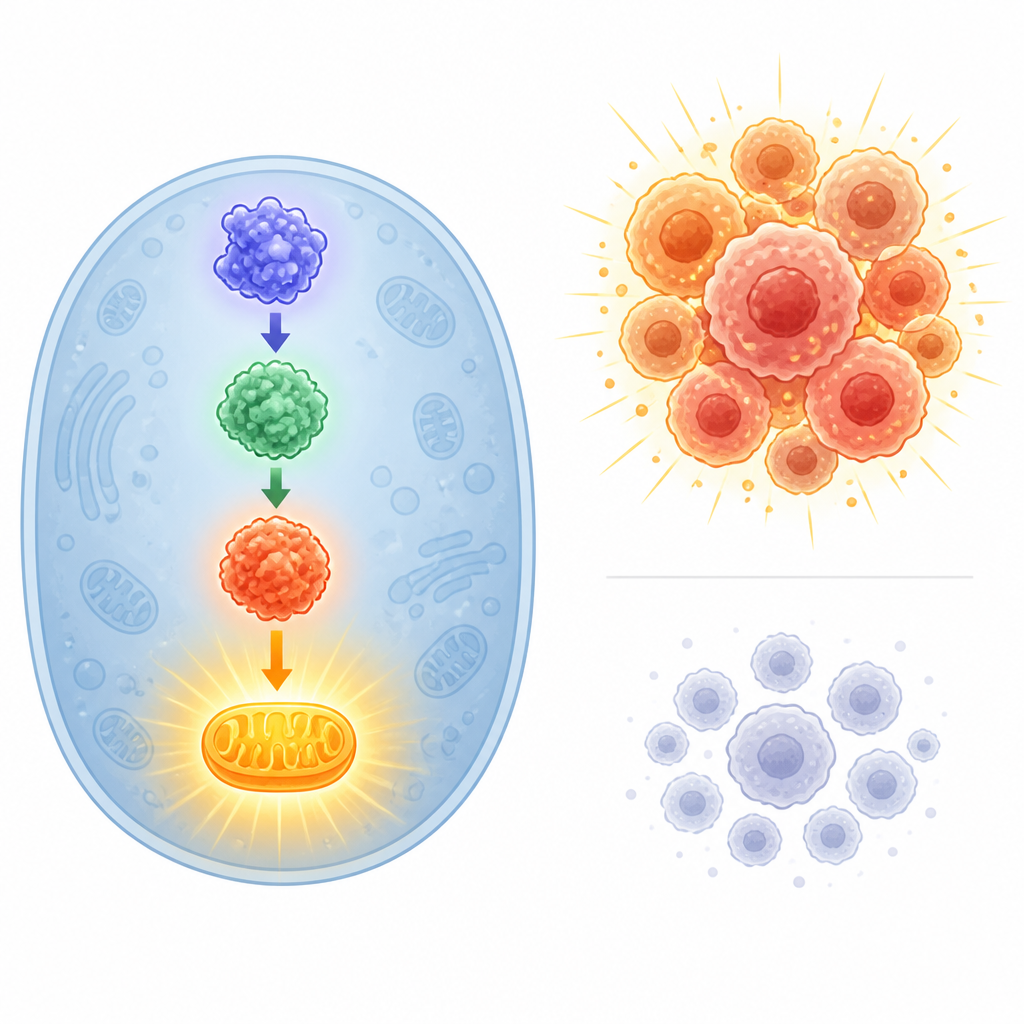
The study also uncovered how ANP32E sends signals upstream to start this chain. ANP32E raises the level of another protein called KDM3B, which helps loosen tightly packed DNA by removing a repressive chemical mark (H3K9me2) near specific genes. In lung cancer cells, KDM3B targets the control region of the EGFR gene, a well-known driver of lung cancer. By erasing this mark, KDM3B makes the EGFR gene more active, leading to higher EGFR protein and stronger downstream signaling through the PI3K/AKT route. This signal then adds the inhibitory tag to GSK3β, further silencing its brake on glycolysis. When the researchers blocked KDM3B or EGFR, ANP32E could no longer boost sugar use, growth, or migration, showing that this epigenetic chain is essential.
A plant compound that cuts the fuel line
Finally, the team searched virtual libraries of chemicals to find ones that could latch onto ANP32E. They identified Penta-O-galloyl-β-D-glucose (PGG), a plant-derived molecule, as a promising binder and confirmed its interaction using computer simulations. In lung cancer cells, PGG dampened the activity of the ANP32E–KDM3B–EGFR pathway and reduced the inactive form of GSK3β, shifting metabolism away from glycolysis. PGG treatment lowered glucose uptake and lactate release in cells, and in mice it slowed the growth of lung tumors without needing to reduce ANP32E protein levels. When ANP32E was already knocked down, adding PGG gave no extra benefit, indicating that its anti-tumor effect depends on targeting ANP32E function.
What this means for patients
In simple terms, this work shows that ANP32E helps lung adenocarcinoma cells step on the gas by turning up a gene (EGFR) that feeds a sugar-burning program and by turning down a natural brake (GSK3β). This double action lets tumor cells consume more sugar and grow and spread more easily. By mapping this route from ANP32E to KDM3B, EGFR, and GSK3β, and by showing that a small molecule like PGG can interfere with it, the study highlights ANP32E as both a warning sign of aggressive disease and a potential handle for future treatments that aim to starve lung tumors of their preferred fuel.
Citation: Wang, Z., Li, Q., Ye, Z. et al. ANP32E drives lung adenocarcinoma progression via GSK3β-mediated glycolytic reprogramming. Cell Death Dis 17, 503 (2026). https://doi.org/10.1038/s41419-026-08712-2
Keywords: lung adenocarcinoma, cancer metabolism, EGFR signaling, epigenetic regulation, glycolysis