Clear Sky Science · en
SIRT1 mediates KU70 to maintain genomic stability in spermatogonial stem cells via the NHEJ repair pathway
Why this research matters for men’s health
Many men who struggle with infertility never learn the cellular reasons behind it. This study looks deep inside the testes at the stem cells that give rise to sperm and asks a simple question: how do these cells repair DNA damage, and what happens when that repair system falters? By uncovering a key protective pathway, the work helps explain why some men lose their sperm-forming stem cells and points toward future ways to better protect fertility from medical treatments and environmental stress.
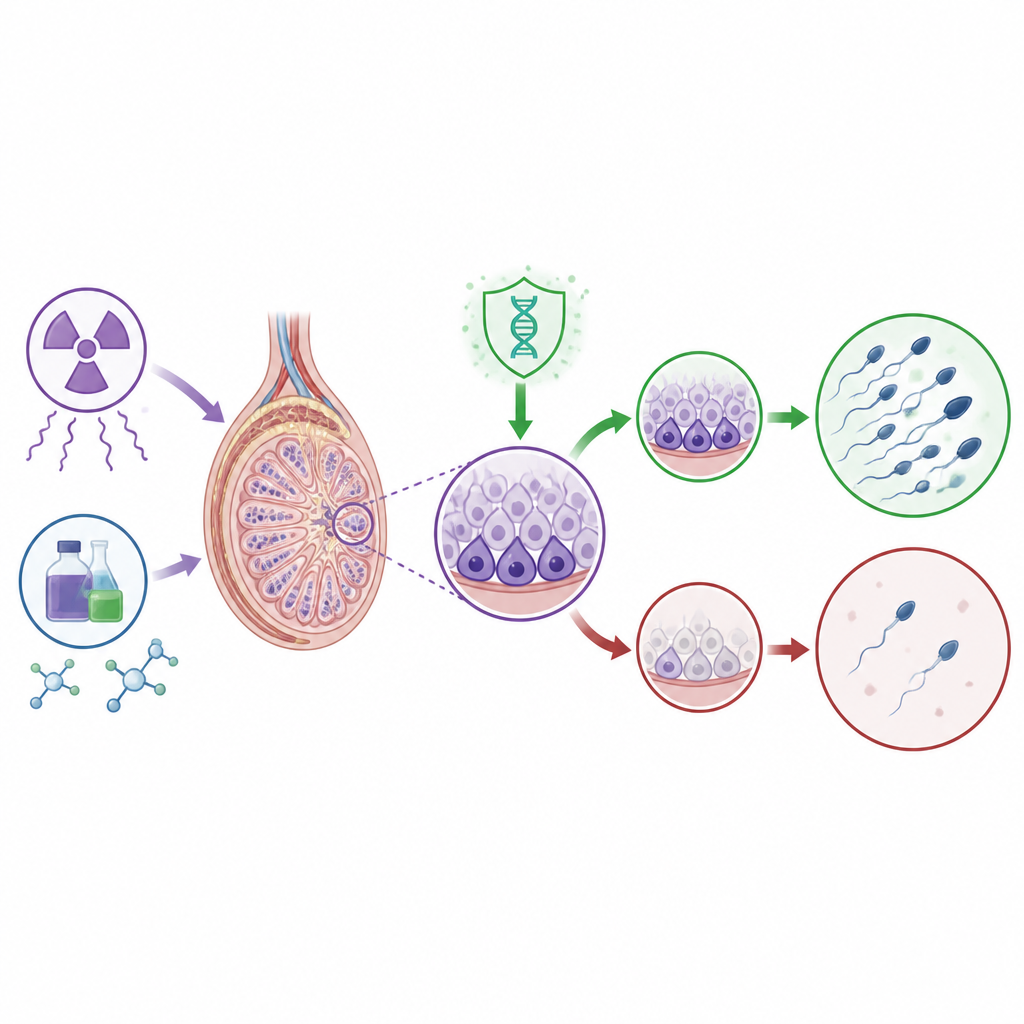
The stem cells that keep sperm production going
Healthy sperm production depends on a small population of spermatogonial stem cells, which sit along the walls of the tiny tubes inside the testes. These cells keep dividing to replenish themselves while also producing the cells that eventually mature into sperm. Because they must divide throughout a man’s life, they are especially vulnerable to DNA damage from radiation, certain drugs, and toxins. If the damage is not repaired, the stem cells can die or accumulate harmful mutations, putting both fertility and genetic health at risk.
Clues from single cells in infertile patients
The researchers first reanalyzed existing single cell RNA sequencing data from human testes, comparing men with normal sperm blockage to those with non obstructive azoospermia, a severe form of infertility where the testes make little or no sperm. This technique allowed them to zoom in on individual testicular cell types, including the rare spermatogonial stem cells, and measure which genes were active. They found that in infertile men these stem cells were fewer in number and showed weaker activity of genes involved in a major DNA repair route known as non homologous end joining, which normally helps fix dangerous double strand breaks in DNA.
A protective protein underperforms in infertile testes
The team focused on a protein called SIRT1, known in other tissues for its role in responding to stress and maintaining genome stability. In the single cell data, SIRT1 levels were lower in stem cells from infertile men. The researchers confirmed this by examining testicular biopsy samples under a confocal microscope. In these tissue sections, stem cells marked by a protein called PLZF showed clearly reduced SIRT1 and another damage response signal, 53BP1, in infertile men, even though levels of a core repair factor named KU70 did not change much. Together, these findings suggest that the overall wiring of the repair pathway is weakened, and that SIRT1 may be a missing piece in the stem cells’ defense system.
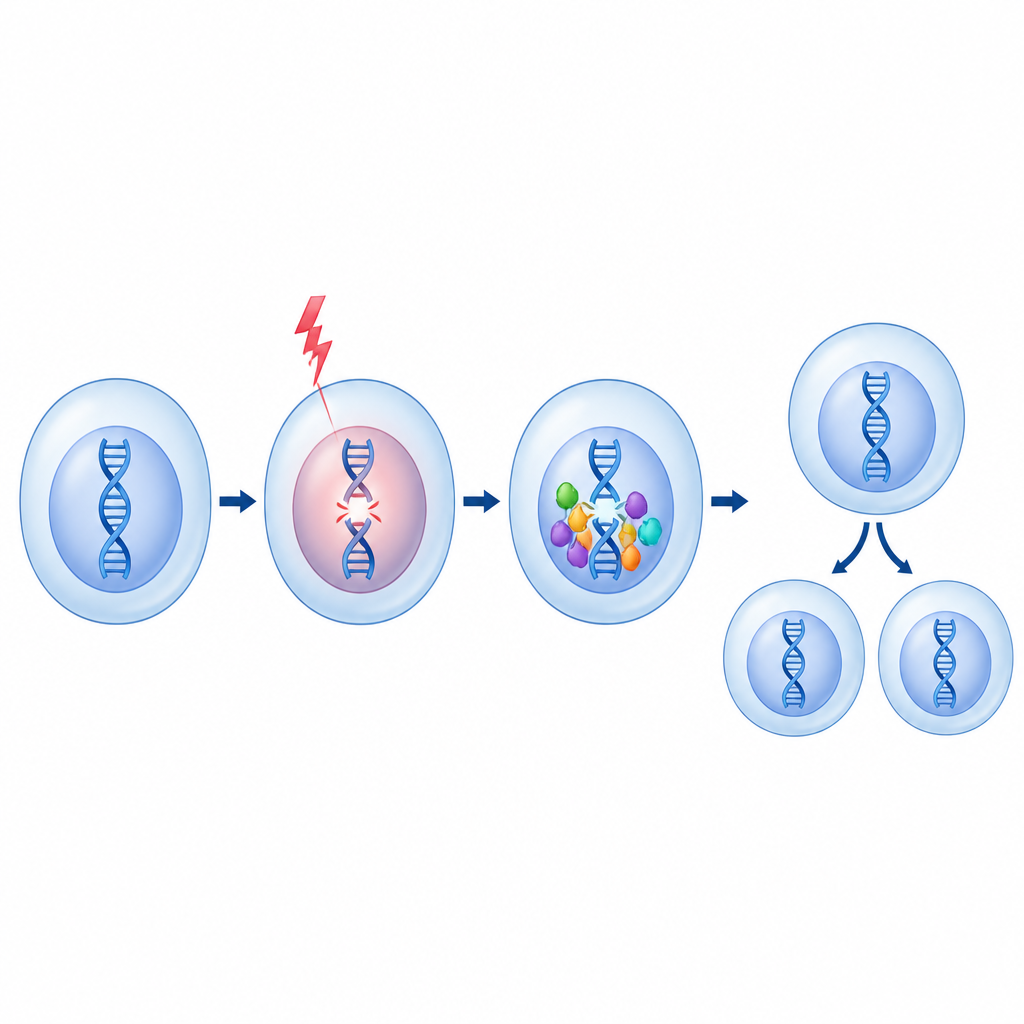
How the repair partnership works under stress
To test how SIRT1 behaves during damage, the scientists exposed mouse testes and cultured stem cells to X rays or to hydroxyurea, a drug that induces DNA stress. In living mice, SIRT1 levels in stem cells rose quickly after damage and then gradually fell back, showing that it is part of a rapid response system. In cultured cells, the team used genetic tools to dial SIRT1 up or down. When SIRT1 was reduced, stem cells grew more slowly, were more easily killed by hydroxyurea, and showed poorer repair performance in a reporter test that directly measures non homologous end joining activity. When SIRT1 was increased, the cells divided more readily, resisted damage better, and showed changes in cell cycle patterns consistent with healthier growth.
A close partnership between SIRT1 and KU70
Digging deeper, the researchers showed that SIRT1 and KU70 cluster together in the nuclei of stem cells after DNA damage, and that they physically interact more strongly under stress. KU70 is a central player in the repair machinery that grabs broken DNA ends. SIRT1 acts as a deacetylase, removing small chemical tags from proteins. In stem cells with extra SIRT1, KU70 carried fewer of these acetyl tags, a state thought to favor its repair function. At the same time, the overall level of KU70 and of another guardian protein, p53, shifted in ways that matched the cells’ improved survival and repair capacity, tying SIRT1 activity to a broader network of damage response signals.
What this means for understanding male infertility
Putting these pieces together, the study paints SIRT1 as a key stress responsive guardian of sperm forming stem cells. In healthy testes, SIRT1 teams up with KU70 to keep DNA repair efficient, helping stem cells survive everyday damage and continue producing sperm. In the testes of men with severe infertility, reduced SIRT1 appears to go hand in hand with weaker repair programs and a shrinking stem cell pool. While this work does not yet translate into treatments, it highlights a specific repair axis that could be targeted in the future to protect germline stem cells during radiation, chemotherapy, or environmental exposures and, ultimately, to help preserve male fertility.
Citation: Zhou, F., Xiao, Y., Yang, Q. et al. SIRT1 mediates KU70 to maintain genomic stability in spermatogonial stem cells via the NHEJ repair pathway. Cell Death Dis 17, 490 (2026). https://doi.org/10.1038/s41419-026-08710-4
Keywords: male infertility, spermatogonial stem cells, DNA repair, SIRT1, genomic stability