Clear Sky Science · en
Regulating the dormancy of cancer stem cells: a novel approach to preventing cancer relapse
Hidden seeds that make cancer come back
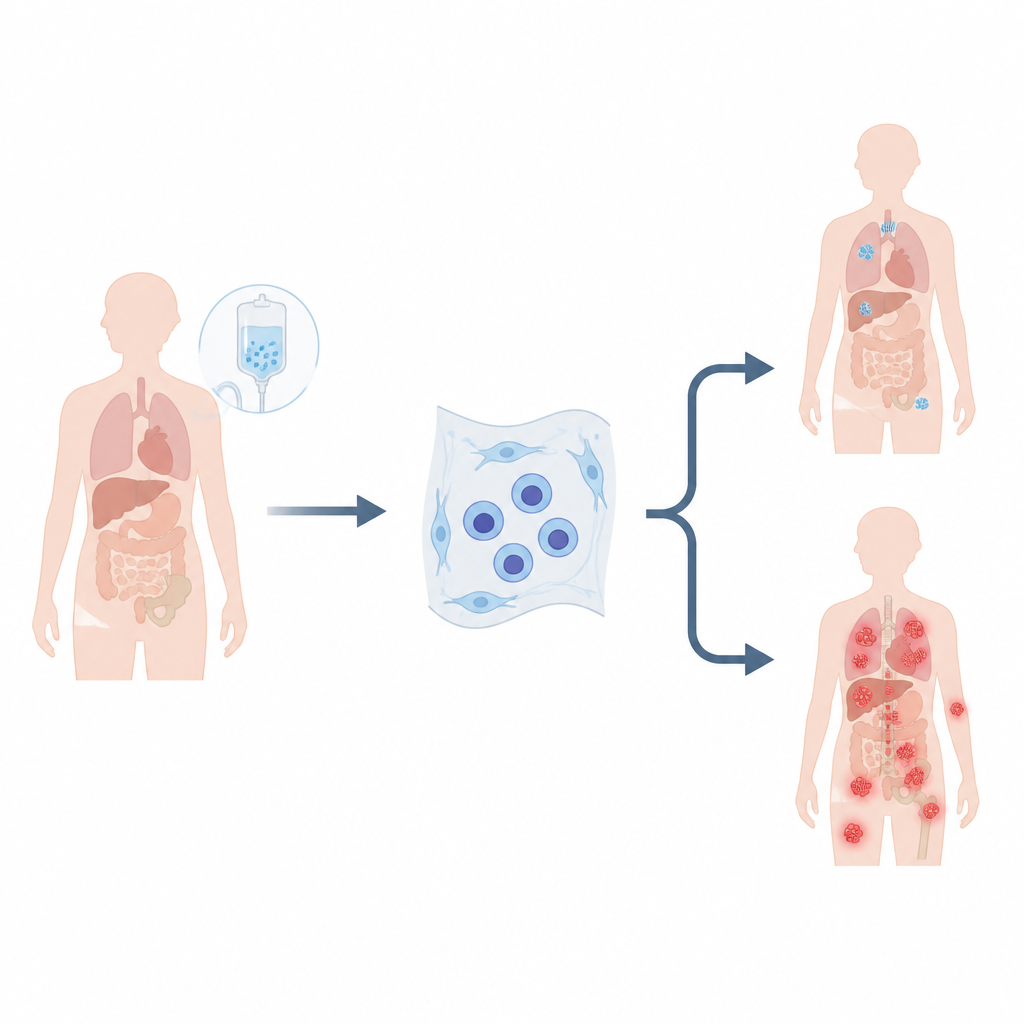
Many people think that once a tumor shrinks after surgery or chemotherapy, the danger has passed. Yet years later, cancer can suddenly return or spread to distant organs. This review explores a little known culprit behind these late comebacks: tiny "sleeper" cells inside tumors that can lie quiet for long periods, survive treatment, and then restart the disease.
Quiet troublemakers inside tumors
Most tumor cells divide quickly, which makes them easier to hit with standard treatments. Cancer stem cells are different. They are a small, long-lasting cell pool that can both renew themselves and spin off many kinds of tumor cells. An even more elusive subgroup, dormant cancer stem cells, slows down so much that they sit in a resting phase of the cell cycle. They burn little energy, keep their DNA relatively stable, and rely on a self-cleaning process called autophagy to survive stress such as low oxygen or scarce nutrients. Because common drugs mainly target fast-dividing cells, these sleepers often escape and can later wake up to drive relapse and metastasis.
Why these sleeper cells are so hard to find and target
Dormant cancer stem cells look almost invisible to current tests because they divide rarely and show little activity. Researchers are beginning to identify molecular clues that enrich for these cells, such as proteins like p27, CD13, GPD1, BEX2, QSOX1, and Survivin. None of these markers is perfect on its own, because many are also found in normal resting cells or other tumor cells. The authors argue that combinations of markers are needed, pairing dormancy signals like p27 with stem cell traits and tumor-specific features. They also describe new animal models, three-dimensional cultures, dye-retention methods, and hypoxia systems that better mimic the harsh niches where these cells hide, allowing scientists to watch when they stay asleep and when they reawaken.
How the cancer neighborhood keeps cells asleep or wakes them up
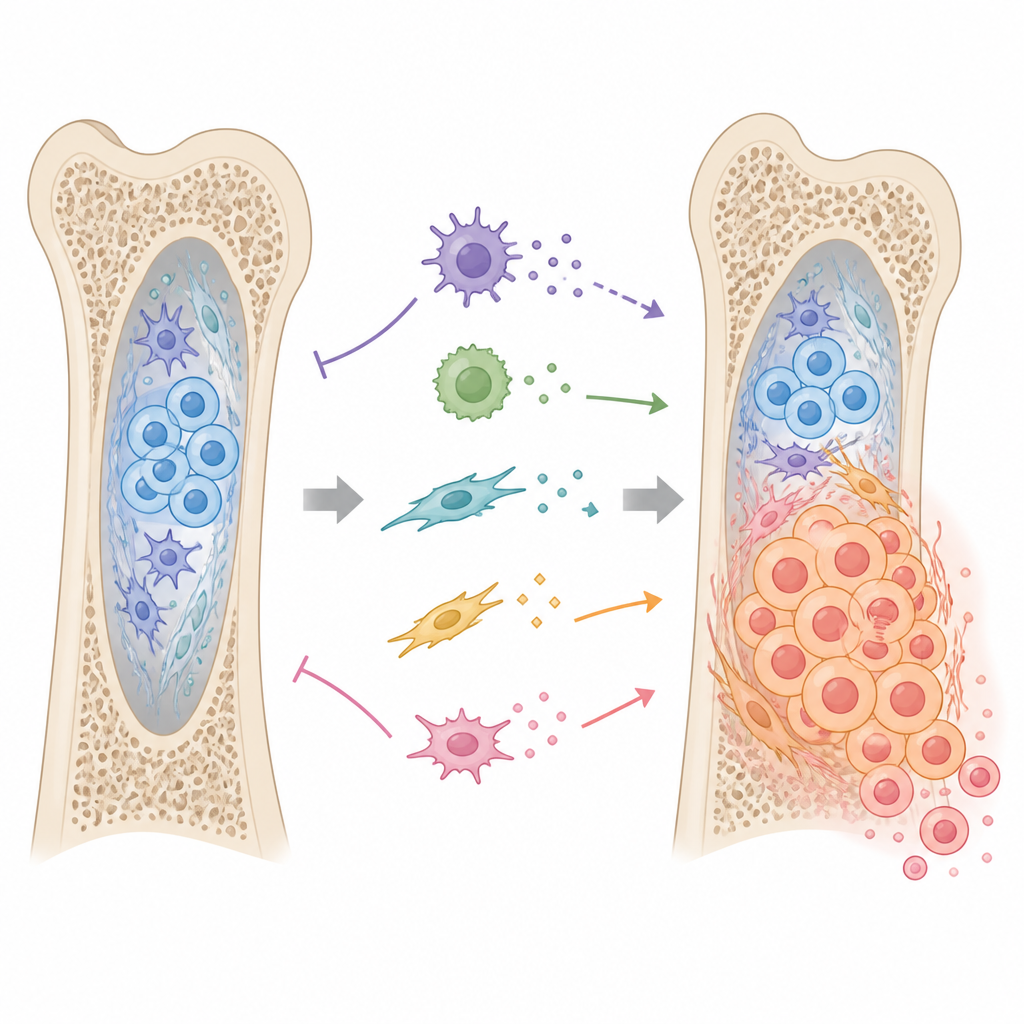
Dormant cancer stem cells do not act alone; they constantly trade signals with their surroundings. Immune cells, fibroblasts, and bone marrow stem cells can either help keep them in check or accidentally protect them. For example, natural killer cells can kill dividing tumor cells and help maintain a "dormant niche," yet some breast cancer stem cells avoid these attacks by changing key proteins. Fibroblasts in esophageal cancer secrete QSOX1, which pushes nearby stem-like cells to raise a shield against immune attack. In the bone marrow, certain growth factors, oxygen levels, and matrix proteins decide whether incoming cancer cells remain in a harmless resting state or begin to grow into new metastases. This tug-of-war explains why the same cancer can stay silent in one organ but flare up in another.
Signals inside the cell that decide rest or growth
Inside dormant cancer stem cells, many signaling routes and epigenetic switches act like a control panel for sleep and wakefulness. Pathways such as mTOR, Notch, Wnt/β-catenin, and FAK–YAP integrate cues about nutrients, stress, and contact with surrounding tissue. When these pathways are tuned down, cells tend to pause; when turned up, they resume dividing and become vulnerable to drugs again. Chemical tags on DNA and histones also matter. Changes in methylation or acetylation can turn key genes on or off, pushing cells into quiescence or out of it. Researchers have shown that tweaking these pathways or epigenetic enzymes in models can either preserve dormancy to prevent spread or deliberately wake cells, then kill them with follow-up therapy.
New ideas for stopping cancer from returning
Because dormant cancer stem cells underlie both treatment resistance and late relapse, the authors highlight several therapeutic approaches. One strategy is to directly attack these cells with drugs that block their special metabolism, survival pathways, or dormancy markers, sometimes in combination with immune therapies that boost natural killer cells or T cells. Another is an "wake and kill" approach, where agents first coax dormant cells into cycling, then conventional chemotherapy finishes the job. Epigenetic drugs and targeted inhibitors are being tested to shift the balance in favor of clearance. While many questions remain about how to track these cells in real time and how safe it is to disturb their resting state, the review concludes that understanding and controlling dormancy could be key to turning many cancers into manageable or nonrecurring diseases.
What this means for patients and future care
For a lay reader, the main takeaway is that cancer can hide in the form of quiet stem-like cells that survive even successful-looking treatment. These sleeper cells respond to both their inner wiring and the tissue around them. By learning how to keep them permanently asleep or expose them at the right moment to therapy, scientists hope to reduce the risk of late relapses and spread. The review lays out the current map of markers, mechanisms, models, and early drug concepts that bring this goal closer to reality.
Citation: Wang, Q., Liang, N., Fang, X. et al. Regulating the dormancy of cancer stem cells: a novel approach to preventing cancer relapse. Cell Death Dis 17, 497 (2026). https://doi.org/10.1038/s41419-026-08707-z
Keywords: cancer stem cells, tumor dormancy, cancer relapse, tumor microenvironment, chemotherapy resistance