Clear Sky Science · en
Perforin-2 enhances antigen-specific CTL immune response by promoting cross presentation
How our immune sentinels learn to target cancer
Our immune system relies on special sentry cells to notice danger, teach killer T cells what to attack, and help them destroy virus-infected cells and tumors. This study explores how a little-known pore-forming protein, called perforin-2, helps these sentry cells train killer T cells more effectively, revealing a new way the body can be helped to fight cancer and infections.
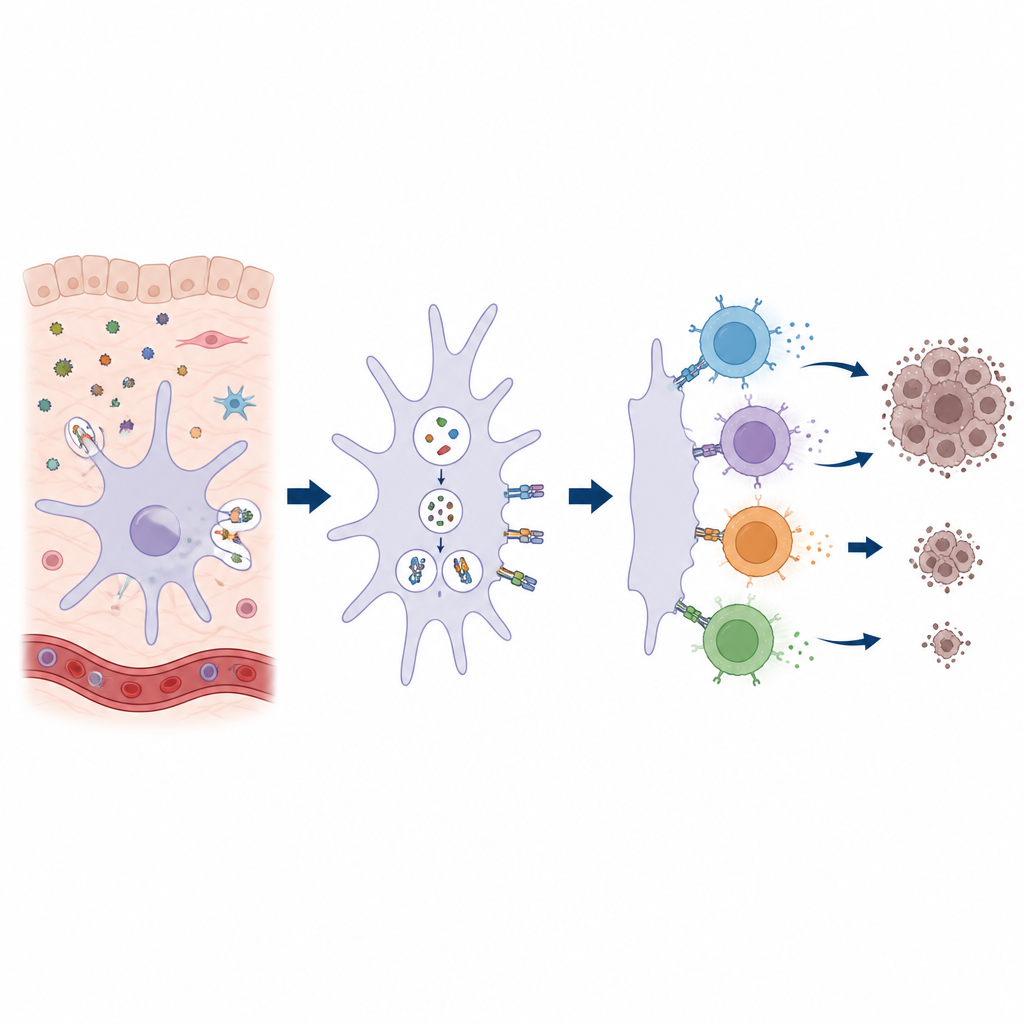
The teachers of killer T cells
Dendritic cells act as teachers for killer T cells. They pick up bits of foreign or abnormal material, called antigens, from their surroundings and show these pieces on their surface to CD8+ cytotoxic T lymphocytes, the immune cells that can directly kill tumors and infected cells. When dendritic cells present outside antigens on a particular class of molecules, they can “cross-prime” naive killer T cells so that these T cells learn to recognize and attack cells carrying the same antigen. This cross-presentation step is vital for starting strong anti-tumor and anti-viral responses.
A pore-forming helper inside dendritic cells
Perforin-2 belongs to a family of proteins that can punch tiny pores in cell membranes. Earlier work showed perforin-2 helps kill bacteria inside cells, but its role in teaching T cells was unclear. In this study, the researchers used mice that completely lack perforin-2 and compared them with normal mice. They grew dendritic cells from bone marrow and tested how well these cells could take up a standard test protein, process it, and then activate killer T cells that recognize that protein. They also looked at how well these mice controlled melanoma tumors, both engineered to carry the test protein and carrying only natural tumor markers.
Perforin-2 boosts antigen uptake and T cell activation
Without perforin-2, dendritic cells showed a clear drop in their ability to display antigen pieces to killer T cells. When given whole protein or protein-coated cells, perforin-2–deficient dendritic cells placed far fewer antigen fragments on their surface and triggered much weaker activation, growth, and killing ability in CD8+ T cells. The same problem appeared in living mice, where transferred T cells divided less in perforin-2–deficient hosts. Importantly, the defect was strongest in a dendritic cell subset that normally specializes in cross-presentation, matching where perforin-2 is most abundant. In contrast, macrophages lacking perforin-2 could still activate T cells well, showing that this effect is mainly tied to dendritic cells.
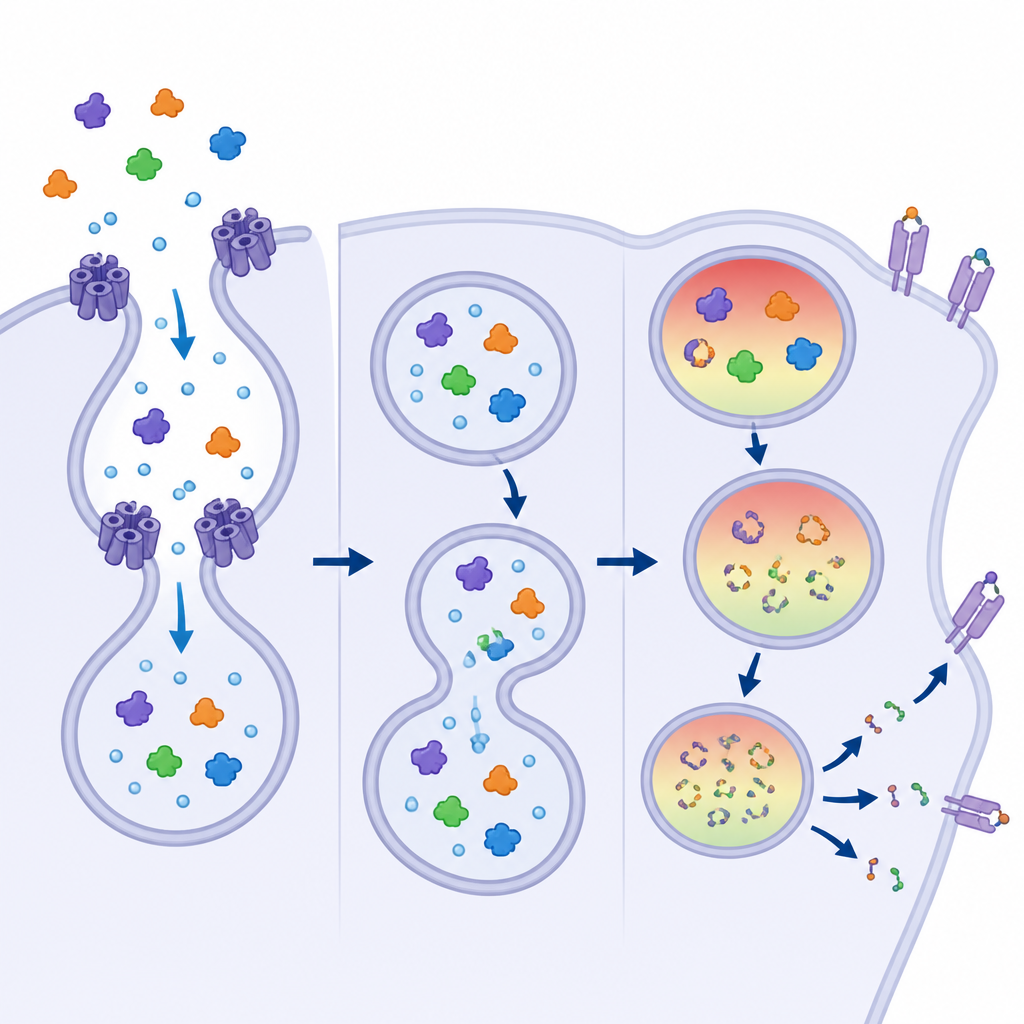
Guiding how antigens enter and are handled inside cells
The team then asked why perforin-2 makes such a difference. They found that immature dendritic cells missing perforin-2 pulled in less antigen and less fluid from their surroundings, especially under mildly acidic conditions similar to those found in inflamed tissues and tumors. In normal cells, perforin-2 clusters on the outer membrane and forms larger complexes when the outside becomes slightly acidic. This clustering is linked to a burst of calcium entering the cell, which triggers membrane repair and a form of large-volume drinking called macropinocytosis. Blocking the repair machinery or macropinocytosis erased the advantage provided by perforin-2, showing that this protein couples tiny membrane damage, repair, and bulk antigen uptake into a single efficient process.
Keeping antigens from being destroyed too soon
Perforin-2 also shapes what happens to antigens after they are inside the cell. In normal dendritic cells, more antigen fragments appear in the cell fluid, where they can be loaded for display to killer T cells. In cells lacking perforin-2, antigens stay trapped longer in internal sacs that become too acidic and break them down quickly. These cells showed stronger signals of antigen digestion and lower internal pH values that favor full destruction instead of careful trimming. Perforin-2 itself appears in these internal sacs, including in pore-like clusters, and seems to help maintain a moderate acidity that prevents over-digestion. As a result, perforin-2 supports both main routes that dendritic cells use to prepare antigens for killer T cells.
Why this matters for cancer control
When the researchers challenged mice with melanoma tumors, those lacking perforin-2 developed tumors earlier, carried larger tumor masses, and died sooner than normal mice. Tumor-bearing mice without perforin-2 had fewer CD8+ and CD4+ T cells in their spleens and tumors, and these T cells were less activated and produced less of the key messenger IFN-gamma when they met tumor antigens again. These findings show that perforin-2 is a central helper for dendritic cells: it boosts antigen uptake, prevents premature antigen destruction, and ensures strong instruction of killer T cells. For a lay reader, the takeaway is that this protein helps immune sentinels more efficiently “sample” what is happening in tissues and then better coach killer T cells to recognize and attack cancer, suggesting a potential new angle for improving cancer immunotherapies in the future.
Citation: Zha, Zk., Deng, Cj., Shen, Lj. et al. Perforin-2 enhances antigen-specific CTL immune response by promoting cross presentation. Cell Death Dis 17, 485 (2026). https://doi.org/10.1038/s41419-026-08705-1
Keywords: perforin-2, dendritic cells, cross-presentation, CD8 T cells, tumor immunity