Clear Sky Science · en
A FoxM1/Smad4 positive feedback loop promotes pancreatic cancer progression
Why this research matters
Pancreatic cancer is one of the deadliest cancers, often discovered late and resistant to current treatments. This study uncovers how two key proteins inside pancreatic cells team up to drive the disease forward, opening the door to new ways of slowing or stopping tumor growth.
A deadly disease that is hard to treat
Pancreatic cancer is notorious for its silent beginning, rapid worsening, and poor survival rates. Worldwide, both new cases and deaths are rising, especially in developing countries. Because current therapies offer only limited benefit, researchers are intensely searching for the hidden molecular "drivers" that help these tumors grow, spread, and resist treatment. One major communication route inside many cancer cells is the TGF-beta pathway, which can push cells toward more aggressive behavior when it goes out of balance.
Two proteins that feed each other’s activity
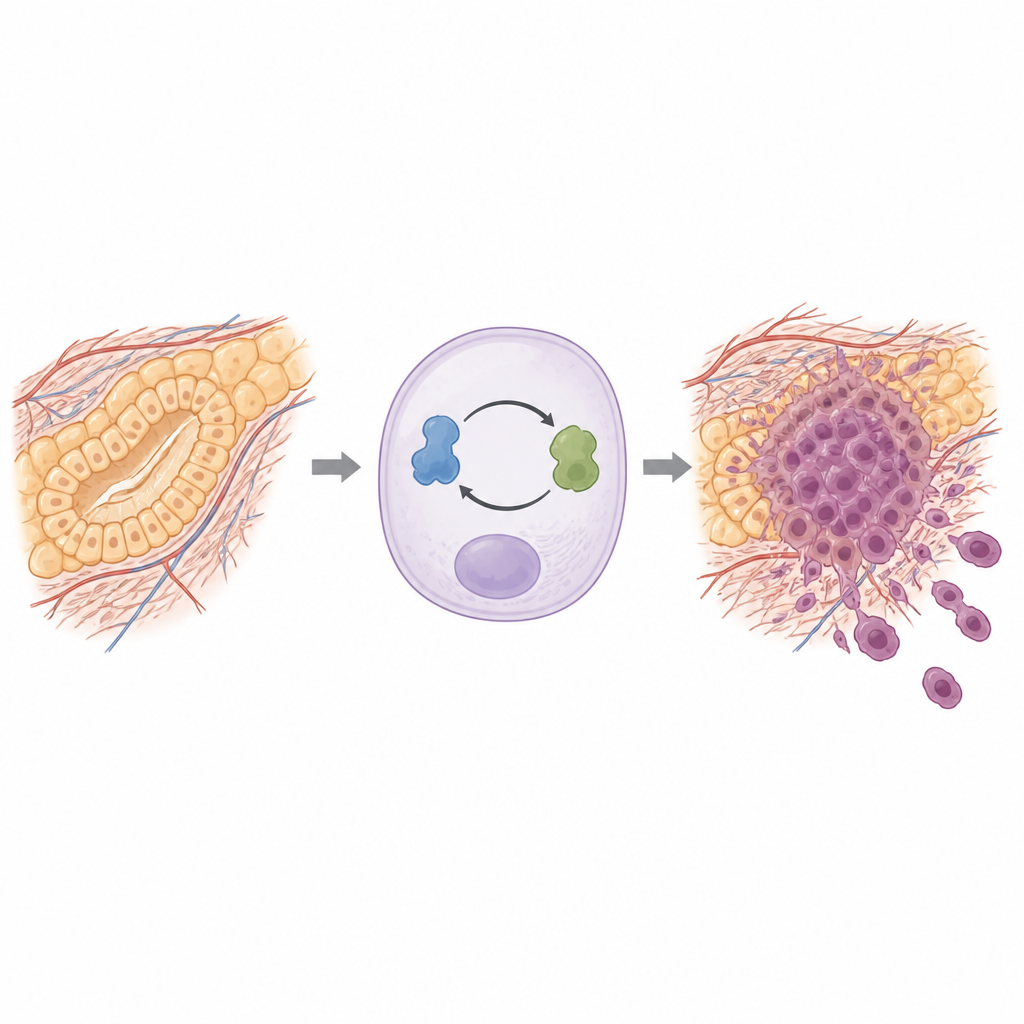
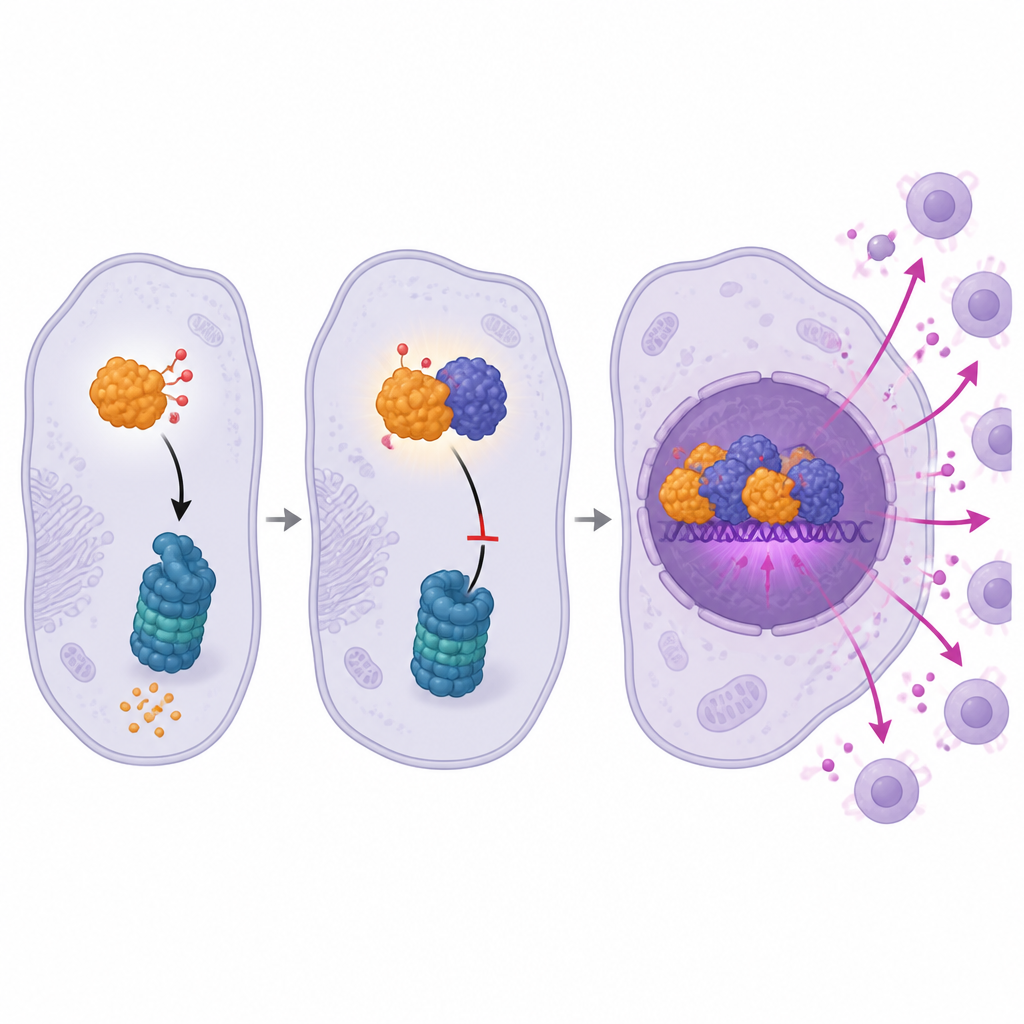
In this work, the scientists focused on two proteins: FoxM1, a switch that turns on many growth-related genes, and Smad4, a central relay in the TGF-beta pathway. Using pancreatic cancer cell lines grown in the lab, tumor models in mice, and human tumor samples, they discovered that FoxM1 and Smad4 form a self-reinforcing loop. FoxM1 protects Smad4 from being broken down by the cell’s waste-disposal machinery, so Smad4 becomes more stable and more abundant. Once activated, Smad4 travels into the cell nucleus, where it binds directly to the DNA region that controls FoxM1, pushing the cell to make even more FoxM1. This circular relationship keeps both proteins highly active.
How the loop makes cancer cells more aggressive
When the researchers boosted FoxM1 levels in pancreatic cancer cells, the cells migrated and invaded more readily, behaviors linked to metastasis. When they reduced FoxM1, these aggressive traits diminished. They also showed that signals from TGF-beta increased the movement of Smad4 into the nucleus and raised levels of proteins tied to a shape-shifting process that lets tumor cells detach and spread. FoxM1 intensified these effects, while blocking the TGF-beta receptor dialed them down. In mice, tumors formed from FoxM1-rich cells grew larger, whereas tumors formed from FoxM1-poor cells remained smaller, suggesting that the loop between FoxM1 and Smad4 fuels tumor growth in living organisms.
Evidence from human tumors
The team then examined human pancreatic cancer tissues. Compared with nearby noncancerous tissue from the same patients, tumor samples had higher levels of FoxM1, Smad4, and an active form of another Smad protein that reflects strong TGF-beta signaling. This was especially true in poorly differentiated tumors, which are more disorganized under the microscope and usually behave more aggressively. These tumors also showed more dividing cells and greater presence of immune cells, hinting at a complex interaction between the runaway signaling loop, tumor growth, and the surrounding immune environment.
What this means for future treatment
For a lay reader, the main message is that the researchers have identified a harmful cycle inside pancreatic cancer cells in which two proteins keep each other switched on, continually feeding the signals that help the tumor grow and spread. By showing how FoxM1 shields Smad4 from destruction and how Smad4, in turn, ramps up FoxM1 production, the study reveals a new weak spot in the cancer’s inner wiring. Targeting this self-sustaining loop, or its link to the TGF-beta pathway, could offer new strategies to slow pancreatic cancer, although much more work is needed before this can be translated into therapies for patients.
Citation: Ruan, B., Wang, B., Zhang, X. et al. A FoxM1/Smad4 positive feedback loop promotes pancreatic cancer progression. Cell Death Dis 17, 465 (2026). https://doi.org/10.1038/s41419-026-08697-y
Keywords: pancreatic cancer, TGF-beta signaling, FoxM1, Smad4, tumor progression