Clear Sky Science · en
Pseudo-senescence induced by palbociclib does not sensitise pleural mesothelioma cells to combinations with senolytics
Why this research matters
Pleural mesothelioma is a rare but deadly cancer usually linked to asbestos exposure, and most patients still have very limited treatment options. New targeted drugs such as palbociclib are designed to stop cancer cells from dividing, and there is growing interest in pairing them with “senolytic” drugs that selectively kill damaged, retirement‑age cells. This study asks a deceptively simple but crucial question: when palbociclib makes mesothelioma cells look old and tired, are they truly finished, or just pausing before coming back to life?
Stopping cancer cells without killing them
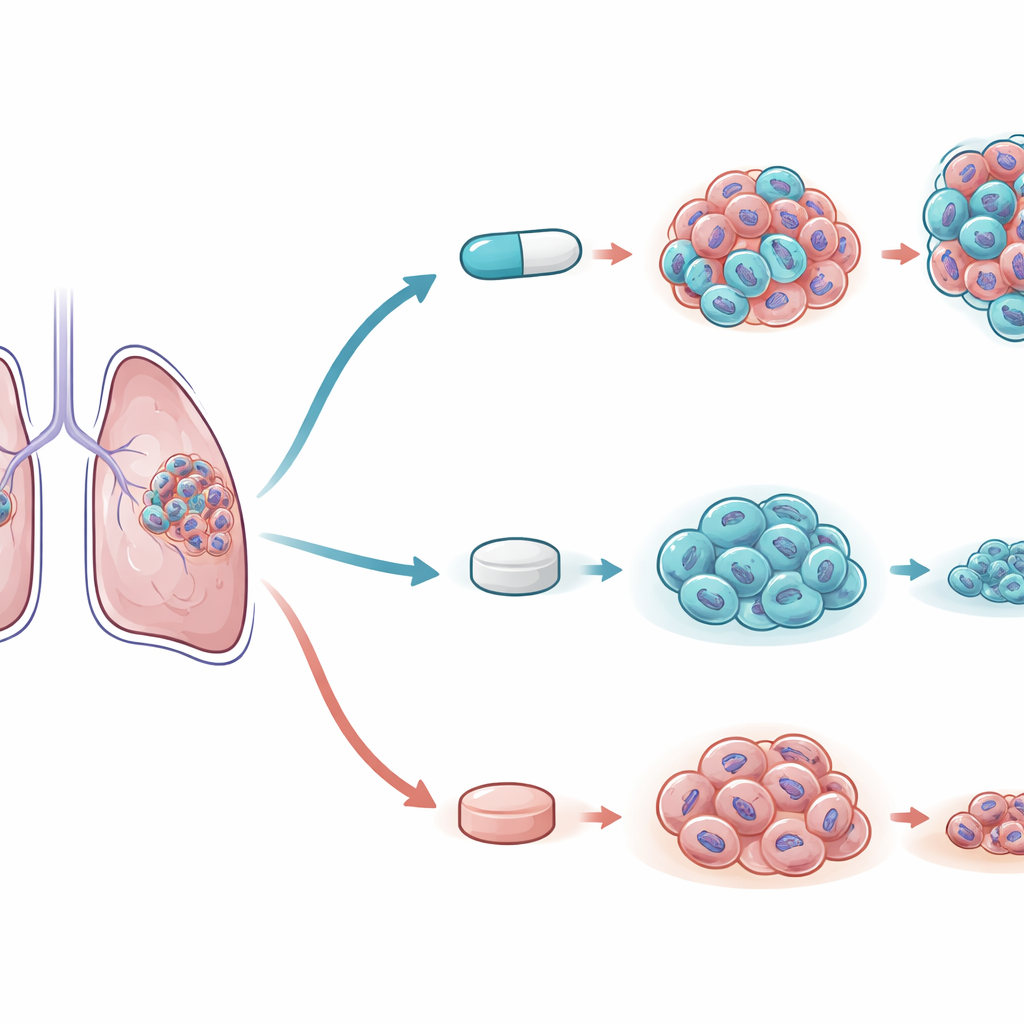
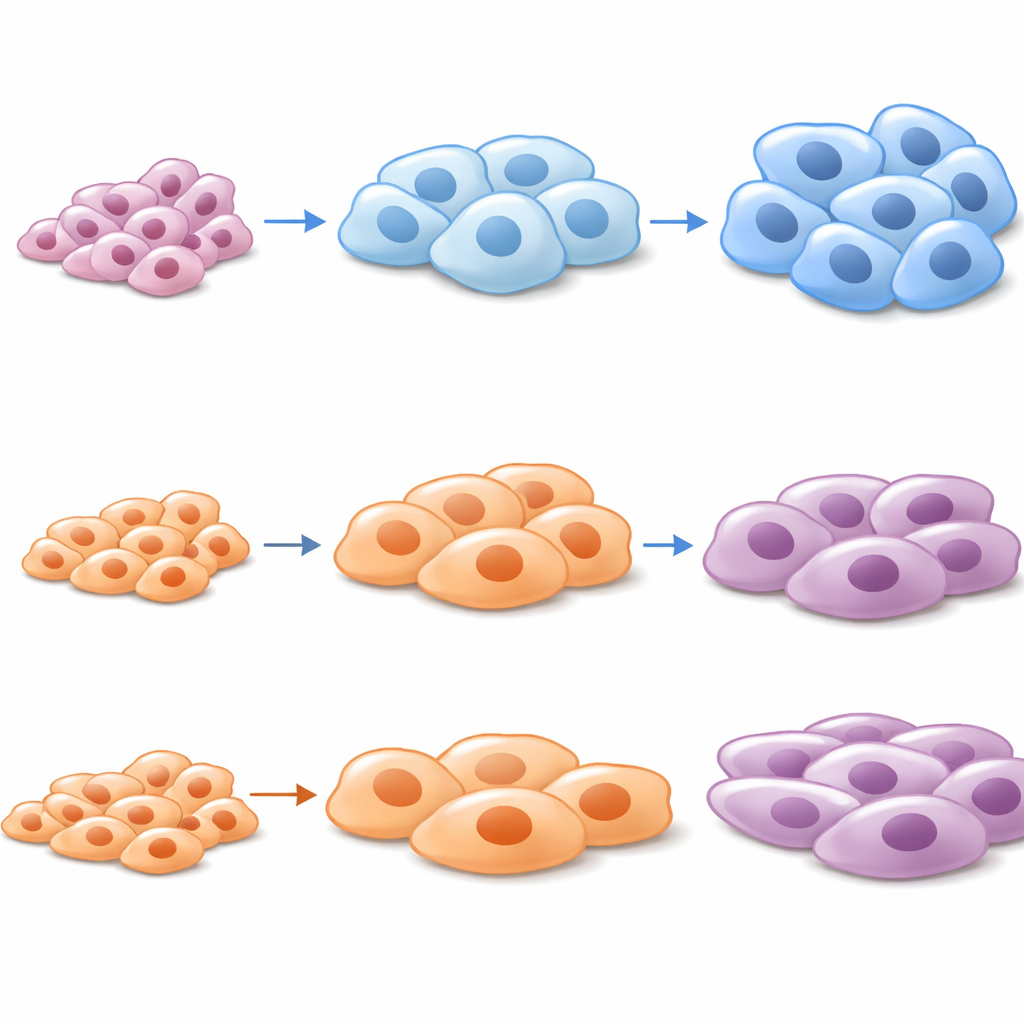
Palbociclib blocks two enzymes, CDK4 and CDK6, that help cells move through the cell cycle. In mesothelioma lab models, this drug sharply slowed cell growth and made the cells larger, less active, and more granular—classic signs of cellular “old age,” or senescence. The cells also released more inflammatory signalling molecules, such as IL‑6 and IL‑8, another hallmark of senescent cells. However, when the drug was washed away, most mesothelioma cells began to grow again, regaining a more youthful appearance and losing these senescence signals. That rebound suggested that palbociclib had pushed them into a temporary timeout rather than a permanent retirement.
Why senolytic add‑ons did not work
Because senescent cells can fuel chronic inflammation and cancer relapse, researchers are exploring senolytic drugs that selectively eliminate them. The team tested several such agents, including BH3 mimetics that target survival proteins in the Bcl‑2 family, and inhibitors of signalling pathways that became more active after palbociclib treatment. While mesothelioma cells often depended on one survival protein, Bcl‑xL, blocking it killed cells whether or not they had seen palbociclib. Adding palbociclib did not make them consistently more vulnerable. Likewise, drugs aimed at Src, STAT3, mTOR, mitochondrial metabolism and stress‑related enzymes failed to team up with palbociclib to wipe out the treated cells. These results indicated that whatever state palbociclib created, it did not behave like a classic, senolytic‑sensitive form of senescence.
A clearer contrast with standard chemotherapy
To find out what true therapy‑induced senescence looks like in this disease, the researchers turned to cisplatin, a long‑standing chemotherapy drug. When mesothelioma cells were briefly exposed to clinically realistic doses of cisplatin and then placed in drug‑free media, their growth essentially stopped for good, even though only a minority of cells died outright. These cells grew larger, showed strong and lasting activity of the senescence marker β‑galactosidase, and kept releasing IL‑6 and IL‑8 after the drug was removed. They also displayed enduring signs of DNA damage and cell‑cycle arrest. Importantly, when single cisplatin‑treated cells were sorted based on size and senescence markers and then re‑grown, almost none were able to restart dividing—unlike palbociclib‑treated cells, which readily bounced back regardless of how “senescent” they initially appeared.
Looking inside the stressed cancer cell
By comparing these two drugs, the team showed that palbociclib triggers a kind of “pseudo‑senescence”: cells swell and emit inflammatory signals, but the internal brakes that enforce lasting arrest are weak and reversible. DNA‑damage markers and the key cell‑cycle blocker p21 rose modestly with palbociclib and then faded after washout, whereas cisplatin drove a stronger and more durable response. Even when palbociclib increased some survival proteins or stress‑related pathways, blocking these add‑on signals did not tip cells into death, underscoring that their survival was not easily undermined by standard senolytic strategies.
What this means for future treatments
For people with mesothelioma, these findings deliver a sober but valuable message. Palbociclib can slow tumor growth at realistic doses, but in this setting it does not reliably push cancer cells into a one‑way path of permanent arrest that senolytic drugs can exploit. Instead, it induces a reversible “pseudo‑senescent” state from which cells can escape and resume dividing once treatment pauses—much like the off‑week schedules often used in the clinic. In contrast, cisplatin, despite its side effects, can drive a more stable, long‑term shutdown of cell division. The work highlights that not all drug‑induced aging of cancer cells is created equal, and that carefully defining whether a treatment causes true or pseudo‑senescence is essential before betting on senolytic combinations to improve patient outcomes.
Citation: Sreeram, I., Plans-Marin, S., Cruz-Rodríguez, M. et al. Pseudo-senescence induced by palbociclib does not sensitise pleural mesothelioma cells to combinations with senolytics. Cell Death Dis 17, 388 (2026). https://doi.org/10.1038/s41419-026-08696-z
Keywords: pleural mesothelioma, CDK4/6 inhibitors, cellular senescence, cisplatin, senolytic therapy