Clear Sky Science · en
PSMD11 stabilizes PGM3 by antagonizing Parkin to promote bladder cancer progression through energy metabolism reprogramming
Why This Matters for Patients
Bladder cancer is common and often returns or spreads even after surgery and current treatments. This study looks inside bladder cancer cells to see how they fuel their rapid growth. By uncovering a key energy control switch, the researchers point to a new way to slow these tumors down and possibly make therapies more effective.
A Hidden Engine Inside Cancer Cells
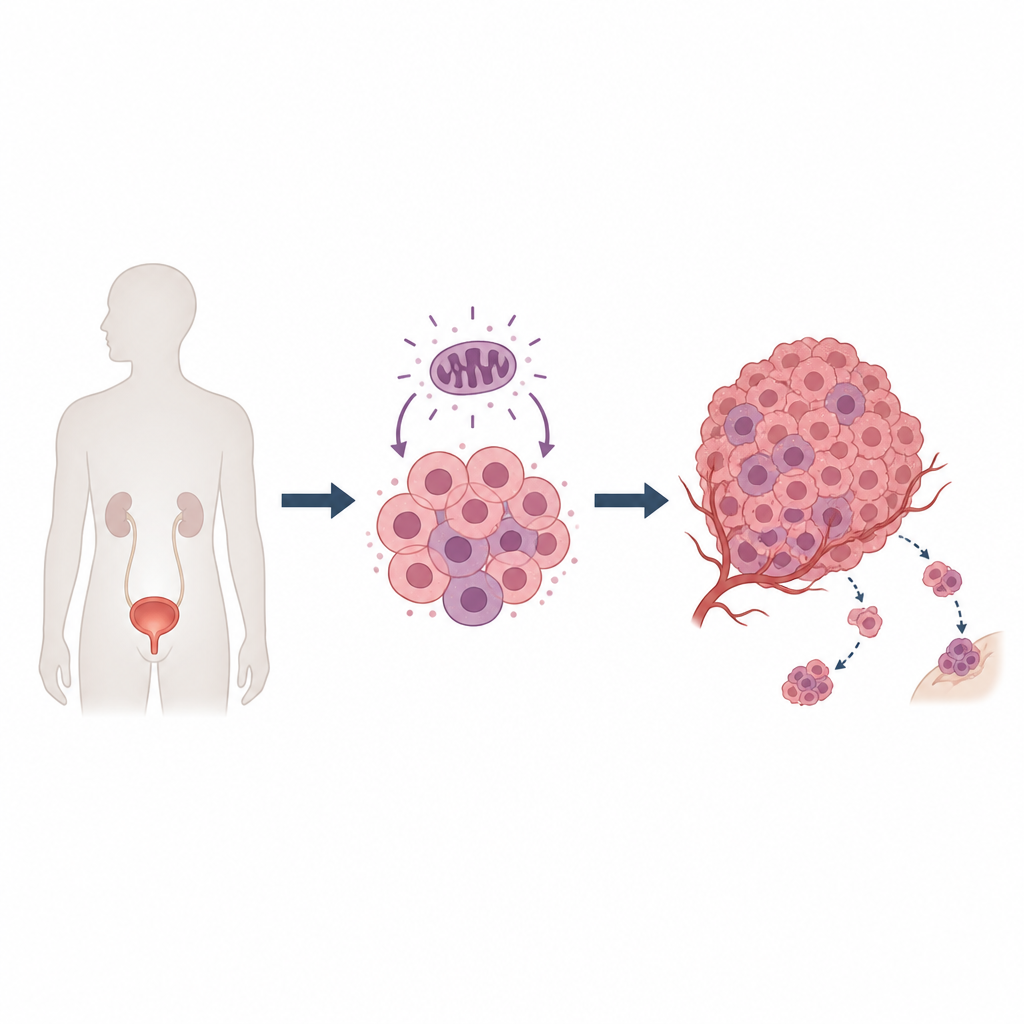
Every cell needs energy to survive, and cancer cells are especially hungry. They draw power from two main routes: breaking down sugar quickly in the fluid of the cell and burning fuel more slowly inside tiny structures called mitochondria. The team focused on a lesser-known helper protein called PGM3, which sits at a crossroads of sugar use. They found that bladder cancer tissues carried much higher levels of PGM3 than nearby normal bladder tissue, and patients whose tumors had more PGM3 tended to have worse outcomes.
How PGM3 Makes Tumors Stronger
To test whether PGM3 is just a bystander or a driver, the researchers lowered its levels in bladder cancer cell lines and in mouse tumor models. When PGM3 was reduced, cancer cells grew more slowly, formed fewer colonies, and were less able to move and invade. In mice, tumors shrank and fewer cancer spots appeared in the lungs. Detailed measurements showed that cells with less PGM3 took up less sugar, made less cellular fuel (ATP), and produced less lactic acid, a sign that both their fast sugar-burning route and their slower oxygen-based route were weakened.
Rewiring the Cell’s Power Supply
Using advanced tools that track many small molecules at once, the team showed that knocking down PGM3 cut key building blocks in both major energy pathways. Instruments that measure how hard mitochondria and glycolysis are working confirmed that both activities dropped sharply when PGM3 was lowered. Gene studies revealed that several important energy enzymes also went down. When the scientists then blocked these energy routes with known drugs, they could blunt the growth boost that came from adding extra PGM3, showing that PGM3 helps tumors largely by ramping up energy production.
A Tug-of-War Over a Key Protein
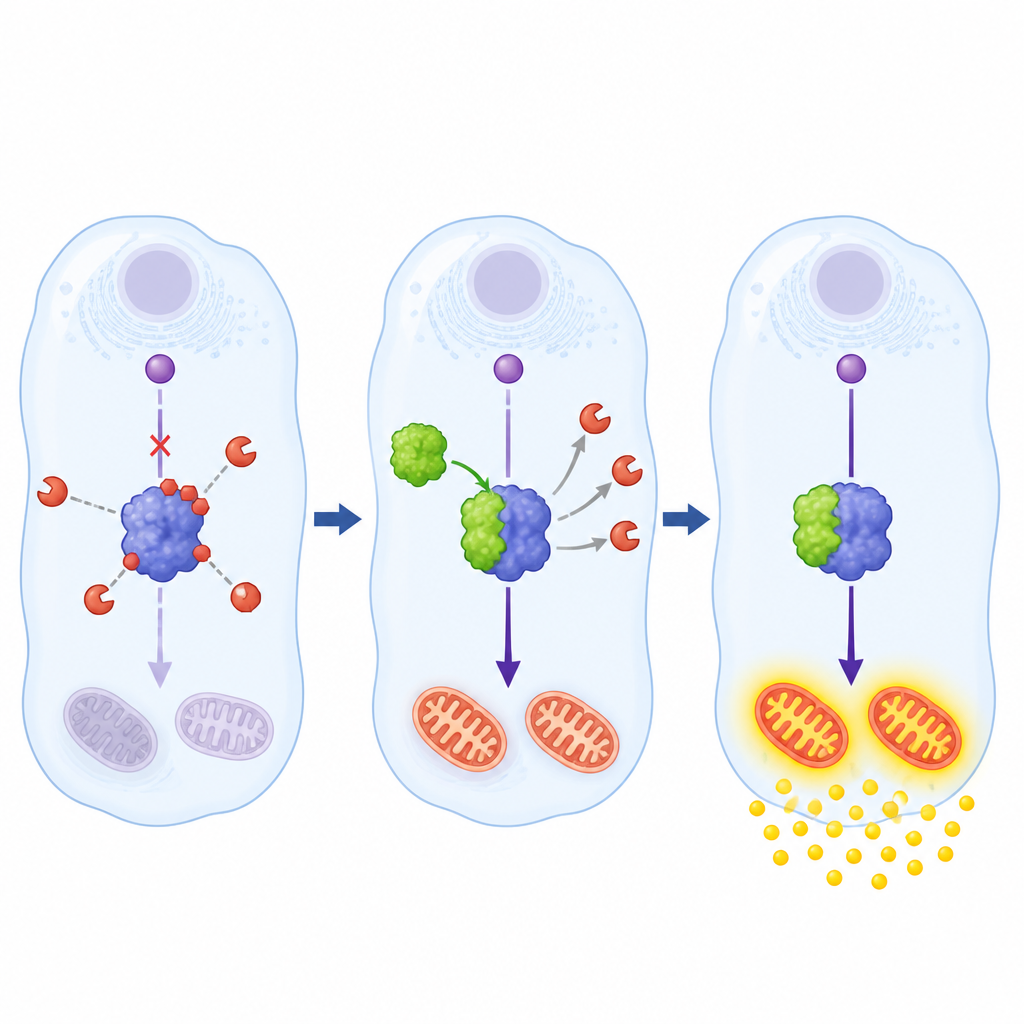
Next, the researchers asked why PGM3 is so abundant in bladder cancer cells. Proteins in cells are constantly made and broken down; one common way to mark a protein for removal is to tag it with small units that send it to the cell’s shredder. The team discovered that a protein called PSMD11 physically sticks to PGM3 and protects it from being tagged and destroyed. Another protein, Parkin, does the opposite: it tags PGM3 for disposal. PSMD11 and Parkin compete for the same spot on PGM3, creating a tug-of-war. When PSMD11 wins, PGM3 is stabilized, energy output rises, and tumors grow more aggressively.
What This Could Mean for Future Treatment
PSMD11 was also found at higher levels in bladder cancer tissues and closely tracked with PGM3 levels. When PSMD11 was reduced, cancer cells lost power and became less able to grow and spread, but restoring PGM3 brought this ability back. A chemical called FR054, which blocks PGM3, slowed bladder cancer cells in dishes and shrank tumors in mice. Together, these findings suggest that the PSMD11–PGM3 pair acts as a key energy booster for bladder cancer. For patients, this work raises the possibility that drugs targeting this axis, especially PGM3, could one day help cut off the energy supply that tumors need, making them easier to control and treat.
Citation: Cheng, Y., Chen, T., Zheng, G. et al. PSMD11 stabilizes PGM3 by antagonizing Parkin to promote bladder cancer progression through energy metabolism reprogramming. Cell Death Dis 17, 457 (2026). https://doi.org/10.1038/s41419-026-08691-4
Keywords: bladder cancer, cancer metabolism, PGM3, PSMD11, Parkin