Clear Sky Science · en
PPARα deficiency causes skin dysbiosis and triggers innate immunity in keratinocytes
Why skin microbes and a hidden switch matter
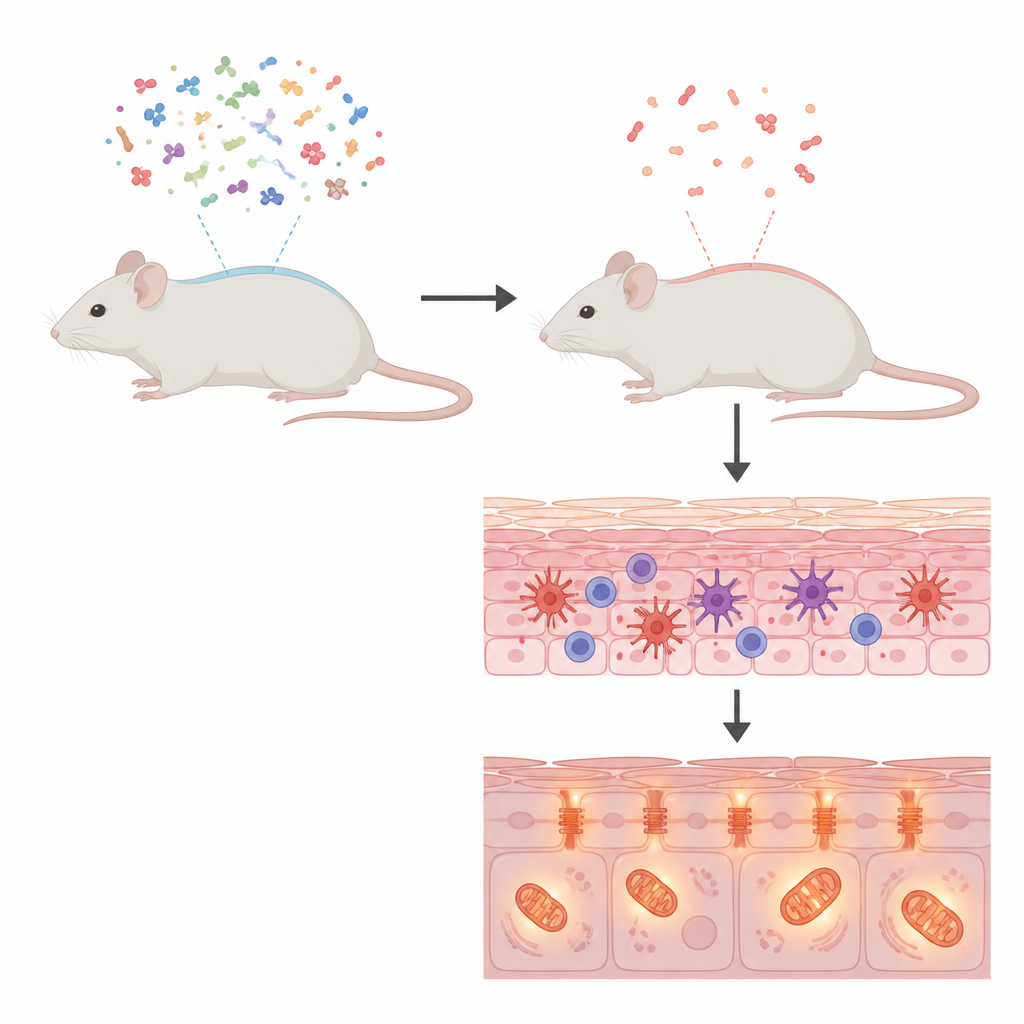
Our skin is home to vast communities of microbes that quietly help defend us and keep the surface healthy. This study explores what happens when a key molecular switch in skin cells, called PPARα, is missing in mice. The work shows that this single change reshapes which bacteria can live on the skin, boosts local defense signals, and pushes skin cells into a state of stress, offering fresh insight into how our bodies balance friendly microbes and inflammation.
A missing guardian of skin balance
The researchers used mice that lack PPARα and compared their skin to that of normal littermates. They found that the total number of bacteria on the skin dropped when PPARα was absent, but the community also became unbalanced. Several types of bacteria increased, while certain staphylococcal species, including Staphylococcus aureus and Staphylococcus lentus, declined. This shift, known as dysbiosis, did not simply reflect fewer germs overall but rather a different mix of residents on the skin surface.
Innate defenses turn up the volume
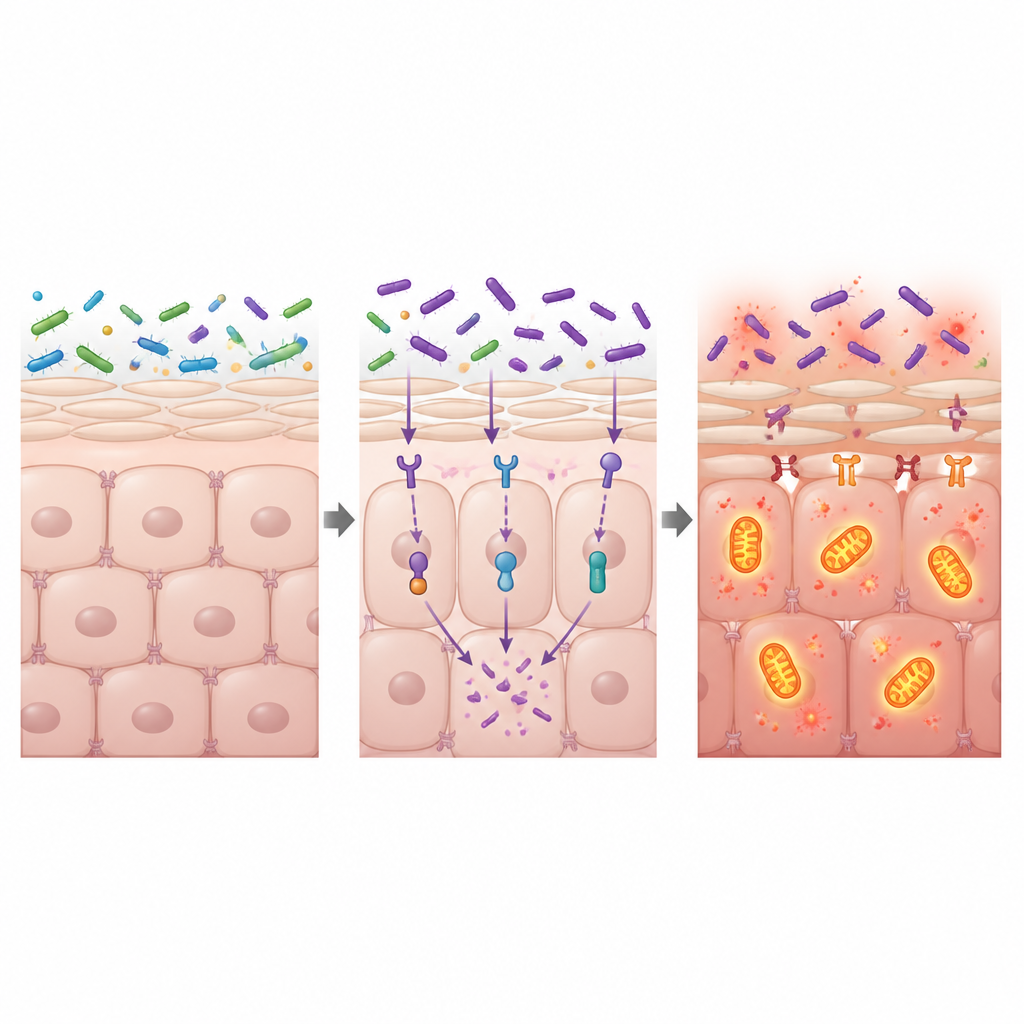
To understand why some bacteria were being driven away, the team looked at early defense systems in the outer skin layer. In the PPARα-deficient mice, skin cells produced more antimicrobial peptides called β-defensins and higher levels of alarm molecules such as interleukin 1β and interleukin 18. These changes were linked to activation of an internal sensor pathway centered on a protein named NOD2, which detects bacterial components and can trigger a form of cellular recycling called autophagy. The boosted defenses and subtle signs of inflammation appeared without obvious damage to the skin barrier or major influx of immune cells, suggesting that resident keratinocytes were doing much of the work.
Silent inflammation and stressed skin cells
Beyond these front-line defenses, the skin of PPARα-deficient mice showed a tilt toward a particular type of immune activity often called the Th17 response. Signals that encourage Th17 pathways and related genes were increased in the epidermis, and a special subset of T cells within the skin produced more of the cytokine IL-17A. At the same time, the keratinocytes themselves displayed signs of oxidative and mitochondrial stress. Protective programs controlled by NRF2 and the mitochondrial enzyme SOD2 were heightened, lipid damage markers accumulated, and the main energy-producing machinery, especially mitochondrial complex I, worked less efficiently. Levels of hydrogen peroxide rose, and a channel protein, aquaporin-3, which can transport this reactive molecule, was more abundant.
Changes in skin structure and the role of bacteria
The outer skin layer did not collapse, but it was subtly reshaped. Markers of both early and late keratinocyte maturation, including keratins and the barrier protein filaggrin, were increased, as was a marker of faster cell turnover. To tease apart what was driven directly by loss of PPARα from what was driven by the altered microbes, the scientists washed the mice with a topical antimicrobial solution. This treatment did not switch off the heightened innate immune genes in keratinocytes, showing that PPARα itself sets that tone. However, it did reduce oxidative stress, normalize aquaporin-3, and bring filaggrin and some other differentiation markers closer to typical levels, pointing to the dysbiotic microbiota as a major driver of cellular stress and certain barrier changes.
What this means for skin health
Taken together, the findings reveal PPARα as an important regulator that helps keep peace between the skin and its microbial partners. When this switch is missing, the skin mounts stronger innate defenses through the NOD2 pathway and Th17-related signals, which reduces certain staphylococcal species but also creates a dysbiotic community that stresses mitochondria and alters barrier proteins like filaggrin. Although this work was done in mice, it suggests that subtle shifts in such molecular controls could influence how human skin balances microbe control, inflammation and barrier strength, with potential relevance for conditions such as eczema and psoriasis.
Citation: Blunder, S., Minzaghi, D., Pavel, P. et al. PPARα deficiency causes skin dysbiosis and triggers innate immunity in keratinocytes. Cell Death Dis 17, 479 (2026). https://doi.org/10.1038/s41419-026-08640-1
Keywords: skin microbiome, PPAR alpha, innate immunity, keratinocytes, oxidative stress