Clear Sky Science · en
Malic enzyme 1 contributes to tumorigenesis and lenvatinib resistance in hepatocellular carcinoma via FSP1-dependent ferroptosis evasion
Why this liver cancer study matters
Most liver cancers are diagnosed late and respond poorly to treatment, especially when tumors learn to resist frontline drugs. This study uncovers how a common metabolic enzyme in liver cells, called ME1, helps liver tumors grow and dodge a form of cell death linked to new cancer therapies. By pinpointing this weak spot, the research suggests new ways to both slow tumor growth and make existing drugs work better for patients.
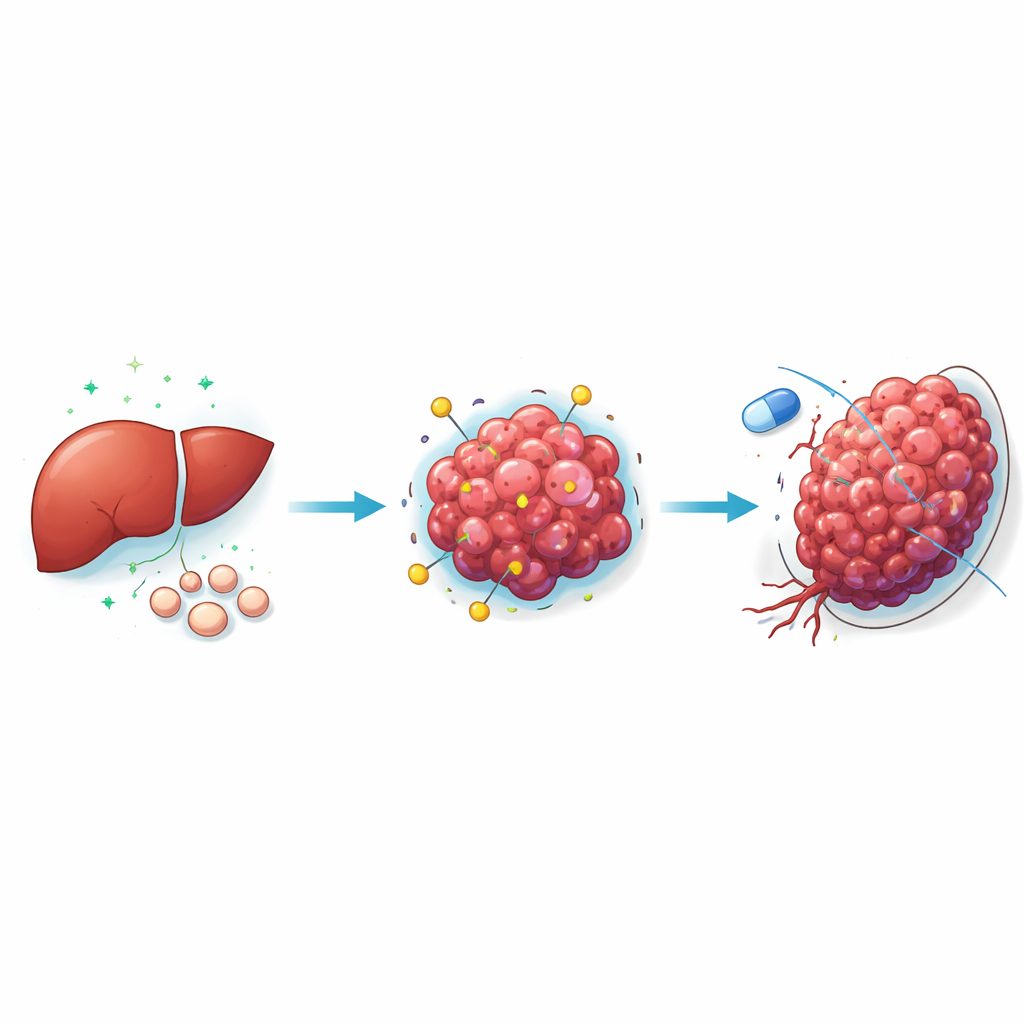
A hidden helper of liver tumors
The researchers began by asking whether ME1, an enzyme that helps cells handle energy and build molecules, behaves differently in liver cancer. Looking at public gene databases and tissue samples from patients, they found that ME1 levels were much higher in liver tumors than in nearby healthy liver tissue. Patients whose tumors had more ME1 tended to live for a shorter time, hinting that this enzyme might actively support cancer rather than just being a bystander.
Proving cause, not just correlation
To see if ME1 actually helps tumors grow, the team manipulated its levels in liver cancer cells grown in the lab and in mice. When they forced cancer cells to make extra ME1, those cells divided faster, formed more colonies, and migrated more easily—behaviors linked to aggressive cancer. In mice given these ME1-boosted cells, tumors grew larger and more quickly. In contrast, when ME1 was reduced in cancer cells, their growth and movement slowed. The team also bred mice lacking ME1 specifically in their liver cells and exposed them to a chemical that causes liver tumors. These mice developed fewer and smaller tumors, had less liver damage and scarring, and showed lower levels of a blood marker of liver cancer, supporting the idea that ME1 actively drives tumor formation.
Dodging a fiery form of cell death
An important emerging way to kill cancer cells is through ferroptosis, a kind of cell death triggered when fats in cell membranes become heavily oxidized. The authors had previously shown that ME1 can protect normal liver tissue from damage by limiting this process. Here they found that cancer hijacks the same protection. When they treated liver cancer cells with several different ferroptosis-inducing compounds, cells rich in ME1 survived far better: they had fewer signs of lipid damage, more normal-looking mitochondria, and lower levels of stress genes tied to ferroptosis. Cells with reduced ME1, and livers from ME1-deficient mice, showed the opposite pattern—more oxidized fats and stronger signals of this death pathway—indicating that ME1 lets cancer cells evade ferroptosis that would otherwise restrain tumor growth.

Fueling resistance to a key drug
The study then turned to lenvatinib, a widely used first-line drug for advanced liver cancer. The team discovered that lenvatinib kills liver cancer cells, at least in part, by triggering the same lipid damage that underlies ferroptosis. Extra ME1 made cells less sensitive to lenvatinib, while ME1 loss made them more vulnerable. When the scientists created a lenvatinib-resistant cell line by slowly increasing the drug dose over many months, these resistant cells turned out to have much higher ME1 levels than their original counterparts. Knocking down ME1 in these resistant cells restored their sensitivity to lenvatinib, reducing their survival and ability to form colonies.
How ME1 powers the cell’s shield
To understand the mechanism, the authors focused on how ME1 supports a specific anti-ferroptosis shield at the cell membrane. ME1 produces NADPH, a chemical source of “reducing power” that fuels many protective reactions. The study showed that high ME1 boosts the activity of another protein, FSP1, which uses NADPH to convert a molecule called CoQ into its protective form. This reduced CoQ acts like a radical-trapping antioxidant in the cell membrane, soaking up damaging reactions before they destroy the lipids needed to trigger ferroptosis. Blocking FSP1 or the production of CoQ largely erased ME1’s protective effect and re-sensitized cells to both ferroptosis inducers and lenvatinib, highlighting a specific ME1–NADPH–FSP1–CoQ chain that shields liver cancer cells.
What this means for future treatment
Taken together, the findings show that ME1 is more than a metabolic workhorse—it is a key enabler of liver cancer growth and of resistance to lenvatinib by helping tumor cells escape ferroptosis. For a layperson, this means that liver tumors use a built-in chemical shield to avoid a form of “fiery” cell death and to withstand a major frontline drug. Turning down ME1, or disrupting its partnership with FSP1 and CoQ, could both slow tumor development and make lenvatinib effective again in resistant cancers. This makes ME1 and its downstream pathway promising targets for new combination therapies and potential markers to predict which patients will benefit most from existing treatments.
Citation: Wu, D., Xu, H., Guo, Y. et al. Malic enzyme 1 contributes to tumorigenesis and lenvatinib resistance in hepatocellular carcinoma via FSP1-dependent ferroptosis evasion. Cell Death Dis 17, 360 (2026). https://doi.org/10.1038/s41419-026-08572-w
Keywords: hepatocellular carcinoma, malic enzyme 1, ferroptosis, drug resistance, lenvatinib