Clear Sky Science · en
Apoptotic cell clearance triggers epithelial fate reprogramming during prostate regression
Why dying cells matter for prostate health
When men receive hormone-blocking treatments for prostate cancer, their prostates shrink dramatically and later can grow back. This shrink-and-regrow cycle has long puzzled researchers, especially how ordinary prostate cells survive the loss of hormones and later help rebuild the organ. This study reveals a surprising player in that story: the way surviving cells clean up their dying neighbors appears to reprogram them into a more flexible, stem-like state.
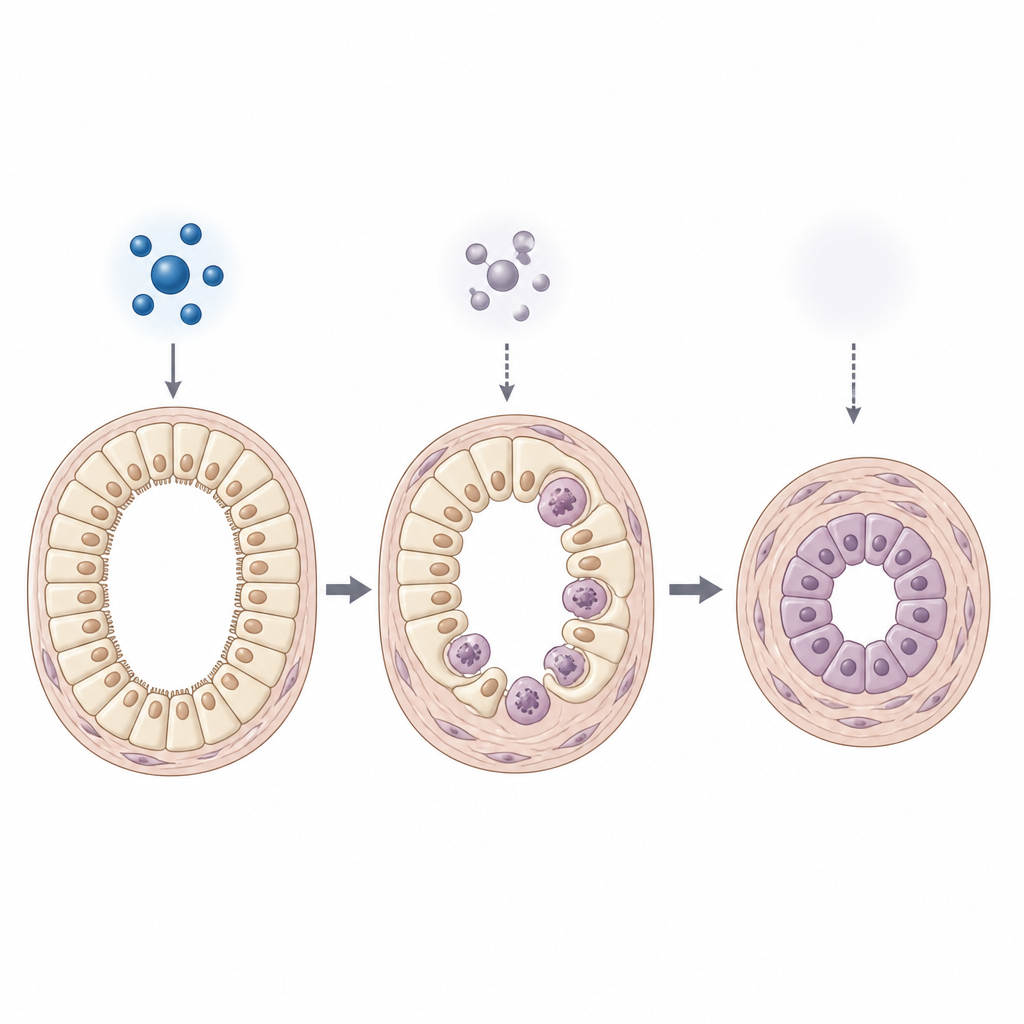
How hormone loss reshapes the prostate
The prostate depends on male hormones to maintain its size and structure. When hormones are removed, either by drugs or surgery, the organ regresses to a fraction of its original mass. In mice, the researchers tracked this process over several weeks. They saw that the tubes that make up the prostate lost many cells, their inner space narrowed, and the remaining lining cells became shorter. Cell loss happened through two routes: sheets of cells peeled off into the tube and many individual cells underwent controlled self-destruction, a process known as apoptosis.
Epithelial cells act as unexpected cleaners
Dead and dying cells cannot simply be left in place; they need to be cleared to avoid inflammation and blockage. Instead of immune cells doing most of the work, the team found that the prostate’s own lining cells, called epithelial cells, were the main cleaners. Using detailed microscopy, they saw these cells engulf apoptotic neighbors and digest them inside specialized compartments. This engulfment, known as efferocytosis, occurred in timed waves that matched bursts of cell death, and at peak times about one in ten epithelial cells were actively digesting corpses in a given duct.
A metabolic switch links cleanup to cell identity
Engulfing and digesting entire cells is energetically costly. By measuring many small molecules in the prostate, the researchers discovered that, during active cleanup, epithelial cells shifted their metabolism toward faster sugar breakdown, a pattern often seen in hard-working or stressed cells. Levels of certain building blocks and energy carriers rose, while key components of the usual energy cycle fell, pointing to a temporary but intense demand for fuel. This surge in sugar use produced more lactate, which in turn was linked to chemical tags appearing on histone proteins that help control which genes are turned on.
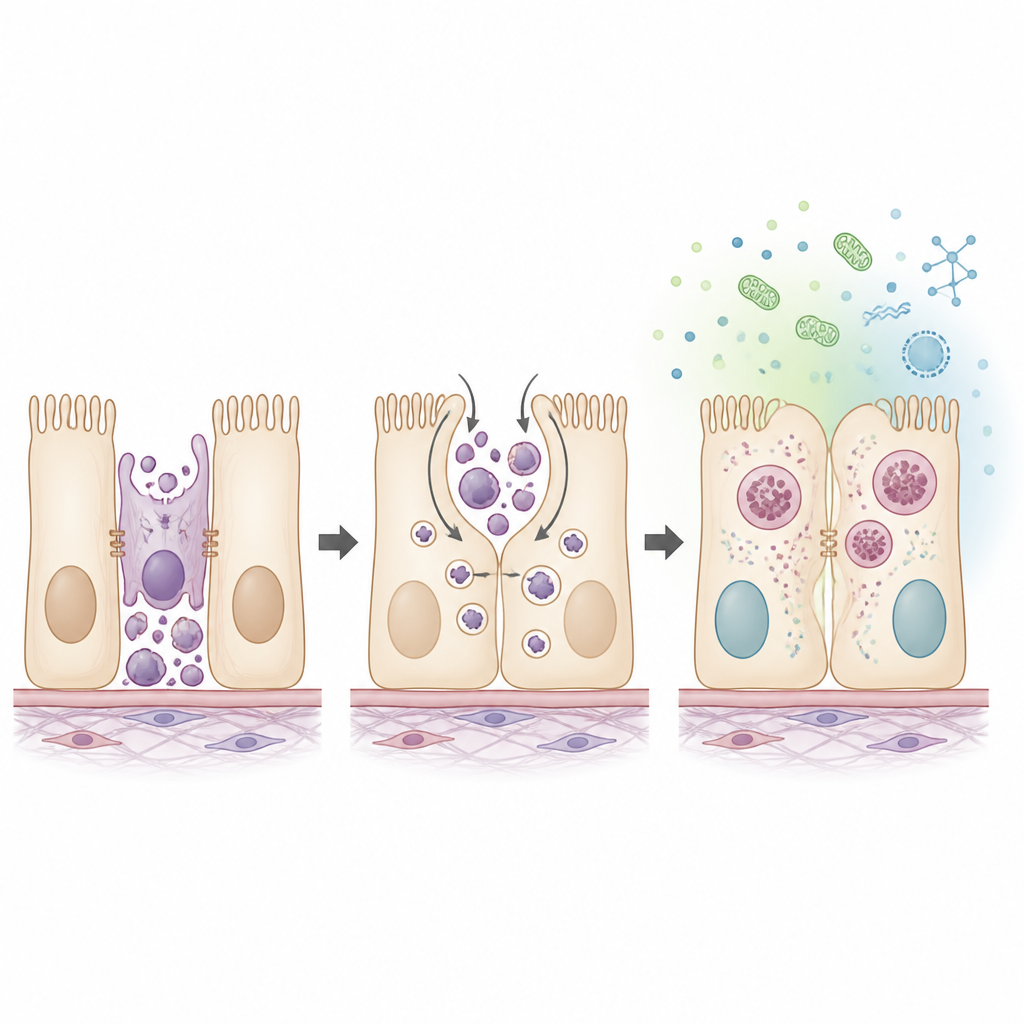
From cleaners to flexible “progenitor-like” cells
These lactate-linked tags were enriched near genes involved in cell recycling, survival, and markers of a progenitor-like luminal state, a flexible condition that can give rise to new epithelial cells. To test whether engulfment itself was necessary for these changes, the team engineered mice whose prostate epithelial cells expressed a mutant protein that blocks recognition of dying cells. In these animals, dead cells were less often engulfed and more often pushed out, the prostate shrank less, the usual metabolic changes were blunted, and a key progenitor marker on the cell surface failed to rise to normal levels. When hormones were later restored, these prostates also showed slightly reduced regrowth.
What this means for cancer and tissue repair
The findings suggest that, in the regressing prostate, the act of swallowing and digesting dying neighbors helps surviving epithelial cells adopt a more adaptable state that supports later regeneration. This link between cleanup, metabolism, and cell identity may also help explain why some prostate cancers become more aggressive after hormone-blocking therapy: similar reprogramming may occur in tumor cells. Beyond the prostate, any tissue that experiences waves of cell death during injury or repair might use a comparable process, where non-immune cells that clear corpses are nudged into new roles that help the tissue adapt and rebuild.
Citation: Graham-Paquin, AL., Saini, D., Viala, S. et al. Apoptotic cell clearance triggers epithelial fate reprogramming during prostate regression. Cell Death Dis 17, 462 (2026). https://doi.org/10.1038/s41419-026-08565-9
Keywords: prostate regression, apoptotic cell clearance, epithelial plasticity, androgen deprivation, efferocytosis