Clear Sky Science · en
Epigenetic remodeling via HDAC6 inhibition amplifies anti-tumoral immune responses in myeloid leukemia cells
Turning the Body’s Defenses Against Leukemia
Standard treatments for aggressive blood cancers like acute myeloid leukemia often rely on harsh chemotherapy, which can be difficult to tolerate and still fail to prevent relapse. This study explores a different angle: instead of attacking cancer cells directly, it tweaks how leukemia cells interact with the immune system and with chemotherapy drugs, aiming to make existing treatments both stronger and more precise.
Why a Single Enzyme Matters
At the heart of this work is HDAC6, a protein that helps control how other proteins are packaged and function inside cells. Unlike many related enzymes that are essential for normal life, HDAC6 can be removed in mice without obvious harm, making it an attractive drug target. The authors examined large patient databases and found that higher HDAC6 levels were linked to worse survival in people with myeloid leukemias, but not in certain lymphoid leukemias. When they used genetic tools to delete HDAC6 in myeloid leukemia cell lines and transplanted those cells into mice, the cancers grew more slowly in living animals—even though, in the lab dish, the same cells divided and formed colonies almost as well as untreated cells. This contrast suggested that HDAC6 might be shaping how leukemia cells behave within the body’s wider environment, especially the immune system.
Hidden Messages Inside Cancer Cells
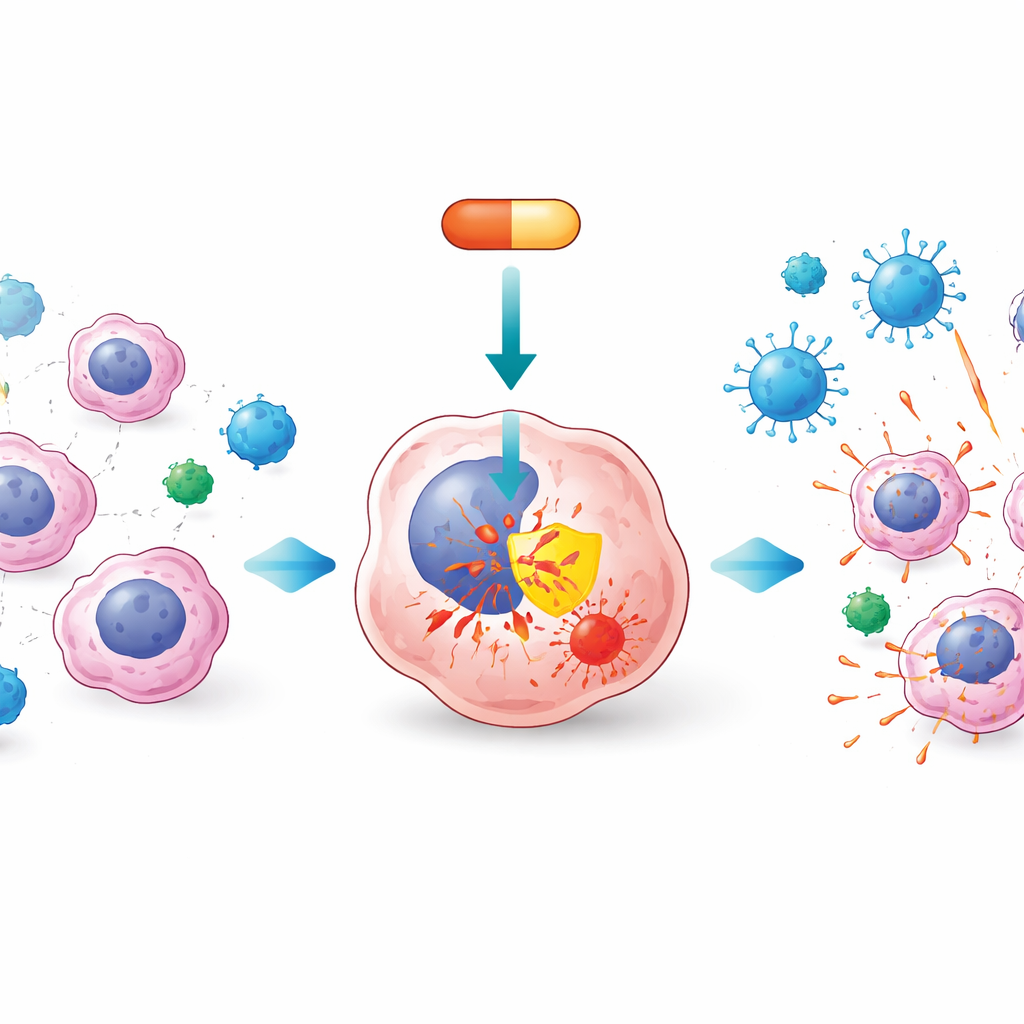
To uncover what changes when HDAC6 is blocked, the team took a broad “multi-omics” look at leukemia cells: they cataloged thousands of proteins inside the cells and in the material they secreted, and mapped which regions of DNA became more accessible for gene activity. They saw a striking rise in proteins linked to cellular recycling centers called lysosomes, including LAMP1, LAMP2 and an enzyme named RNase T2. These changes were accompanied by increased openness of the DNA regions encoding those proteins, pointing to a form of epigenetic remodeling—chemical adjustments that alter gene activity without changing the genetic code itself. Many of the altered proteins and pathways were tied to immune signaling and inflammatory responses, hinting that HDAC6 normally helps leukemia cells dampen the attention they receive from the immune system.
A Tumor-Suppressing Signal Gets Turned Back On
Among the altered proteins, RNase T2 stood out. This enzyme has previously been described as a tumor suppressor that can act like a distress signal, helping recruit and activate immune cells in the tumor’s neighborhood. In multiple myeloid leukemia models lacking HDAC6, RNase T2 levels rose both inside the cells and in their surroundings, and putting HDAC6 back into these cells pushed RNase T2 back down. Importantly, when the researchers tested lymphoid leukemia cells, blocking HDAC6 did not boost RNase T2 in the same way, underscoring that this effect is specific to the myeloid lineage. Analyses of patient data supported this pattern: people with myeloid leukemia who had a low HDAC6-to–RNase T2 ratio tended to live longer, while the opposite trend appeared in lymphoid leukemia. Together, these findings suggest that HDAC6 helps myeloid leukemia cells silence a natural alarm system that would otherwise call in immune help.
Waking Up T Cells and Boosting Chemotherapy
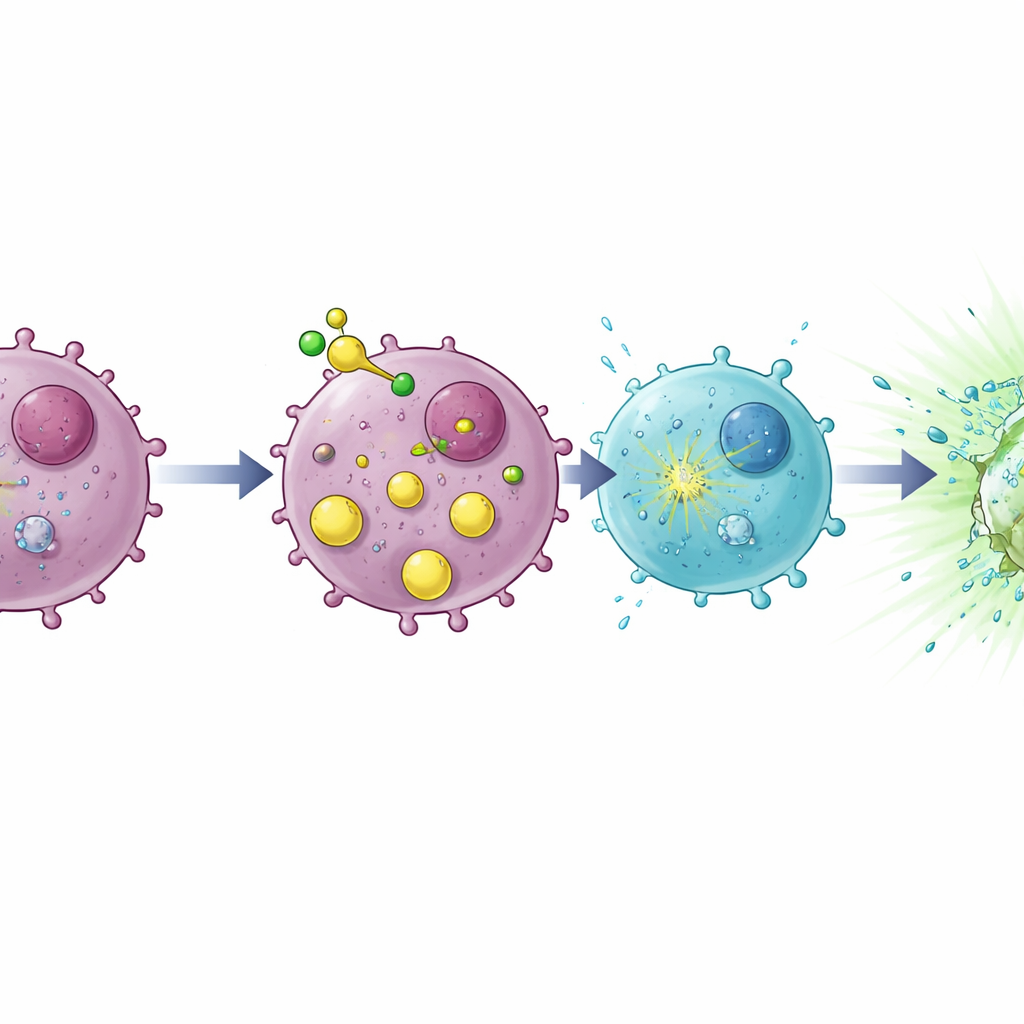
The team then asked whether blocking HDAC6 could actually sharpen the attack by immune cells known as CD8+ T cells, which are key players in killing cancer cells. In a mouse model of myeloid leukemia with a working immune system, treatment with an HDAC6-targeting drug led to more active bone-marrow T cells that produced higher levels of killing-related molecules and showed stronger signs of releasing toxic granules toward cancer cells. In companion lab experiments, T cells exposed to leukemia cells pretreated with the HDAC6 inhibitor became more aggressive and killed more cancer cells, even when they were only exposed to the treated cells’ supernatant. Although drug treatment alone showed only a modest trend toward slowing leukemia in mice, these results point to HDAC6 blockade as an immune “primer” that makes T cell responses more effective.
Making Standard Drugs Work Harder
Because HDAC6 inhibitors alone were not dramatically toxic to leukemia cells, the researchers looked for drug partners that might work better in combination. A focused screen revealed that standard chemotherapy agents used in myeloid leukemia, particularly Cytarabine and Clofarabine, became more potent when HDAC6 was removed or inhibited. Leukemia cells lacking HDAC6 were more prone to undergo programmed cell death when exposed to these drugs, and showed signs of increased DNA damage responses. When the HDAC6 inhibitor Ricolinostat was combined with Cytarabine or Clofarabine across many cell lines and patient-derived samples, myeloid leukemia cells consistently showed strong synergy, whereas lymphoid leukemia cells and healthy control cells were far less affected. Molecular analyses suggested that impaired DNA repair and altered stress signaling help explain this selective vulnerability.
What This Could Mean for Future Treatments
Overall, the study paints HDAC6 as a kind of switch that myeloid leukemia cells use to stay hidden from the immune system and resist chemotherapy. Turning that switch off with selective inhibitors appears to reawaken an internal alarm signal (through RNase T2 and lysosome-related changes), making the cancer cells more visible and vulnerable to CD8+ T cells and to DNA-damaging drugs such as Cytarabine and Clofarabine. Because HDAC6 is not essential for normal development and early inhibitors have shown manageable safety profiles, combining HDAC6 blockers with established chemotherapies or emerging immunotherapies could offer a more targeted, less toxic way to treat myeloid leukemias, pending confirmation in carefully designed clinical trials.
Citation: Schliehe-Diecks, J., Tu, JW., Stachura, P. et al. Epigenetic remodeling via HDAC6 inhibition amplifies anti-tumoral immune responses in myeloid leukemia cells. Cell Death Dis 17, 300 (2026). https://doi.org/10.1038/s41419-026-08541-3
Keywords: myeloid leukemia, epigenetic therapy, immune activation, HDAC6 inhibition, chemosensitization