Clear Sky Science · en
RNA-seq at different stages of human pancreatic β cell differentiation reveals proliferation dynamics and SMAD9 in directing β cell fate
Why this research matters for diabetes and stem cell therapy
Diabetes occurs when the pancreas can no longer provide enough working insulin-producing beta cells. Scientists are learning to grow replacement beta-like cells from stem cells, but these lab-grown cells still do not fully match the real thing. This study uses a powerful gene-reading approach to watch, in detail, how human stem cells gradually turn into insulin-secreting beta-like cells. By doing so, it uncovers how these cells stop dividing, switch on hormone-handling programs, and reveals a previously overlooked gene, SMAD9, as a key director of beta cell identity and function.
Following the life story of future insulin-producing cells
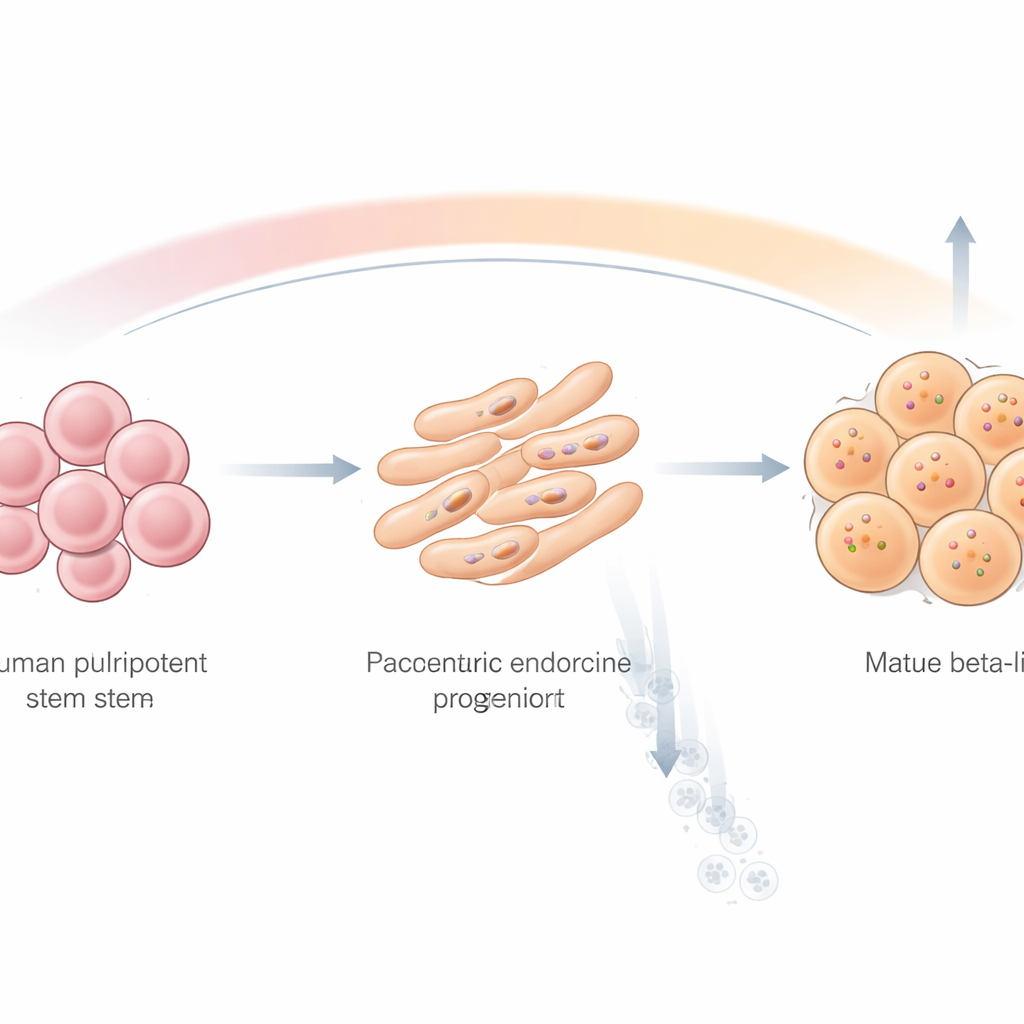
The researchers started with human pluripotent stem cells, which can become almost any cell type in the body. Using established recipes, they guided these cells through several stages that mimic human pancreas development: first into pancreatic progenitors, then endocrine progenitors, and finally into beta-like cells that release insulin. At crucial points in this journey—day 0 (stem cells), day 20 (endocrine progenitors), and day 35 (beta-like cells)—they captured a snapshot of which genes were switched on or off using RNA sequencing, a technique that reads the cell’s active genetic instructions. By comparing many independent stem cell lines, they focused on changes that were consistent and therefore likely to reflect core features of human beta cell maturation rather than quirks of any single cell line.
From busy builders to steady specialists
One of the clearest trends was a major slowdown in the cell cycle—the internal machinery that drives cell division. Early on, many genes that promote DNA copying, chromosome separation, and cell division were highly active, and most cells were in phases of the cycle that prepare for or carry out division. As cells moved into endocrine progenitor and then beta-like stages, these cell division genes dropped sharply, and flow cytometry showed that a growing majority of cells entered a resting phase. Markers such as KI67, KIF14, E2F7, SKA1 and SKA3, which are closely tied to the mechanics of mitosis, were strongly reduced. This pattern mirrors what is seen in genuine human beta cells in the body: as they mature and become better at sensing glucose and releasing insulin, they largely stop multiplying.
Switching on hormone handling and turning down nerve-like programs
Beyond cell division, the gene activity maps showed a coordinated functional shift. Some sets of genes stayed steadily higher in both endocrine progenitors and beta-like cells, especially those linked to responding to signals and controlling development. Others rose specifically as cells progressed from day 20 to day 35. These included genes involved in responding to environmental cues and regulating hormone levels, in line with cells becoming more capable of producing and secreting insulin. At the same time, a different group of genes—those associated with nerve cell development—declined. Pancreatic islet cells share certain features with neurons, but this study suggests that, by day 35, the emerging beta-like cells are dialing down a nerve-like program in favor of a more endocrine-focused identity.
Finding the genetic conductors, with SMAD9 center stage
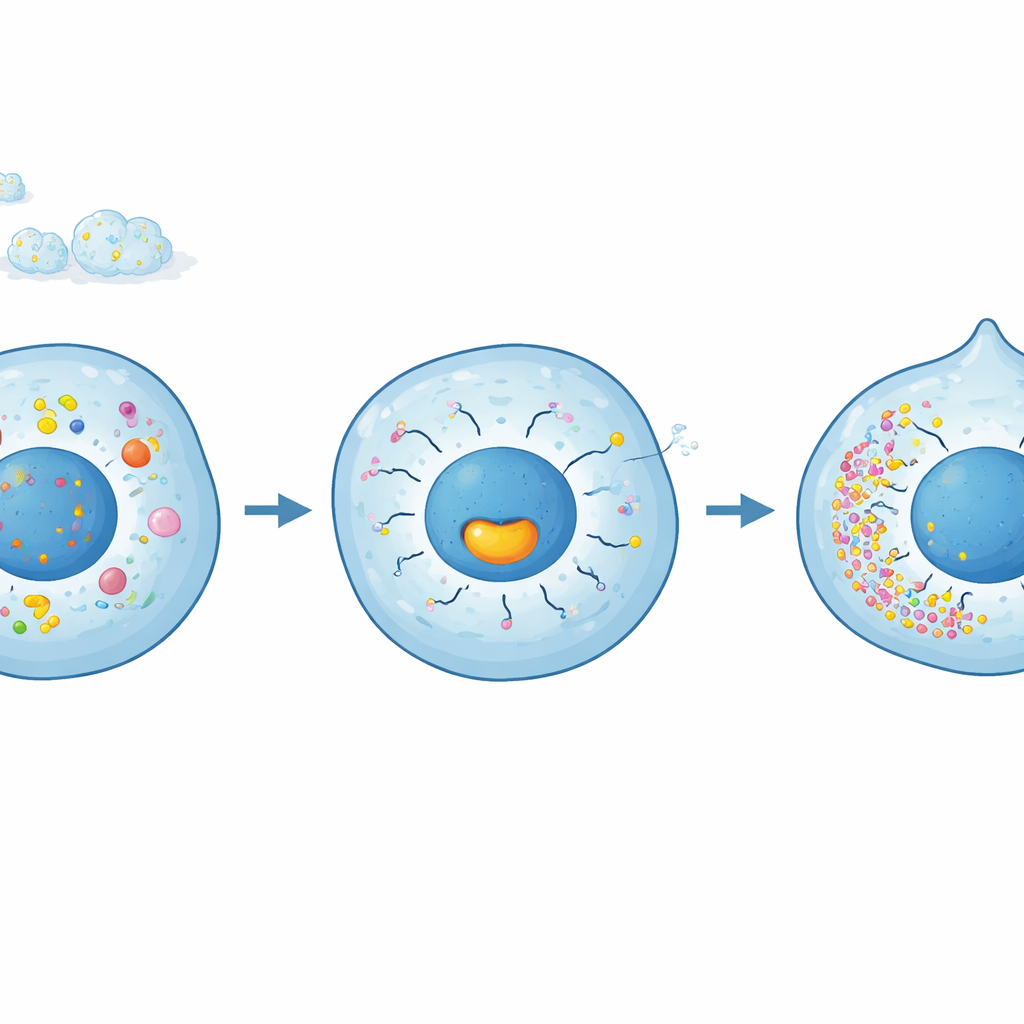
Because transcription factors act as master switches that control many other genes, the team combed through their data for such regulators that changed in a distinctive way during the transition from endocrine progenitor to beta-like cell. Among dozens of candidates, SMAD9 stood out: its activity rose strongly between day 20 and day 35 in both stem cell systems. When the researchers reduced SMAD9 levels in endocrine progenitors using targeted RNA interference and allowed differentiation to continue, the resulting beta-like cells expressed markedly less of crucial beta cell markers, including insulin itself and key identity genes such as PDX1 and NKX6.1. These cells also contained less total insulin. Genome-wide analysis of SMAD9-depleted beta-like cells showed reduced expression of many genes known to underlie beta cell identity and insulin release, including several ion channels and other factors required for proper glucose-stimulated secretion.
SMAD9’s influence extends to mature human beta cells
To test whether SMAD9 also matters after development, the team turned to an established human beta cell line that already makes and secretes insulin in response to glucose. Knocking down SMAD9 in these cells again lowered the levels of insulin and beta cell identity proteins. When challenged with high glucose, the SMAD9-depleted cells failed to mount a strong insulin secretory response, even though their overall insulin stores were largely unchanged. Publicly available datasets of human islets supported these findings: higher SMAD9 levels were associated with greater insulin secretion and a higher proportion of beta cells, and SMAD9 expression was enriched in beta cells compared with other islet cell types.
What this means for future diabetes therapies
Viewed together, the results portray a two-part story. First, as stem cell–derived pancreatic cells mature into beta-like cells, they shut down their cell division machinery and ramp up hormone-handling genes, echoing how beta cells naturally develop in humans. Second, among the many genes changing during this period, SMAD9 emerges as a crucial coordinator: it helps endocrine progenitors acquire beta cell identity, supports the expression of multiple beta cell genes, and is needed for proper insulin release in mature beta cells. While more work is required to unravel exactly how SMAD9 interacts with other signaling pathways, this study provides a rich catalog of gene and transcription factor changes during late-stage human beta cell development and highlights SMAD9 as a promising target for improving stem cell–based therapies for diabetes.
Citation: Lim, E.X.H., Ong, G.J.X., Ang, D.A. et al. RNA-seq at different stages of human pancreatic β cell differentiation reveals proliferation dynamics and SMAD9 in directing β cell fate. Cell Death Dis 17, 302 (2026). https://doi.org/10.1038/s41419-026-08529-z
Keywords: pancreatic beta cells, stem cell differentiation, SMAD9, insulin secretion, diabetes research