Clear Sky Science · en
Mesenchymal stromal cells modulate survival and regeneration of human hematopoietic stem cells via PGE2/cAMP signaling
Protecting the Body’s Blood Factory
Radiation and chemotherapy save lives, but they also damage the bone marrow “factory” that constantly makes new blood cells. When the stem cells that power this factory are harmed, patients risk severe anemia, infections, and even long-term marrow failure. This study explores how natural helper cells in the bone marrow, and a drug strategy that mimics them, can shield these vital stem cells from DNA-damaging treatments and help them bounce back.
Hidden Helpers in the Bone
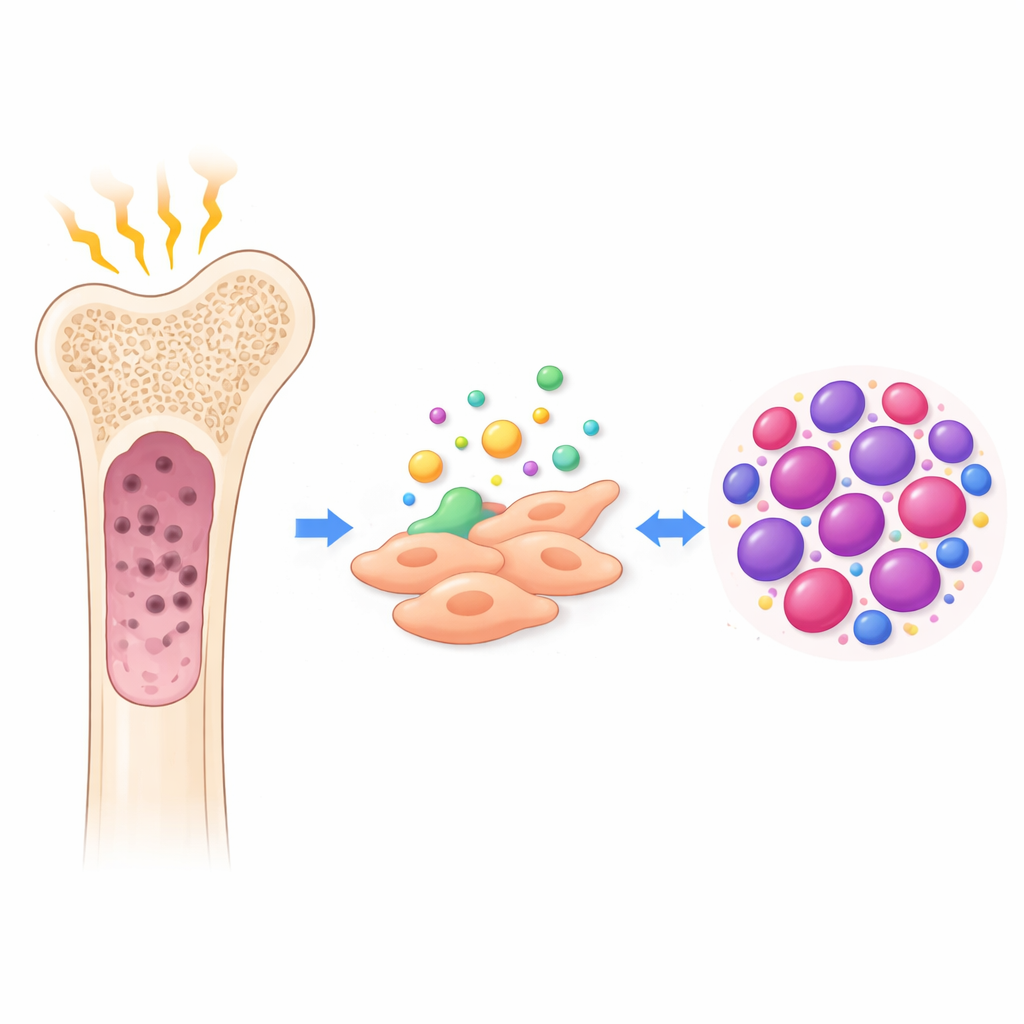
Deep inside our bones, blood-forming stem and progenitor cells quietly renew the entire blood system. They do not work alone: they live in close contact with mesenchymal stromal cells, a type of support cell that shapes their local environment. Earlier animal studies suggested that signals from this niche can help stem cells survive radiation, but similar benefits were hard to reproduce with human cells. The authors therefore built a human-focused model that placed purified human blood stem cells together with stromal cells and exposed them to ionizing radiation, mimicking what happens during cancer therapy.
How Support Cells Rescue Stem Cells
When human stem cells were irradiated on their own, many underwent programmed cell death and lost their ability to regenerate blood in mice. In striking contrast, stem cells kept in contact with stromal cells were largely protected: their mitochondria, the cell’s powerhouses, stayed functional, fewer cells died, and they engrafted far better when transplanted into immunodeficient mice. Gene activity analyses showed that stromal contact switched on a survival- and “stemness”-oriented program in the blood stem cells, while dialing down stress and inflammatory responses. A key feature of this shift was activation of a molecular switch called CREB, which turns on genes whenever the internal messenger molecule cAMP is elevated.
A Fatty Messenger at the Center of the Story
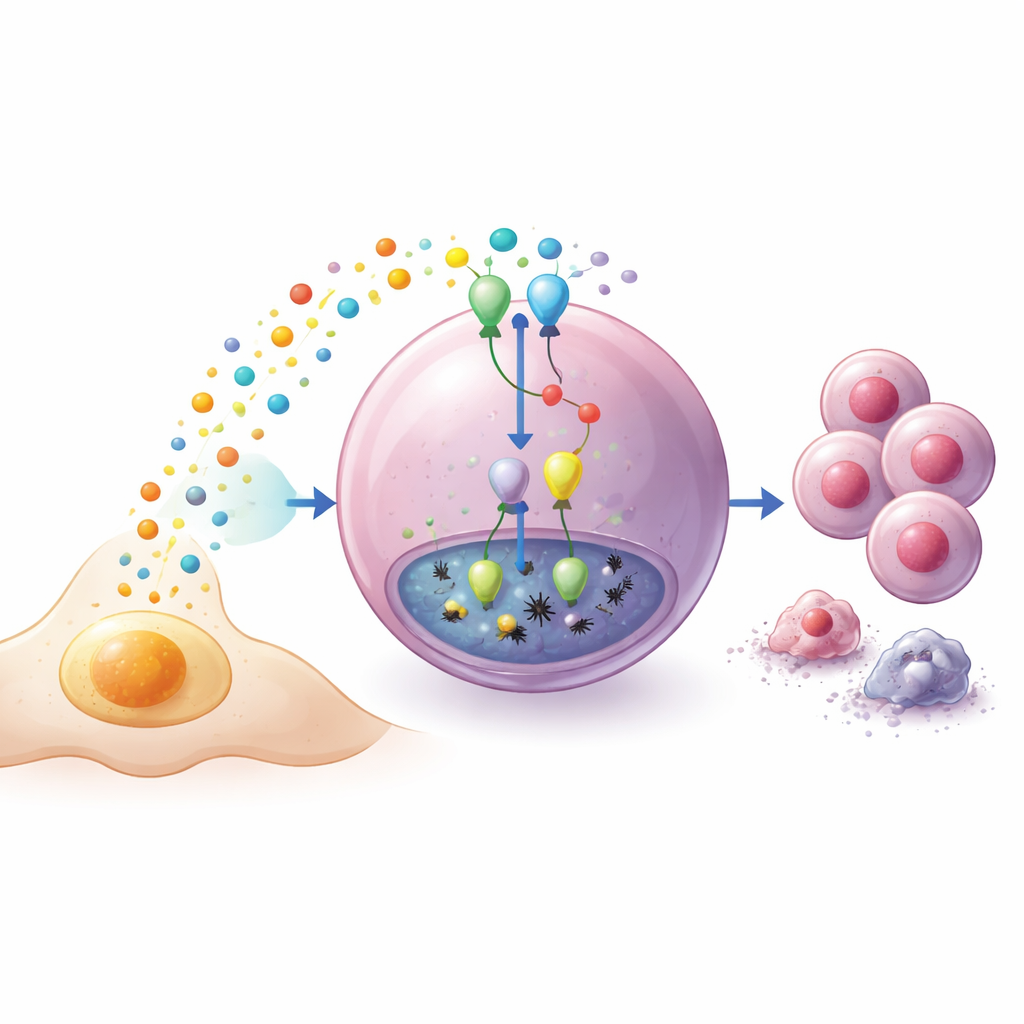
To find the upstream trigger, the researchers searched for substances known to raise cAMP that stromal cells can secrete. They pinpointed prostaglandin E2, a fatty molecule already known to influence blood stem cells in animals. Stromal cells, but not the stem cells themselves, released large amounts of this messenger. Blocking its receptors on human stem cells erased the protective effect, showing that prostaglandin E2 is a main signal through which stromal cells boost cAMP and activate CREB. Interestingly, this natural signal was especially effective at rescuing the most dormant, “resting” stem cells, which are believed to be crucial for long-term marrow health.
Drugs That Mimic Nature’s Signal
The team then asked whether they could bypass stromal cells entirely and activate the same protective pathway with small molecules. They combined forskolin, which stimulates cAMP production, with IBMX, which prevents its breakdown. This drug duo strongly activated CREB in irradiated human stem cells, reduced cell death in both resting and dividing cells, and preserved healthy mitochondrial function. When treated cells were transplanted into mice, they produced much higher levels of human blood cells and maintained their ability to repopulate new hosts, a hallmark of true stemness. At the molecular level, cAMP signaling toned down key death-promoting factors and helped stabilize protective proteins such as MCL1 and BCL-XL, shifting the balance decisively toward survival.
What This Could Mean for Patients
From a lay perspective, the study identifies a built-in rescue system in the bone marrow and shows how to amplify it with drugs. By copying how stromal cells use prostaglandin E2 to raise cAMP and activate CREB, forskolin and IBMX temporarily harden human blood stem cells against DNA damage. Although this boost does not fully overcome all long-term effects of radiation in living animals, it significantly preserves the cells’ regenerative power after ex vivo exposure. In the future, carefully timed activation of this pathway could help patients better tolerate intensive treatments or improve the safety and success of gene-editing procedures that deliberately cut DNA in these critical stem cells.
Citation: Muddineni, S.S.N.A., Katz-Even, C., Zipin-Roitman, A. et al. Mesenchymal stromal cells modulate survival and regeneration of human hematopoietic stem cells via PGE2/cAMP signaling. Cell Death Dis 17, 307 (2026). https://doi.org/10.1038/s41419-026-08502-w
Keywords: bone marrow, hematopoietic stem cells, mesenchymal stromal cells, radiation protection, cAMP signaling