Clear Sky Science · en
ZIC2 affects oral squamous cell carcinoma stemness by regulating glycerophosphocholine metabolism via LYPLA2
Why this mouth cancer study matters
Oral cancer affects how we eat, speak, and socialize, yet survival rates have barely improved in decades. Many tumors come back after surgery, radiation, or chemotherapy because a small group of hardier cells survives treatment. This study explores how a single control protein inside these cells may help mouth tumors stay aggressive and resistant, and points to a new way to weaken them by disrupting their use of certain fat-related molecules.
A closer look at stubborn tumor cells
Not all cancer cells are the same. A small fraction, often called cancer stem cells, can renew themselves and seed new tumors even after therapy. In oral squamous cell carcinoma, a common mouth cancer, these cells are linked to relapse and spread. The researchers set out to find which control proteins are tied to this stem-like behavior. Using large genetic databases from cancer patients, they identified a protein called ZIC2 that was unusually active in tumor tissue compared with healthy mouth tissue and whose high levels were linked with poorer patient survival.
The key protein that drives tumor behavior
After flagging ZIC2 in patient data, the team tested its role directly in oral cancer cell lines grown in the lab and in mice. When they reduced ZIC2 levels, cancer cells grew more slowly, moved less, invaded less, and formed fewer free-floating spheres, a hallmark of stem-like cells. These ZIC2-low cells also became easier to kill with common drugs such as cisplatin and 5-fluorouracil. When ZIC2 was boosted, the opposite occurred: growth, movement, invasion, and sphere formation all increased, and cells became less sensitive to chemotherapy. In mice, blocking ZIC2 or its downstream partner shrank tumors and reduced cell division inside them.
How fat-related chemistry enters the story
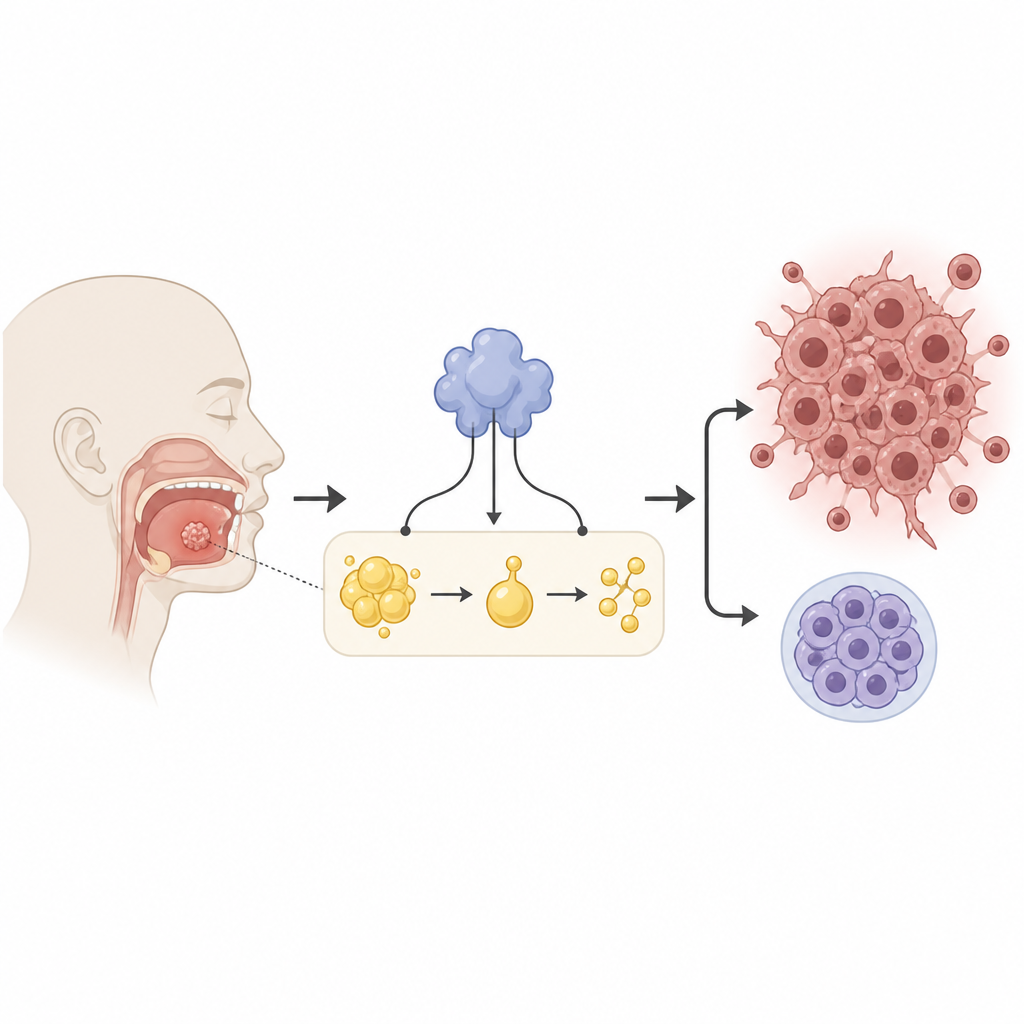
To understand how ZIC2 reshapes cancer cell behavior, the scientists looked at which genes and small molecules changed when ZIC2 was lowered. Pathway analysis pointed toward lipid metabolism, the chemistry of fats and related compounds that cells use for energy, membranes, and signaling. One molecule, glycerophosphocholine (GPC), stood out: its levels fell when ZIC2 was knocked down and rose again when ZIC2 was restored. Adding extra GPC back to ZIC2-deficient cells increased their ability to form spheres and raised levels of stemness markers such as OCT4 and Nanog, suggesting that GPC helps maintain the toughest, most renewing tumor cells.
The LYPLA2 link between control protein and metabolism
Digging deeper, the researchers traced how ZIC2 connects to GPC. They examined enzymes that process GPC and found that one, called LYPLA2, dropped sharply when ZIC2 was reduced while other related enzymes changed little. LYPLA2 itself was more abundant in patient tumor samples than in nearby normal tissue. When LYPLA2 was silenced, oral cancer cells lost growth, movement, invasion, and sphere-forming capacity. Restoring LYPLA2 in cells lacking ZIC2 rescued much of this aggressive behavior. In mice, chemical inhibition of LYPLA2 slowed tumor growth and decreased the fraction of actively dividing cells, especially at higher doses, underscoring its role as a functional middleman between ZIC2 and the lipid pathway.
What this means for future treatment
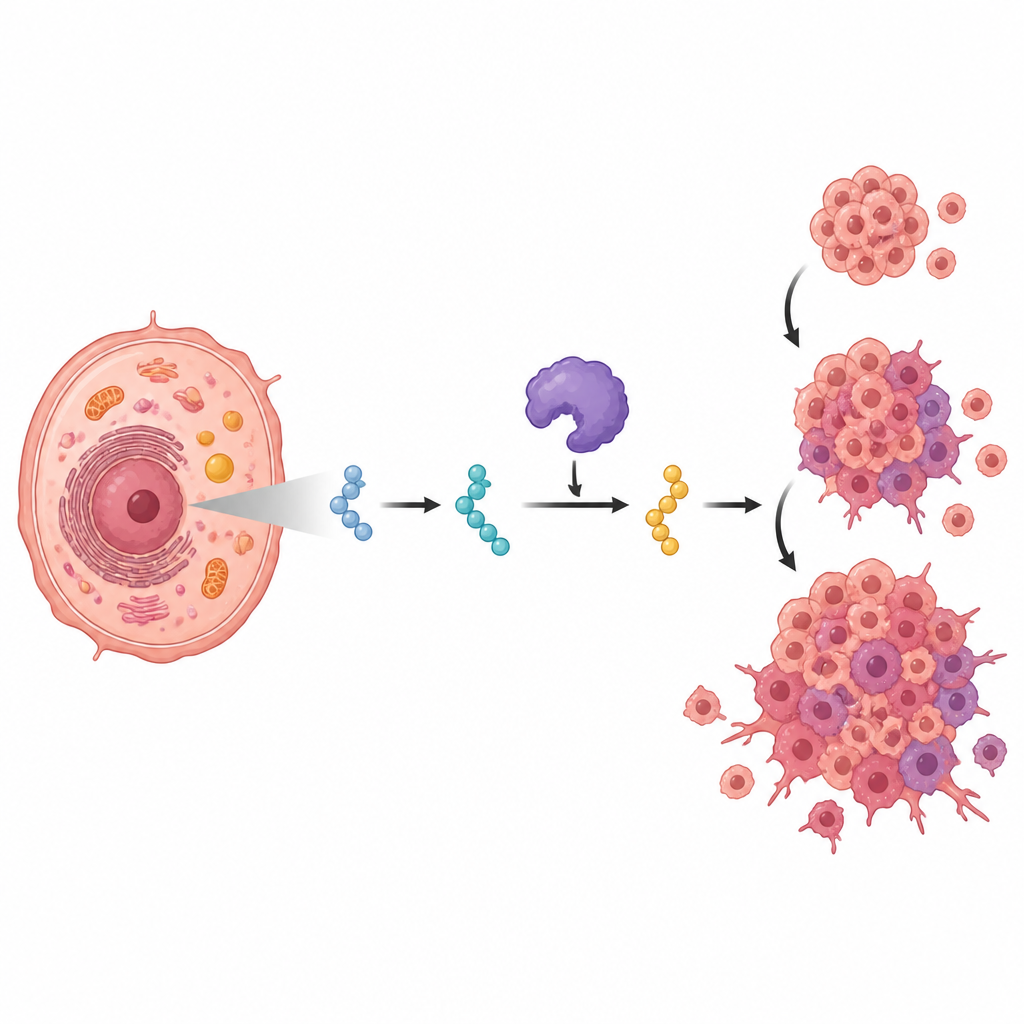
Together, these findings outline a chain of events: ZIC2 raises LYPLA2, LYPLA2 shapes GPC metabolism, and GPC in turn supports the stem-like traits that make oral tumors grow, spread, and resist drugs. For a layperson, this can be seen as discovering a master switch that helps the most stubborn mouth cancer cells tap into a fat-related fuel system. By targeting ZIC2, LYPLA2, or the GPC pathway, future therapies may be able to drain this fuel, making tumors less aggressive and more responsive to existing treatments, and potentially improving outcomes for patients with oral cancer.
Citation: Li, S., Ma, X., Li, Y. et al. ZIC2 affects oral squamous cell carcinoma stemness by regulating glycerophosphocholine metabolism via LYPLA2. Cell Death Dis 17, 486 (2026). https://doi.org/10.1038/s41419-026-08483-w
Keywords: oral squamous cell carcinoma, cancer stem cells, lipid metabolism, ZIC2, LYPLA2