Clear Sky Science · en
Ataxia-telangiectasia mutated kinase inhibition overcomes gemcitabine resistance in intrahepatic cholangiocarcinoma via DNA ligase I-dependent repair vulnerability
Why this study matters for patients
Cancers of the bile ducts inside the liver, known as intrahepatic cholangiocarcinomas, are difficult to treat and often resist standard chemotherapy. Many patients receive the drug gemcitabine, sometimes with cisplatin, yet tumors frequently learn to survive these medicines. This study explores a new way to make stubborn tumors vulnerable again by attacking the way cancer cells repair damaged DNA, potentially opening a path to more effective treatments for patients who have run out of options.
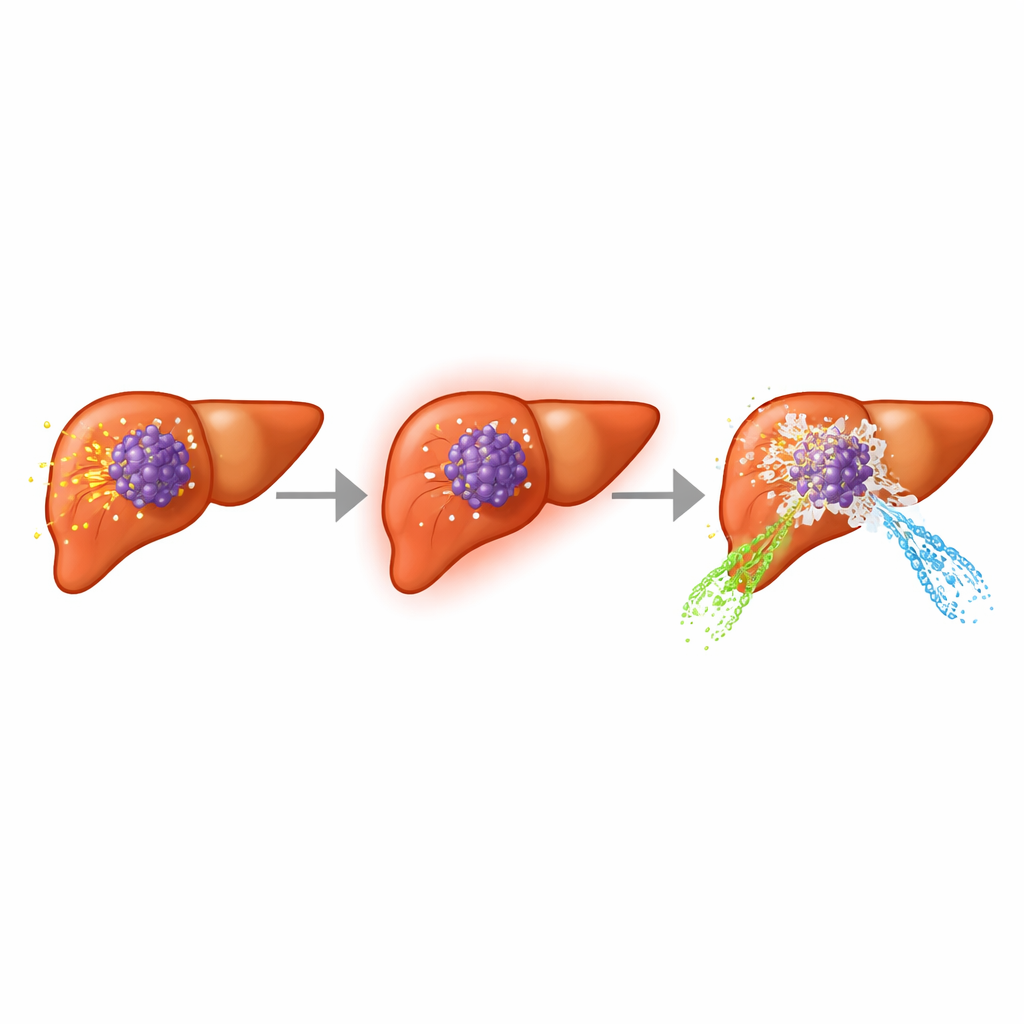
A hidden weakness in stubborn tumors
The researchers focused on tumor cells that had already become resistant to gemcitabine, mimicking what happens in patients whose disease stops responding to treatment. These cancer cells depend heavily on internal repair systems that fix dangerous breaks in their DNA, allowing them to withstand further damage from chemotherapy or radiation. One key controller of these repair systems is a protein called ATM, a kind of cellular alarm switch that coordinates how cells respond when their DNA is broken. The team asked a simple but powerful question: if they blocked this switch, could they expose a weakness unique to gemcitabine-resistant cells while leaving more sensitive cells relatively unharmed?
Blocking the repair switch to hit cancer harder
Using cell lines derived from intrahepatic bile duct tumors, the team compared gemcitabine-sensitive “parent” cells with their gemcitabine-resistant counterparts. They treated both types with cisplatin, a standard DNA-damaging drug, and then added AZD0156, an experimental medicine that turns off ATM. In resistant cells, even tiny amounts of AZD0156 dramatically boosted the killing power of cisplatin, slashing cell survival and preventing colonies from regrowing. Sensitive parent cells, in contrast, showed much less extra harm from adding the ATM blocker. The same pattern appeared when they replaced cisplatin with radiation: combining radiation with AZD0156 led to much more cell death and long‑term growth suppression in resistant cells than in parent cells, suggesting a selective vulnerability.
How broken repair leads to cancer cell death
To understand what was happening inside the cells, the scientists looked at molecular signs of DNA damage and cell suicide. When cisplatin or radiation was combined with ATM inhibition, resistant cells accumulated large amounts of broken DNA that remained unrepaired, visible as intense nuclear signals marking double‑strand breaks. At the same time, key executioner proteins in the cell death pathway, known as caspases, were strongly activated, and a DNA‑associated protein called PARP was cut, all hallmarks of programmed cell death. Knocking down ATM genetically, without drugs, produced similar effects: resistant cells became more sensitive to cisplatin and even partly regained sensitivity to gemcitabine, confirming that loss of ATM activity itself was driving the vulnerability.
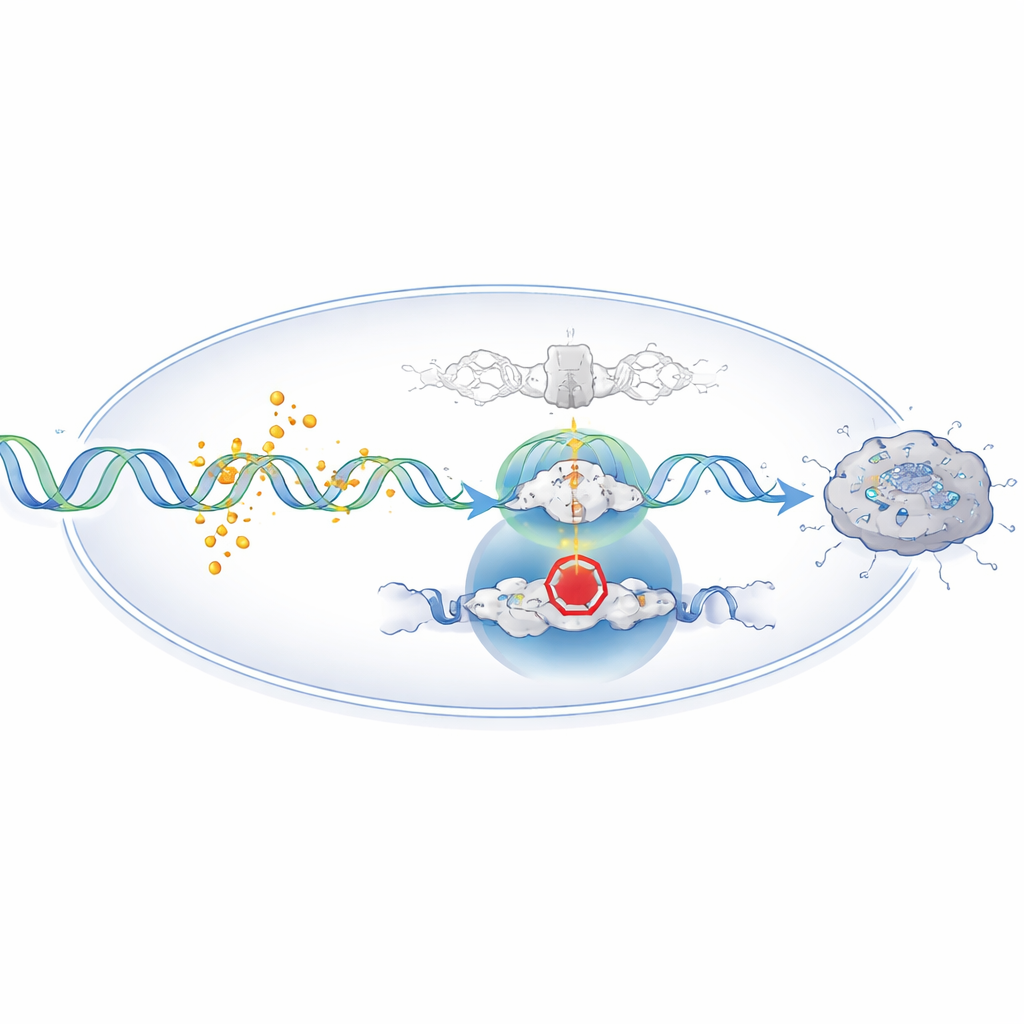
A missing repair tool tips the balance
The team then searched for what made resistant cells so dependent on ATM. They examined a group of genes involved in an alternative backup repair route for broken DNA ends. Among them, one stood out: DNA ligase I, a protein that helps seal broken DNA strands. In gemcitabine-resistant cells, especially under DNA‑damaging conditions, this ligase was consistently reduced at the protein level, suggesting that an entire repair pathway was weakened. When the researchers artificially restored DNA ligase I in resistant cells, those cells became less sensitive to the ATM inhibitor plus cisplatin combination. This indicated that the treatment was exploiting a specific repair defect—reduced ligase activity—creating a situation where blocking ATM pushed the already compromised cells beyond their ability to cope, a concept known as synthetic lethality.
Testing the strategy in living tumors
To see whether this approach might work in living organisms, the researchers implanted gemcitabine‑resistant bile duct cancer cells under the skin of mice. Once the tumors formed, the animals received cisplatin alone, AZD0156 alone, both drugs together, or only saline. Tumors exposed to both cisplatin and the ATM inhibitor were significantly smaller and lighter than those in mice given cisplatin alone. Tissue slices from these tumors showed more areas of damage and cell loss, while the treatment regimen remained tolerable for the animals. These results mirrored the dish‑based experiments and suggested that the combination can effectively curb growth of resistant tumors in a living system.
What this could mean for future care
Overall, the study reveals that some gemcitabine‑resistant bile duct cancers carry a hidden weakness in their DNA repair machinery, centered on reduced DNA ligase I. By turning off the ATM repair switch with drugs like AZD0156 and simultaneously using DNA‑damaging treatments such as cisplatin or radiation, this weakness can be exploited to selectively trigger cancer cell death. For patients, this work offers a mechanistic explanation for why certain resistant tumors might respond to specific drug‑and‑radiation combinations, and it points to DNA ligase I levels as a possible marker to identify who could benefit most. While clinical trials are still needed, the findings provide a strong scientific basis for testing ATM inhibitors as part of combination therapies to overcome drug resistance in cholangiocarcinoma.
Citation: Lin, SH., Pan, YR., Hung, TH. et al. Ataxia-telangiectasia mutated kinase inhibition overcomes gemcitabine resistance in intrahepatic cholangiocarcinoma via DNA ligase I-dependent repair vulnerability. Cancer Gene Ther 33, 289–300 (2026). https://doi.org/10.1038/s41417-026-01005-y
Keywords: cholangiocarcinoma, drug resistance, DNA repair, ATM inhibitor, cisplatin