Clear Sky Science · en
Treatment monitoring by biomarker analysis in a Phase I dose-expansion study of AZD2811 for relapsed/refractory small-cell lung cancer
Watching Cancer Through a Simple Blood Draw
For people facing small-cell lung cancer, one of the toughest challenges is knowing if treatment is working before the disease suddenly worsens. This study explores whether a new drug and a new way of tracking cancer through the blood can give doctors a faster, gentler window into how this fast-moving disease responds, without relying only on scans and hard-to-get tissue biopsies.
A Tough Lung Cancer That Spreads Fast
Small-cell lung cancer is a particularly aggressive form of lung cancer that tends to spread quickly and return after standard chemotherapy. Traditional tissue biopsies are difficult to repeat because the tumors often lie deep in the chest or in fragile organs. That makes it hard for doctors to see how the cancer changes over time or why some treatments stop working. The researchers behind this trial wanted to test both a targeted drug and a blood-based monitoring strategy that might help fill this gap.
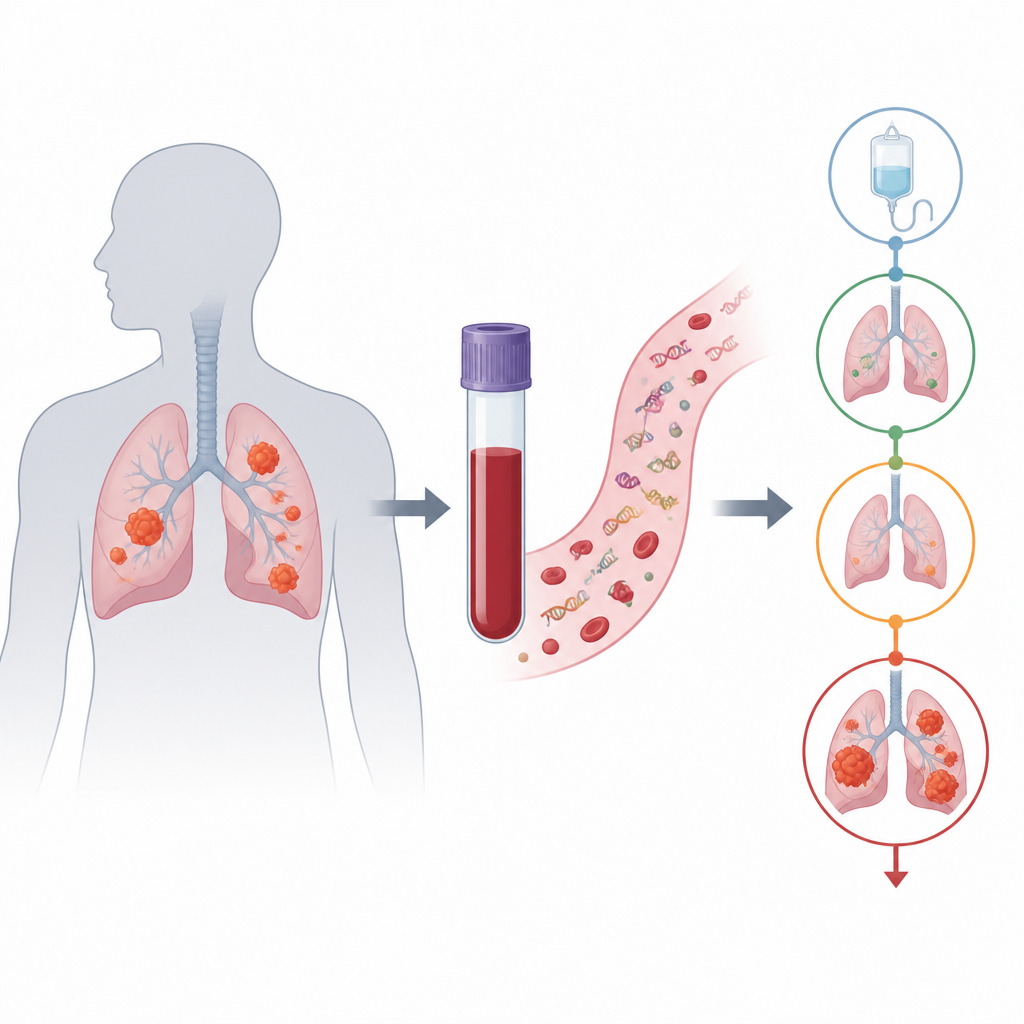
A Targeted Drug and a Carefully Watched Trial
The drug tested, called AZD2811, was designed to block a protein that helps cancer cells divide. It was given in a nanoparticle form, as an infusion once every three weeks, to 21 people whose small-cell lung cancer had already come back or resisted standard platinum-based chemotherapy. All participants had previously received the usual first-line treatment. In this dose-expansion phase of an early-stage trial, the goals were to understand safety, look for early signs of benefit, and see whether blood tests could reliably track the disease.
What the Treatment Achieved
In this small group, one person experienced a clear tumor shrinkage, and almost half had their disease stay stable for at least six weeks, with four people remaining stable for many months. The most frequent side effects involved the bone marrow, such as lowered white blood cells and anemia, which matched the drug’s expected impact on dividing cells and were mostly manageable with supportive care. Paired tumor samples taken before and shortly after treatment showed that the drug hit its intended target inside cancer cells and triggered signs of cell death, confirming that the treatment was biologically active even when visible tumor shrinkage was limited.
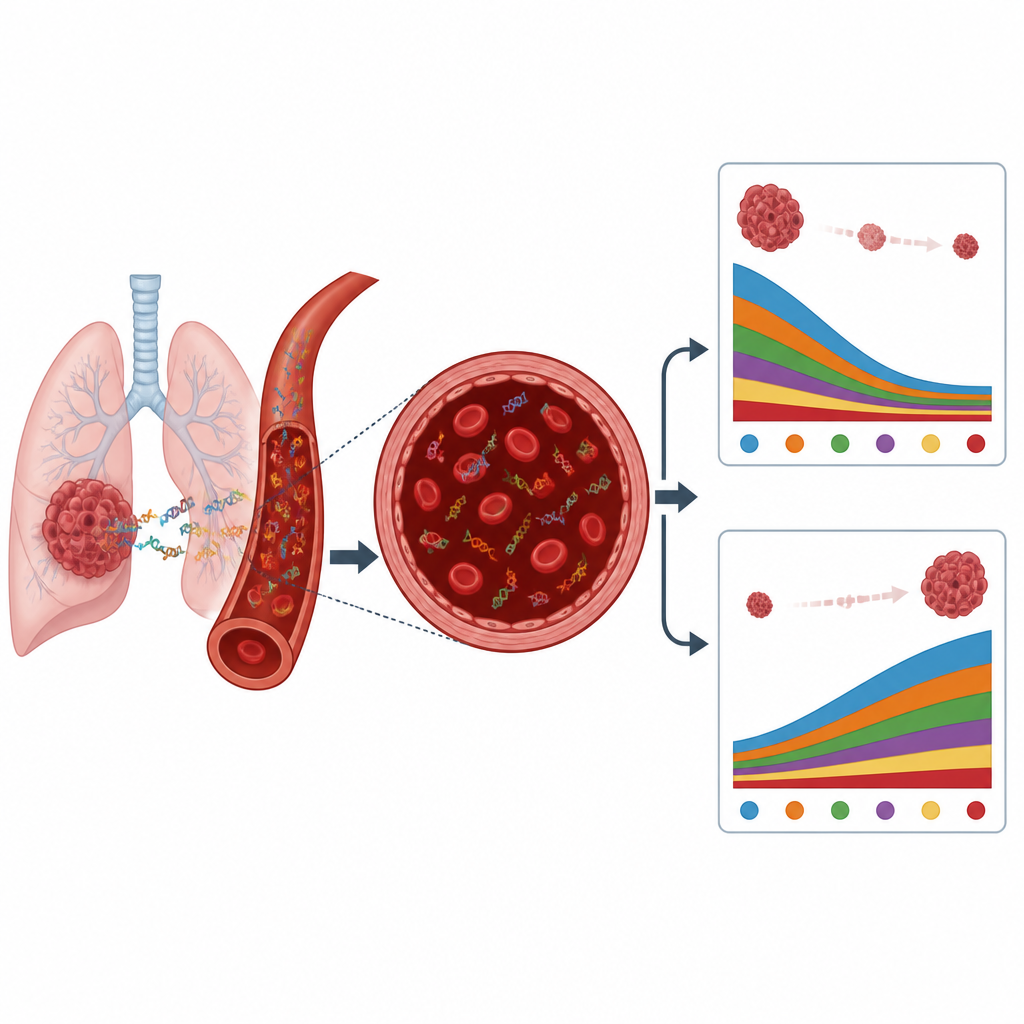
Reading Cancer’s Fingerprints in Blood
The most striking advances came from studying bits of tumor DNA and tumor cells circulating in the blood. The team repeatedly sampled blood from each patient and used highly sensitive methods to read genetic changes linked to small-cell lung cancer. They found that these blood markers closely matched what has been seen previously in tumor tissue and captured the complex mix of changes that drive this disease. People who started the trial with higher levels of tumor DNA or more tumor cells in their blood tended to live for a shorter time, even though these measures did not simply mirror tumor size on scans. In many cases, drops in tumor DNA after the first treatment cycle went hand in hand with stable disease or response, while rising DNA levels warned of relapse weeks or even months before scans showed clear progression.
Clues to Tumor Type and Future Combinations
By studying both tissue samples and blood, the researchers could also sort tumors into recently described small-cell lung cancer subtypes and watch how those identities sometimes shifted over time. Most people in this trial had one dominant subtype, but traces of others were often present, hinting at hidden diversity within each tumor. In a few patients, the pattern of genes involved in cell growth and immune activity suggested why they might have benefited from AZD2811 or from later treatment with immunotherapy. These detailed profiles point toward smarter ways to match patients with targeted drugs or combinations, such as pairing cell-division blockers with immune checkpoint blockade.
What This Means for Patients
Although development of AZD2811 has now stopped, the study’s findings suggest that a personalized surveillance approach built on blood tests could transform how doctors follow small-cell lung cancer. Regular blood checks for tumor DNA and tumor cells may help identify high-risk patients earlier, reveal whether a treatment is helping after just one cycle, and flag returning disease long before symptoms or scans make it obvious. Used alongside tissue testing when feasible, this strategy could guide quicker treatment changes and better use of emerging therapies, offering a more precise way to manage a cancer that has long outpaced traditional tools.
Citation: Johnson, M.L., Fabbri, G., Ciardullo, C. et al. Treatment monitoring by biomarker analysis in a Phase I dose-expansion study of AZD2811 for relapsed/refractory small-cell lung cancer. Br J Cancer 134, 1592–1604 (2026). https://doi.org/10.1038/s41416-026-03414-0
Keywords: small-cell lung cancer, liquid biopsy, circulating tumor DNA, treatment monitoring, AZD2811