Clear Sky Science · en
Furmonertinib combined with bevacizumab in EGFR-TKI-resistant leptomeningeal metastasis: analysis of the CSF ctDNA molecular response and survival outcomes
Why this matters for people with lung cancer
When lung cancer spreads to the delicate coverings of the brain and spinal cord, patients often face severe symptoms and very short survival. This study explores whether pairing two existing drugs can offer people with this dangerous complication more time and a better quality of life, and whether a simple fluid sample from around the brain can help doctors track how well treatment is working in real time.
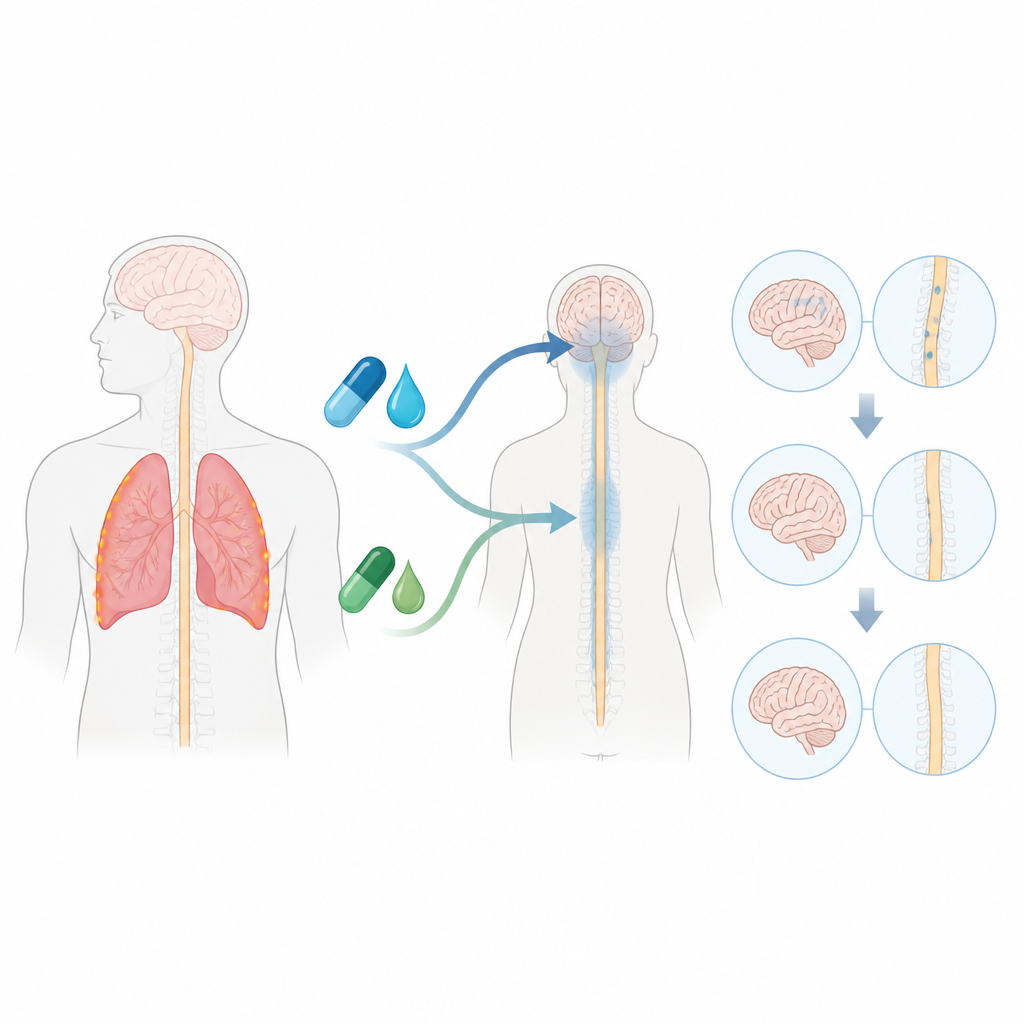
A serious problem inside the brain
Some patients with a common form of lung cancer driven by EGFR gene changes initially do well on modern targeted pills, but cancer cells can later invade the thin membranes around the brain and spinal cord, a condition called leptomeningeal metastasis. This form of spread is especially hard to treat because many medicines do not pass easily from the blood into the fluid bathing the brain. Even with advanced targeted drugs, once this complication appears, survival is usually measured in months, and there is no agreed standard treatment.
A new drug pair put to the test
The researchers looked back at 104 people with EGFR-mutant lung cancer whose disease had spread to the brain coverings after earlier third generation targeted drugs stopped working. One group received high dose furmonertinib, a targeted pill designed to get into the brain, together with bevacizumab, an antibody that alters tumour blood vessels. The other group received the same high dose of furmonertinib alone. The two groups were otherwise similar in age, overall health, and prior treatments, making it easier to compare outcomes between the two strategies.
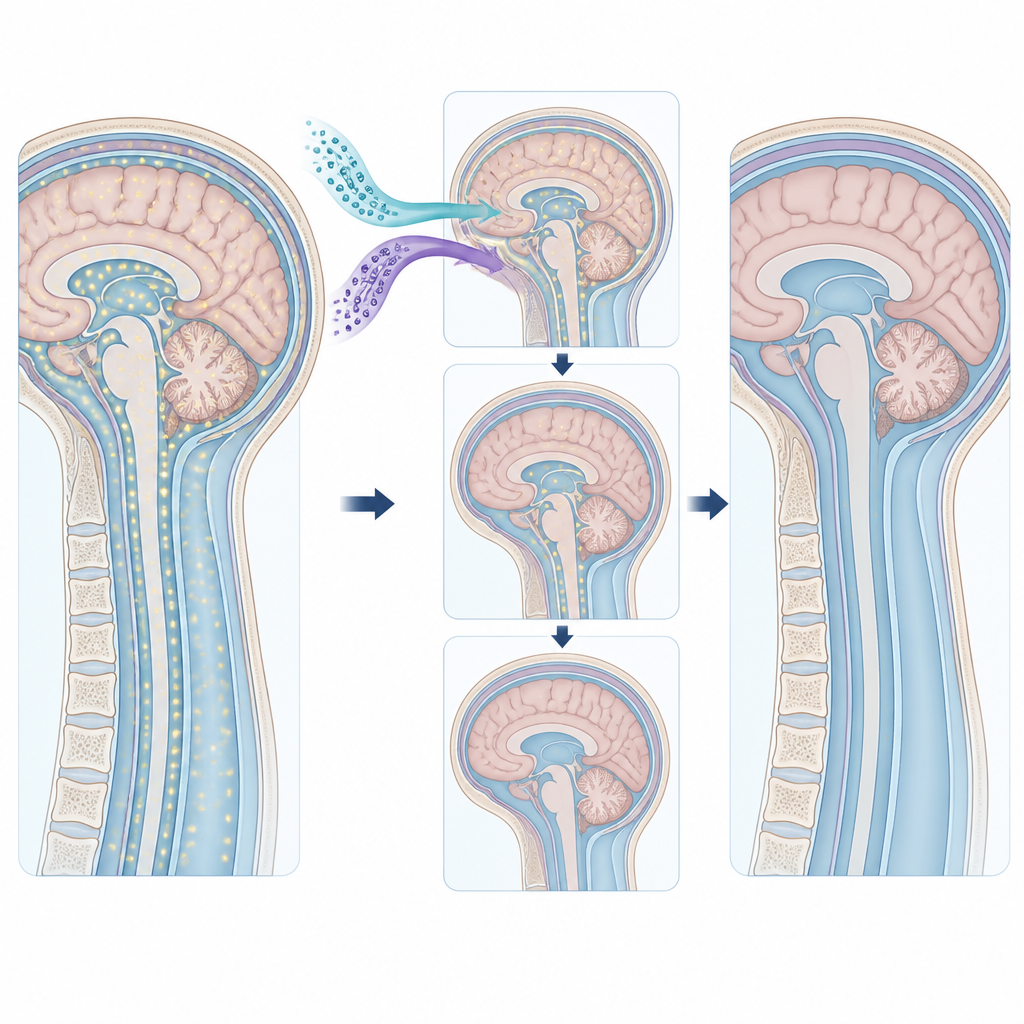
Better control and longer survival with the combination
Patients who took the two drug combination had more frequent improvement or stabilisation of their brain and spinal cord disease than those who took furmonertinib alone. The time before the cancer inside the head worsened increased from about four months with a single drug to nearly seven months with the combination. Overall survival roughly doubled, from just over seven months to more than fifteen months on average. These gains were seen even though many patients were quite ill and had already been heavily treated, suggesting that changing how drugs reach the brain environment can make a meaningful difference.
Using brain fluid as a live treatment gauge
Beyond clinical outcomes, the team also asked whether genetic traces of cancer floating in the clear fluid around the brain could act as an early warning system. They repeatedly sampled this cerebrospinal fluid and measured fragments of tumour DNA carrying EGFR changes. When these levels dropped by at least one fifth compared with the start of treatment, patients tended to live longer and keep their disease under better control than those whose levels stayed high or rose. People whose tumour DNA steadily fell across several checks often survived well beyond two years, showing that this simple measure can mirror how well treatment is working before scans clearly change.
What this could mean for future care
Together, the findings suggest that combining furmonertinib with bevacizumab, often alongside chemotherapy delivered directly into the brain fluid, can improve outcomes for patients who currently have very limited options. At the same time, regularly tracking tumour DNA in the cerebrospinal fluid offers doctors a sensitive tool to see whether the cancer is responding or slipping out of control. While larger, forward looking trials are still needed, this approach points toward more tailored and timely care for people facing one of the most feared complications of lung cancer.
Citation: Wang, X., Xie, Y., Hu, J. et al. Furmonertinib combined with bevacizumab in EGFR-TKI-resistant leptomeningeal metastasis: analysis of the CSF ctDNA molecular response and survival outcomes. Br J Cancer 134, 1614–1623 (2026). https://doi.org/10.1038/s41416-026-03407-z
Keywords: lung cancer, brain metastasis, targeted therapy, bevacizumab, circulating tumor DNA