Clear Sky Science · en
Lymphocyte subset reconstitution and clinical outcomes following haploidentical hematopoietic stem cell transplantation
Why rebuilding the immune system matters
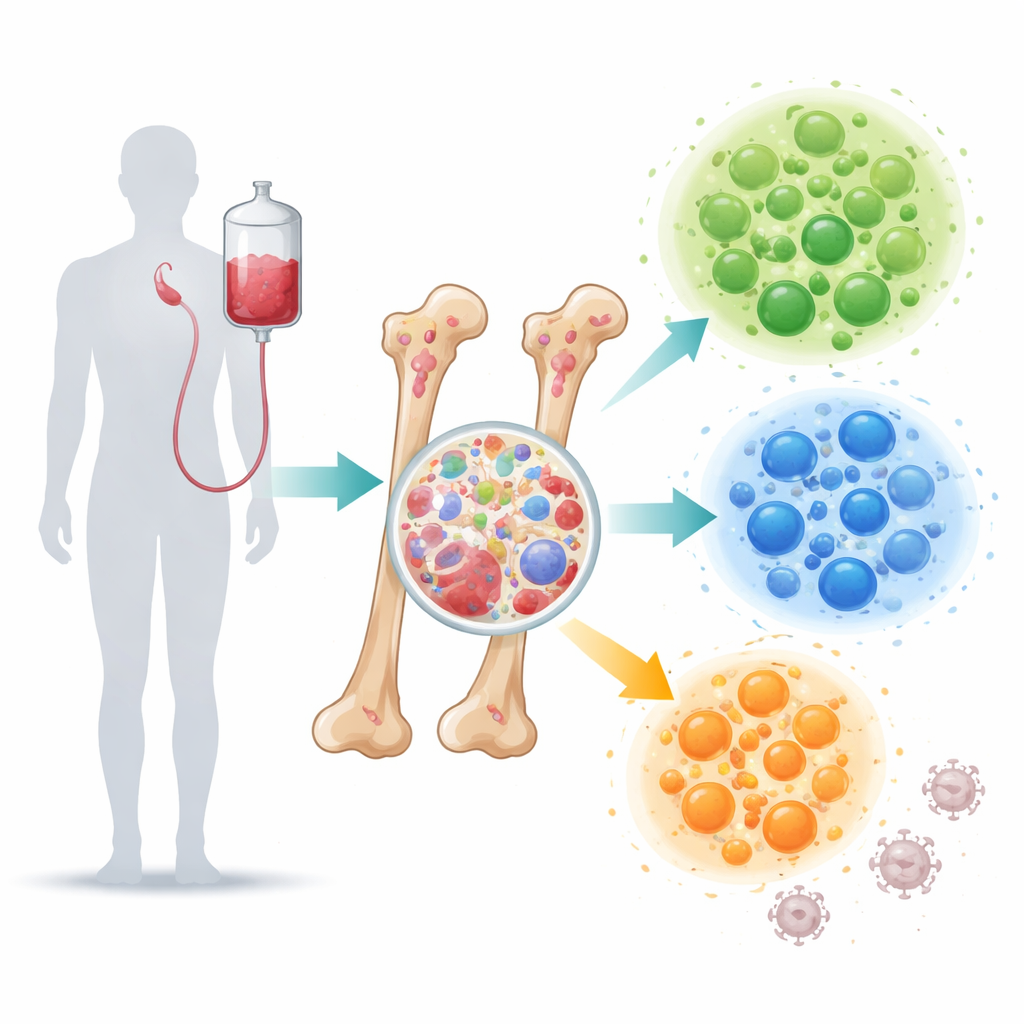
For people with blood cancers such as leukemia or lymphoma, a stem cell transplant from a relative can be life-saving. But after the transplant, the patient’s immune system has to grow back from scratch. How quickly and in what pattern different types of white blood cells return can mean the difference between cure and serious complications like infections, organ damage, or the cancer coming back. This study followed hundreds of patients receiving half-matched (haploidentical) transplants from family donors to find out which immune cells best predict who does well—and when those cells matter most.
Watching the new immune system grow
The researchers tracked 577 patients with various blood cancers who received peripheral blood stem cell transplants from partially matched relatives between 2016 and 2024. Over the first year after transplant, they repeatedly measured many immune cell types in the blood: helper and killer T cells, their naïve and memory forms, a special calming subset called regulatory T cells, natural killer (NK) cells, and antibody-producing B cells. Using detailed statistical models, they linked the rise and fall of these cell groups at different time points to key outcomes: survival, deaths from treatment complications, cancer relapse, viral reactivations, and graft-versus-host disease, where donor cells attack the patient’s tissues.
The calming cells that quietly save lives
One cell type—regulatory T cells, or Tregs—stood out as especially important early after transplant. Patients whose Tregs came back quickly in the first one to four months were far less likely to die from transplant-related causes and more likely to be alive years later. Crucially, this protection did not come at the cost of more cancer relapses. The team also noticed that patients with higher early Treg levels were less likely to have reactivation of cytomegalovirus (CMV), a common latent virus that can cause severe pneumonia and other complications when the immune system is weak. A causal analysis suggested that about one‑third of Tregs’ benefit on survival operated through preventing CMV from flaring up, while the rest likely reflected broader stabilization of the immune system.
Killer cells, antibody cells, and long-term protection
Other immune players influenced risk in more delayed ways. Patients whose naïve killer T cells (a fresh, flexible form of CD8 T cells) recovered well over the first nine months had fewer deaths from treatment complications, fewer relapses, and better overall survival. Stronger total CD8 T cell recovery later in the year also tracked with lower relapse risk, highlighting the role of these cells in hunting down any remaining cancer. B cells, which mature more slowly, showed a different but equally important pattern: from about two to nine months after transplant, patients with sustained B cell recovery had fewer deaths unrelated to relapse and better survival overall. Higher B cell counts in the second half of the year were also linked to a lower chance of developing moderate-to-severe chronic graft-versus-host disease, suggesting that a well-balanced antibody system may help keep long-term immune attacks in check.
Fine-tuning protection without blunting the cure
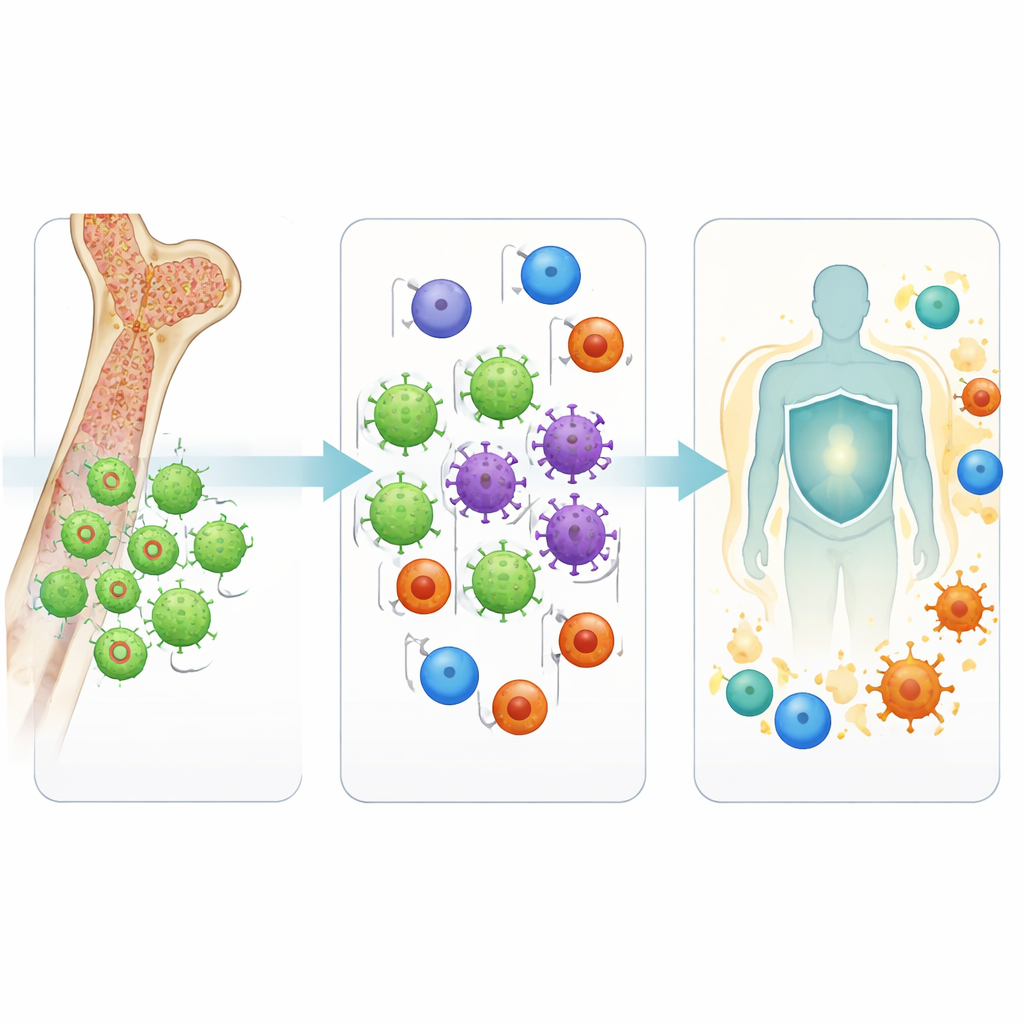
Some findings reshaped assumptions about how to balance graft-versus-leukemia effects with safety. Cells showing recent activation (CD3⁺CD69⁺ T cells) were associated with fewer relapses later in the year without an obvious signal of extra toxicity, hinting that sustained, controlled T cell vigilance can be beneficial. Meanwhile, differences in standard drug regimens used to prevent graft-versus-host disease changed how fast certain cell types returned, but did not, by themselves, alter overall survival or relapse rates in this cohort. This suggests that the quality and coordination of immune recovery—who returns, in what order, and at what levels—may matter more than sheer cell counts or any single preventive drug choice.
What this means for patients and future care
For patients facing a half-matched stem cell transplant, this work shows that the story does not end once the graft “takes.” The tempo and balance of immune rebuilding over the first year strongly shape long-term outcomes. Early return of regulatory T cells appears to be a linchpin, reducing deadly infections like CMV and lowering treatment-related deaths without encouraging cancer to come back. Later, robust B cell and CD8 T cell recovery helps guard against chronic complications and relapse. In practical terms, the study supports closer immune monitoring after transplant and raises the possibility of tailored interventions—such as strategies to boost Tregs or support B cell maturation at key windows—to make these powerful but risky procedures safer and more effective.
Citation: Jiang, P., Zhou, X., Cai, Y. et al. Lymphocyte subset reconstitution and clinical outcomes following haploidentical hematopoietic stem cell transplantation. Br J Cancer 134, 1289–1299 (2026). https://doi.org/10.1038/s41416-026-03345-w
Keywords: haploidentical stem cell transplant, immune reconstitution, regulatory T cells, cytomegalovirus reactivation, graft-versus-host disease