Clear Sky Science · en
Investigating PAK inhibition in combination with PD-1 blockade to enhance cytotoxic CD8+ T cell-mediated killing and suppress invasion of ovarian cancer cells
Why this research matters
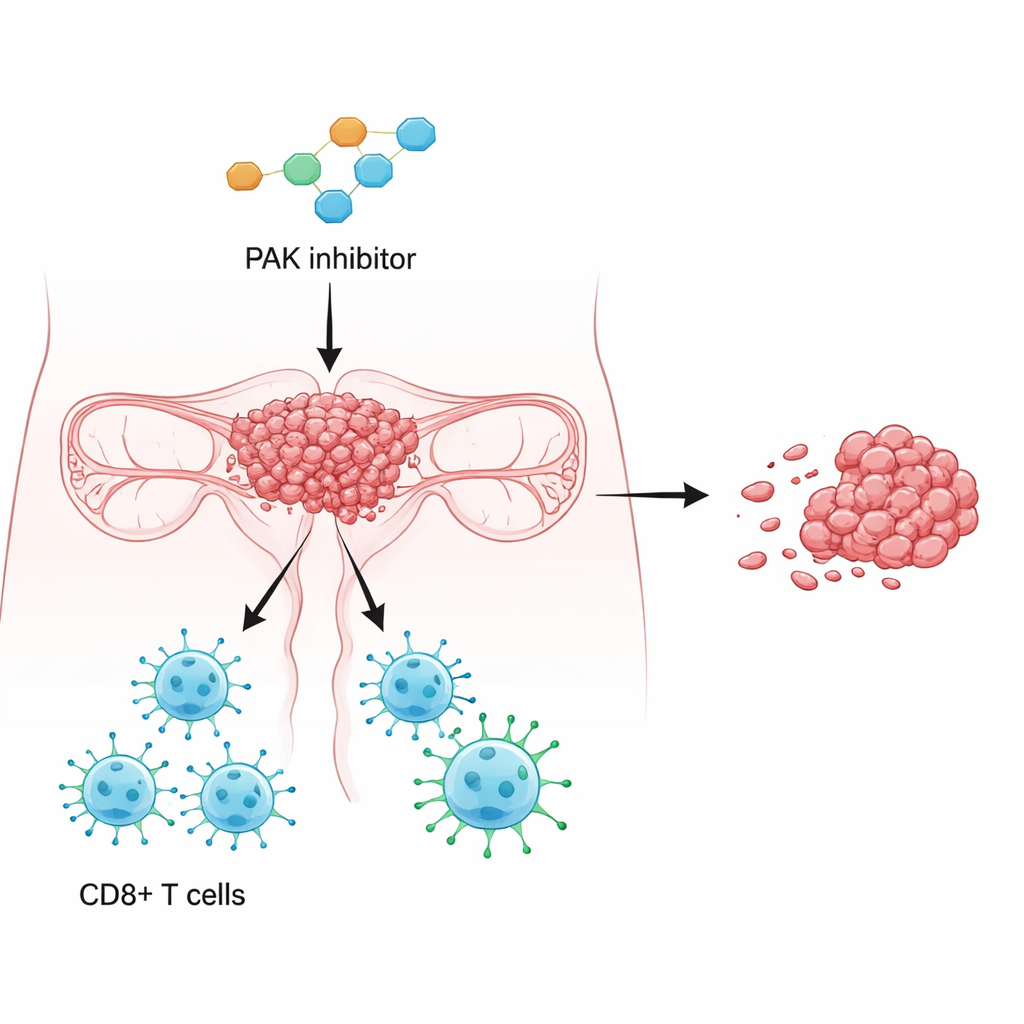
High-grade serous ovarian cancer is one of the deadliest cancers affecting women, in part because it spreads quickly in the abdomen and often escapes the body’s immune defenses. Standard treatments—surgery and chemotherapy—help many patients but rarely provide long-lasting control once the disease has advanced. This study explores a new strategy: using drugs that slow cancer cell spread together with an immunotherapy that helps killer T cells attack tumors more effectively.
The problem of a fast-spreading cancer
Most women with ovarian cancer are diagnosed with a particularly aggressive form called high-grade serous ovarian cancer. These tumor cells easily break away from the ovary, form tiny clusters called spheroids, and then invade nearby tissues in the abdominal cavity. At the same time, many of these cancers display a surface protein called PD-L1, which acts like a shield that switches off attacking immune cells. Drugs that block PD-1 or PD-L1 have transformed treatment for some cancers, but on their own they have shown only modest benefit in ovarian cancer. Researchers therefore suspected that ovarian tumors might need to be “sensitized” before immune therapies can work well.
A two-pronged treatment idea
The team focused on a family of enzymes called PAKs that help cancer cells move, invade, and resist therapy. Using laboratory-grown ovarian cancer cell lines that closely mimic real high-grade serous tumors, they first showed that these cells make several PAK proteins and display PD-L1 on their surface. They then treated the cancer cells with different PAK-blocking drugs, some targeting several PAKs at once and others aimed at specific subgroups. These inhibitors did not dramatically reduce how many cancer cells were alive, but they strongly disrupted internal signaling routes linked to growth and invasion, especially proteins called ERK and β-catenin that help drive tumor spread.
Slowing invasion and setting up the immune attack
To mimic how ovarian cancer spreads in the body, the researchers grew three-dimensional spheroids of tumor cells and embedded them in a gel made of collagen, similar to the body’s supporting tissues. Untreated spheroids sent out streams of cells that collectively moved outward—just as real tumors invade the abdominal lining. When the scientists added a broadly acting PAK inhibitor, these invasive streams shrank markedly, particularly in one of the most realistic cell models. This suggested that blocking PAKs can limit the physical spread of high-grade serous cancer cells even if it does not kill them outright, making them more vulnerable to other attacks.
Boosting killer T cells with combination therapy
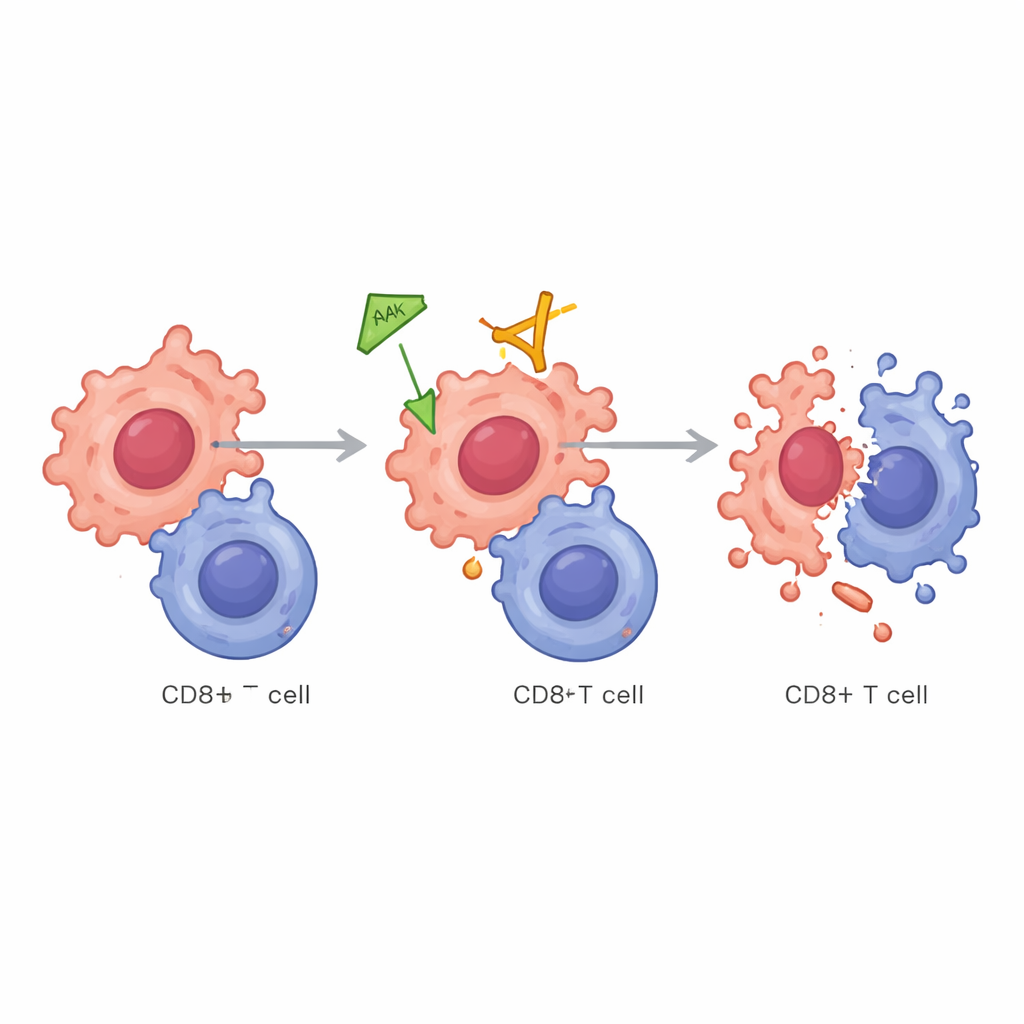
The next question was whether PAK inhibition could help the immune system. The researchers mixed the pretreated cancer cells with human CD8+ T cells—immune cells specialized in killing abnormal cells. When PAK inhibitors and T cells were present together, or when the tumor cells were pretreated with inhibitors before T cells were added, the T cells killed significantly more cancer cells than without PAK inhibition. Interestingly, while total PD-L1 levels inside the cells fell, PD-L1 on the cell surface stayed the same or even rose, maintaining an immune “brake.” When the team added an anti-PD-1 drug (pembrolizumab) to block this brake, the effect was dramatic: at higher PAK inhibitor doses, T cell–mediated killing of cancer cells jumped to around two-thirds to three-quarters of the tumor population in their assays.
What this could mean for future patients
Taken together, the findings indicate that PAK-blocking drugs can weaken ovarian cancer cells by disturbing their growth and invasion programs, while a PD-1–blocking antibody frees CD8+ T cells to finish the job. In the lab, this combination turned a relatively resistant cancer into one that killer T cells could attack much more efficiently. Although these results are pre-clinical and need to be confirmed in animal studies and clinical trials, they suggest that a carefully timed combination of an oral PAK inhibitor followed by PD-1 immunotherapy might one day offer women with high-grade serous ovarian cancer a more powerful, targeted way to curb both tumor spread and immune escape.
Citation: Mitchell, A.R., Chen, Y., Pugliese, G. et al. Investigating PAK inhibition in combination with PD-1 blockade to enhance cytotoxic CD8+ T cell-mediated killing and suppress invasion of ovarian cancer cells. Br J Cancer 134, 1248–1260 (2026). https://doi.org/10.1038/s41416-026-03342-z
Keywords: ovarian cancer, immunotherapy, PAK inhibitors, PD-1 blockade, CD8 T cells