Clear Sky Science · en
From complexity to clarity: aging bone marrow niche in bone and blood regeneration and malignancy
Why the bone marrow neighborhood matters as we age
The soft tissue inside our bones is more than a blood factory; it is a bustling neighborhood where blood stem cells, blood vessels, bone-forming cells, nerves, and immune cells constantly talk to one another. This article explains how this bone marrow neighborhood changes with age, how those changes ripple out to affect our blood, immunity, and skeleton, and why the same shifts can make us more vulnerable to cancers such as leukemia and multiple myeloma.
The hidden community inside bone
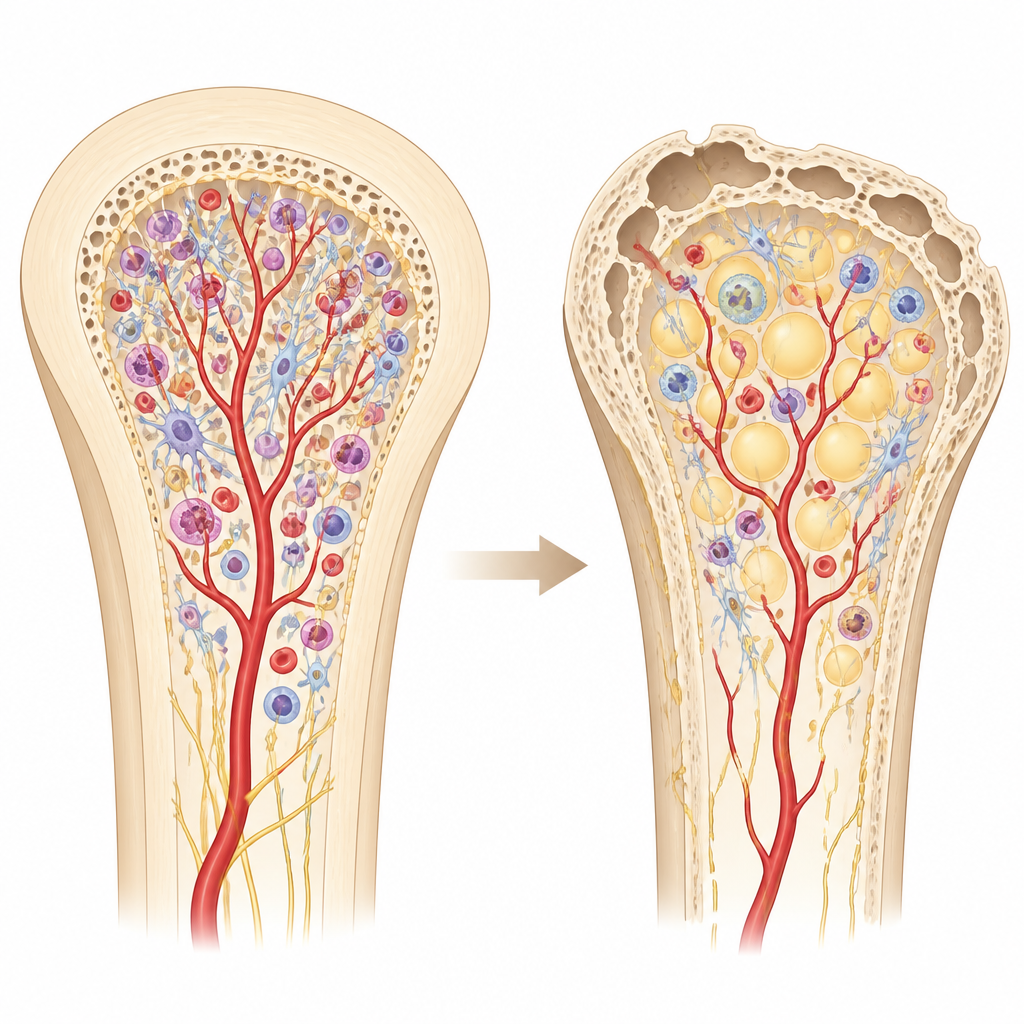
Deep within our bones, a specialized environment known as the bone marrow niche orchestrates the life of blood stem cells. These rare cells must strike a careful balance between resting, dividing, and maturing into the many types of blood and immune cells we need every day. They rely on surrounding support cells, including flexible connective-tissue cells, bone builders, fat cells, and a rich network of blood vessels. Far from being fixed scaffolding, this neighborhood reacts to injury, infection, and metabolic demands, adjusting how many new blood cells are produced and how quickly bone is repaired.
How aging reshapes the bone and blood factory
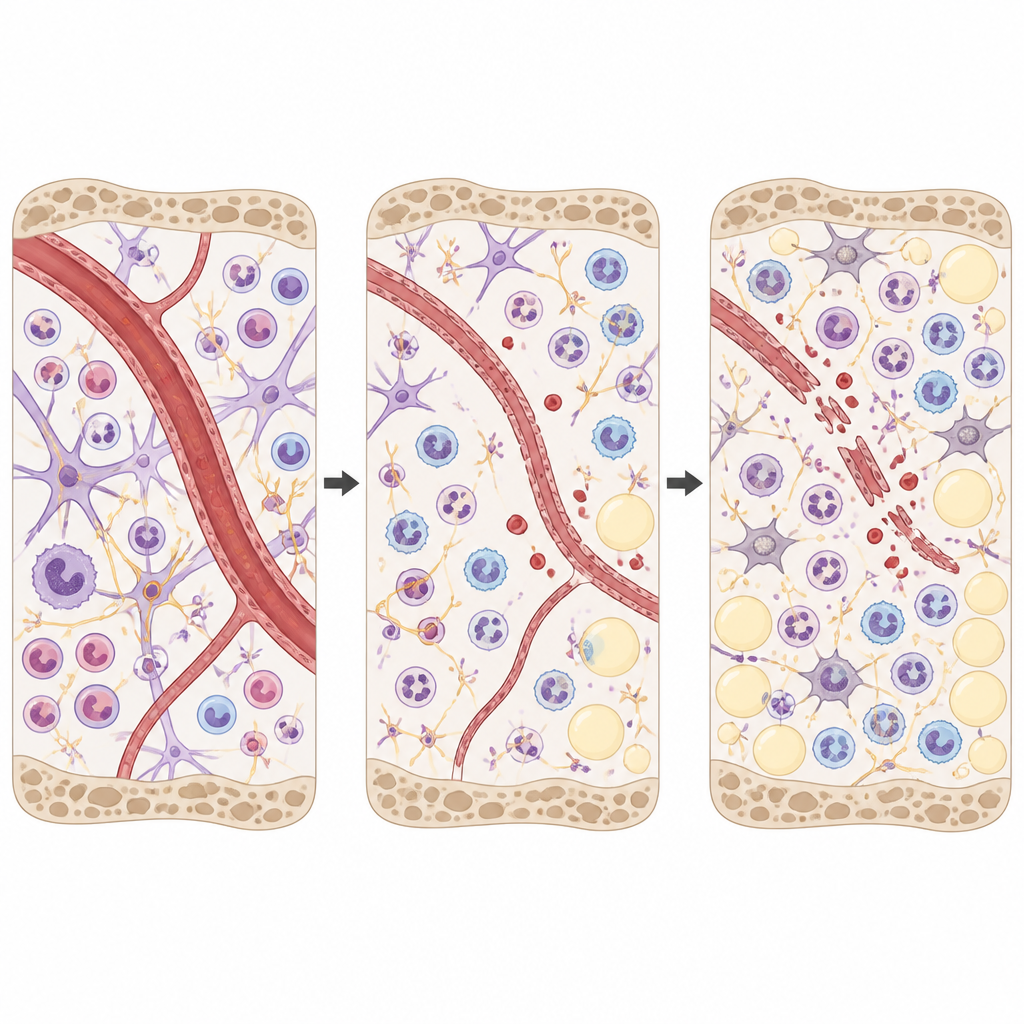
With age, this once well-tuned environment becomes disturbed on many levels at once. Blood vessels that once delivered oxygen and helpful growth signals reliably now become sparser and leakier, especially a specialized vessel type that normally supports both new bone and new blood. Support cells that used to favor bone formation begin to tilt toward making fat and inflammatory molecules. Low-grade, chronic inflammation builds up, a phenomenon sometimes called inflammaging, nudging stem cells away from balanced blood production toward an overabundance of certain white blood cells and fewer infection-fighting lymphocytes. Nerves that help set daily rhythms in blood stem cell release also dwindle, adding another layer of dysregulation.
When the neighborhood helps or hinders cancer
The same signals that normally protect stem cells can be twisted to help malignant cells. In diseases such as multiple myeloma and acute myeloid leukemia, cancer cells send out chemical messages and tiny vesicles that reprogram their surroundings. Support cells begin to secrete growth factors that favor tumor survival, while cutting back on signals that protect healthy stem cells. Bone-resorbing cells are activated, leading to fragile bones riddled with holes, while immune cells that might attack the cancer are held at bay. Animal studies even show that faulty bone-forming cells alone can sometimes push otherwise healthy stem cells toward a pre-cancerous state, suggesting that in some cases the neighborhood may help spark disease, not just respond to it.
Signals from the whole body shape the marrow
The marrow niche does not age in isolation. Hormones, gut microbes, diet, physical activity, and environmental exposures all feed into this system. Nerves release signals that change across the day and night, guiding when stem cells stay put or enter the bloodstream. Molecules made by gut bacteria, such as short-chain fatty acids and lactate, can influence support cells in marrow and shift blood production. Weight gain and high-fat diets remodel the niche toward fat storage and inflammation, while exercise and certain hormones tend to favor bone building and healthier stem cell behavior. With aging, shifts in sex hormones, stress hormones, and chronic exposure to inflammatory triggers combine to push the niche toward a more hostile, less regenerative state.
New ways to map and repair the aging niche
To untangle this complexity, researchers are using powerful tools such as single-cell sequencing, advanced imaging, and engineered mini–bone marrow tissues. These approaches reveal previously hidden subtypes of blood vessels and support cells, and how their relationships change during aging, injury, and cancer. They also allow scientists to test potential rejuvenation strategies, from drugs that remove senescent, inflammation-producing cells to agents that revive helpful blood vessels or calm harmful cytokines. Early work in animals shows that blocking specific inflammatory signals, restoring certain nerve cues, or transplanting young vascular or lymphatic cells can partially restore blood and bone function, though the right timing and combinations remain open questions.
What this means for healthy blood and bone in later life
Taken together, the article concludes that the aging bone marrow niche is both a victim and a driver of decline in blood and bone health. Changes in vessels, support cells, nerves, and inflammatory tone reinforce one another, gradually tipping the balance away from sturdy bones and balanced immunity and toward frailty and cancer risk. Because many of these shifts are reversible in experimental models, the niche emerges as a promising target for therapies that aim not to turn back the clock entirely, but to restore a healthier conversation among cells inside our bones. Better maps of this hidden neighborhood, paired with patient-tailored treatments, may one day help preserve resilient blood and bone systems well into old age.
Citation: Roy, N., Liu, H., Horenberg, A.L. et al. From complexity to clarity: aging bone marrow niche in bone and blood regeneration and malignancy. Bone Res 14, 54 (2026). https://doi.org/10.1038/s41413-026-00543-3
Keywords: bone marrow niche, hematopoietic stem cells, aging, inflammation, leukemia