Clear Sky Science · en
SphK1/mitophagy axis in cementocytes drives orthodontic root resorption via mitochondrial transfer to osteoclasts
Why tooth roots can be harmed by braces
Orthodontic treatment straightens teeth and improves smiles, but strong forces from braces or aligners can sometimes eat away at the roots of teeth, shortening them over time. This paper explores why that happens and uncovers a hidden energy-sharing system between cells in the tooth root and nearby bone cells that dissolve hard tissue. Understanding this process could help dentists move teeth safely without sacrificing root health. 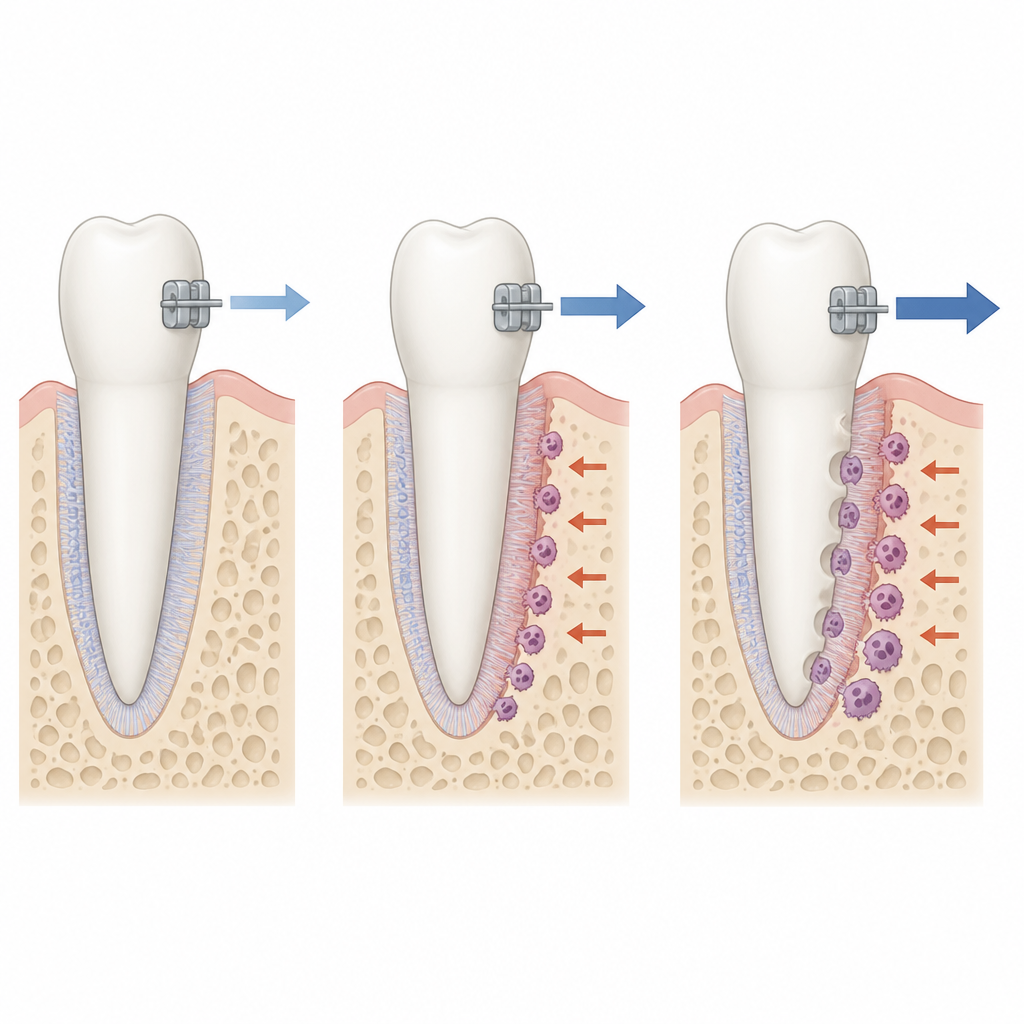
When helpful tooth cells turn into stress sensors
Each tooth root is coated with a thin mineral layer called cementum, inside which live tiny cells known as cementocytes. These cells sit in small spaces connected by fine channels, forming a communication network similar to that of bone cells. Under normal or light orthodontic force, this system allows the tooth and surrounding bone to remodel in a controlled way. But when the force is too strong, the cementocytes do more than simply sense pressure. They begin sending powerful activation signals to nearby bone-resorbing cells called osteoclasts, which then start carving pits into the tooth root itself.
Stress, damaged power plants, and cellular clean-up
Heavy mechanical force overloads the cementocytes, causing their internal power plants, the mitochondria, to become stressed and less efficient. The cells respond by turning on a clean-up program called mitophagy that selectively removes damaged mitochondria. In this study, the authors show that strong force greatly boosts this clean-up activity, while gentle force does not. Markers of mitophagy rise, damaged mitochondria can be seen under the microscope, and more of them are enclosed in recycling structures. A signaling enzyme named SphK1 stands at the center of this response, acting as the molecule that converts physical pressure into the decision to ramp up mitophagy.
A surprising gift: mitochondria sent to bone-resorbing cells
Rather than simply digesting all their worn-out power plants, the stressed cementocytes package part of this mitochondrial cargo and send it outward to osteoclast precursors in the nearby bone. The receiving cells take up these mitochondria, which act like a fuel bonus. With this extra energy support, the osteoclast precursors more readily mature into full resorbing cells and switch their metabolism toward rapid sugar burning. In laboratory experiments, fluid from force-loaded cementocytes made osteoclasts larger, more numerous, and more aggressive at cutting pits into mineral surfaces, and this boost depended on the mitophagy and mitochondrial transfer pathway. 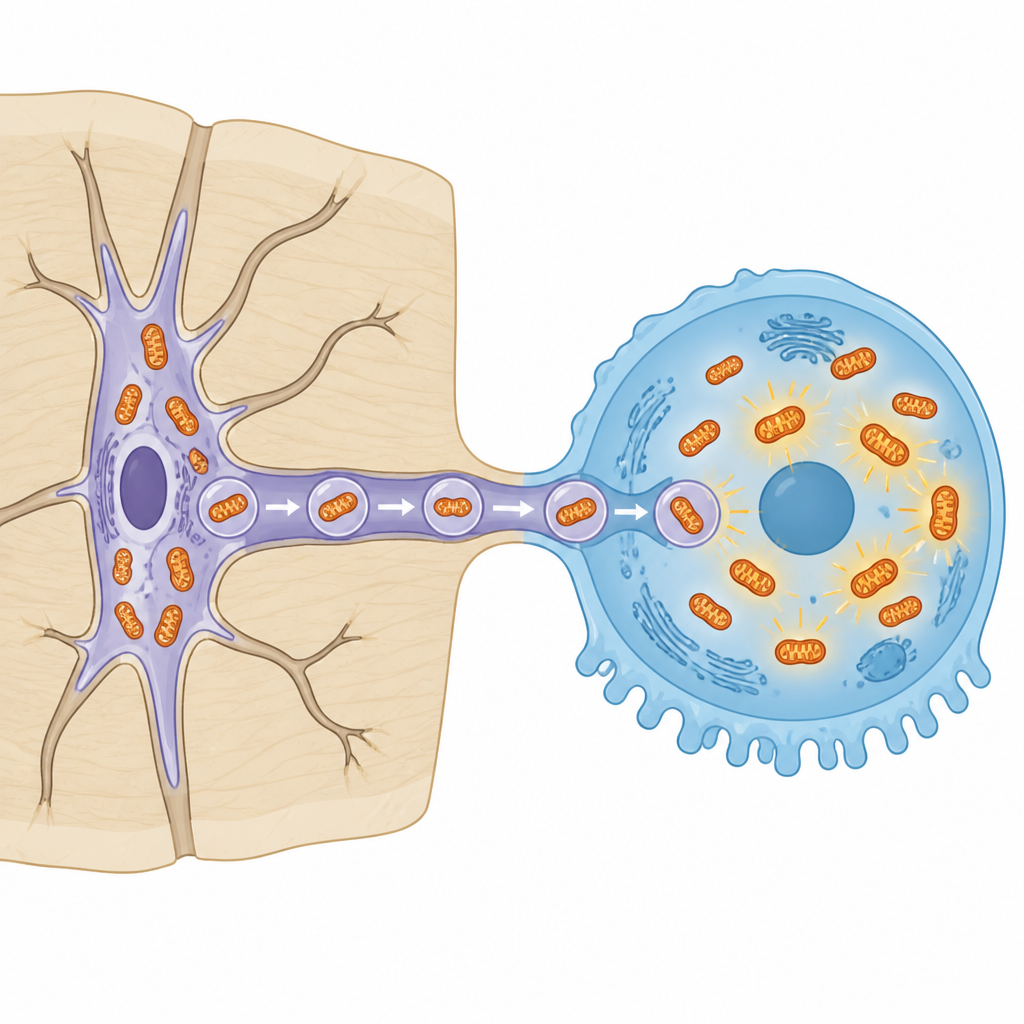
Blocking the signal without stopping tooth movement
The researchers then tested what happens when SphK1, the key pressure sensor, is blocked with a drug or reduced by genetic tools. When SphK1 was dampened, cementocytes showed less mitophagy, released fewer mitochondria, and their conditioned fluid no longer supercharged osteoclast growth or metabolism. In rats wearing orthodontic springs, inhibiting SphK1 cut down the number and activity of root-surface osteoclasts, reduced resorption pits, and lowered metabolic markers in these cells. Importantly, tooth movement and surrounding bone remodeling still proceeded, suggesting that it may be possible to protect roots without stalling orthodontic treatment.
What this means for future orthodontic care
This work reveals that cementocytes are not passive victims of heavy orthodontic force but active players that hand off energy-rich mitochondria to bone-resorbing cells, unintentionally fueling root damage. The SphK1-driven mitophagy and mitochondrial transfer pathway forms a bridge between mechanical stress and the cellular machinery that shortens roots. By targeting this pathway, future therapies might let orthodontists use effective forces while lowering the risk of root loss, helping patients keep both straighter teeth and stronger roots over the long term.
Citation: Wang, H., Chen, S., Chen, S. et al. SphK1/mitophagy axis in cementocytes drives orthodontic root resorption via mitochondrial transfer to osteoclasts. Bone Res 14, 52 (2026). https://doi.org/10.1038/s41413-026-00538-0
Keywords: orthodontic root resorption, cementocytes, mitochondrial transfer, osteoclasts, mitophagy