Clear Sky Science · en
Neural regulation of bone: from central neural circuits to peripheral innervation of the skeletal stem cell niche
How Nerves Quietly Shape Our Bones
Most of us think of bones as passive scaffolding and nerves as wires for pain and movement. This review reveals a different picture: the nervous system constantly talks to our skeleton, helping decide when bone should be built, when it should be broken down, and how it heals after injury. Understanding this hidden dialogue could transform how we treat osteoporosis, slow fracture healing in the elderly, and painful bone diseases.
The Brain’s Hidden Hand in Bone Health
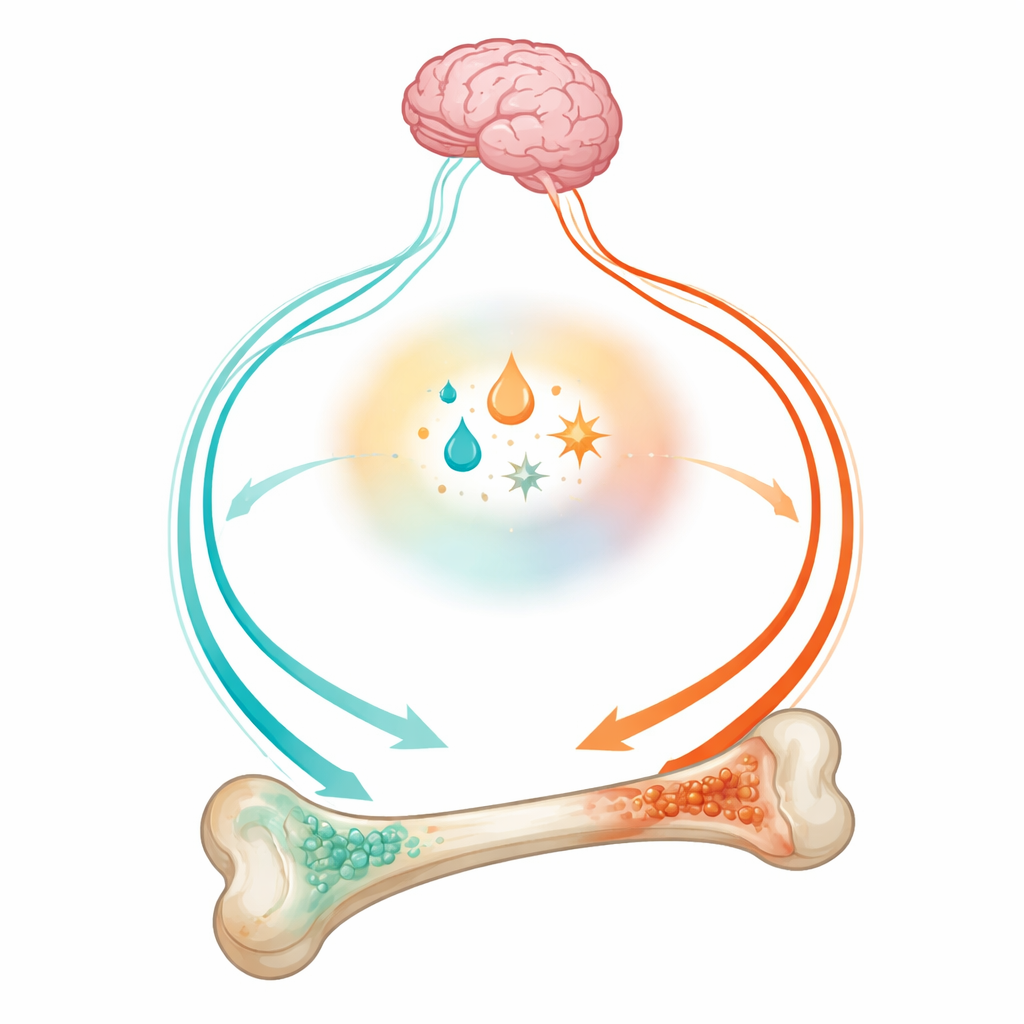
Deep in the brain, regions of the hypothalamus act as command centers that balance hunger, stress, sleep, and reproduction. The authors explain how these same hubs also tune bone metabolism. They listen to signals carried in the blood—such as stress hormones, sex hormones, thyroid hormones, and metabolic cues like leptin and adiponectin from body fat—and convert them into nerve and hormonal outputs that reach the skeleton. Through these routes, the brain sets daily “rhythms” of bone turnover, links bone repair to overall energy status, and explains why conditions like chronic stress, menopause, thyroid disease, or disrupted sleep can weaken bones.
Wires in the Bone: Local Nerve–Bone Conversations
Far from ending at the spine, nerve fibers spread throughout bone tissue itself. Sensory nerves detect mechanical load, injury, and inflammation, while autonomic nerves (sympathetic and parasympathetic) adjust blood flow and cellular activity. The review details how sensory fibers release chemical messengers that generally favor bone building: they encourage bone-forming cells to grow and mature and restrain bone-resorbing cells. In contrast, sympathetic fibers tend to push the system toward bone loss by stimulating resorption and dampening formation, though they can support repair under some conditions. Parasympathetic signals, carried mainly by acetylcholine, usually counterbalance these effects and support bone formation.
Timekeepers, Hormones, and Everyday Bone Wear-and-Tear
The authors also highlight that bone is governed by internal clocks. A master clock in the brain aligns with the light–dark cycle and resets smaller clocks inside bone cells. These clocks coordinate daily waves of bone breakdown and rebuilding, and they interact with autonomic nerves and hormones. Night-shift work, jet lag, or chronic sleep disruption can scramble these rhythms, impairing bone-forming cells and boosting bone-resorbing cells, which may raise fracture risk. In parallel, classic hormone axes linking the brain, pituitary, adrenal glands, gonads, and thyroid feed into this system, connecting life stages such as puberty, pregnancy, and aging with changes in skeletal strength.
The Stem Cell Neighborhood Inside Bone
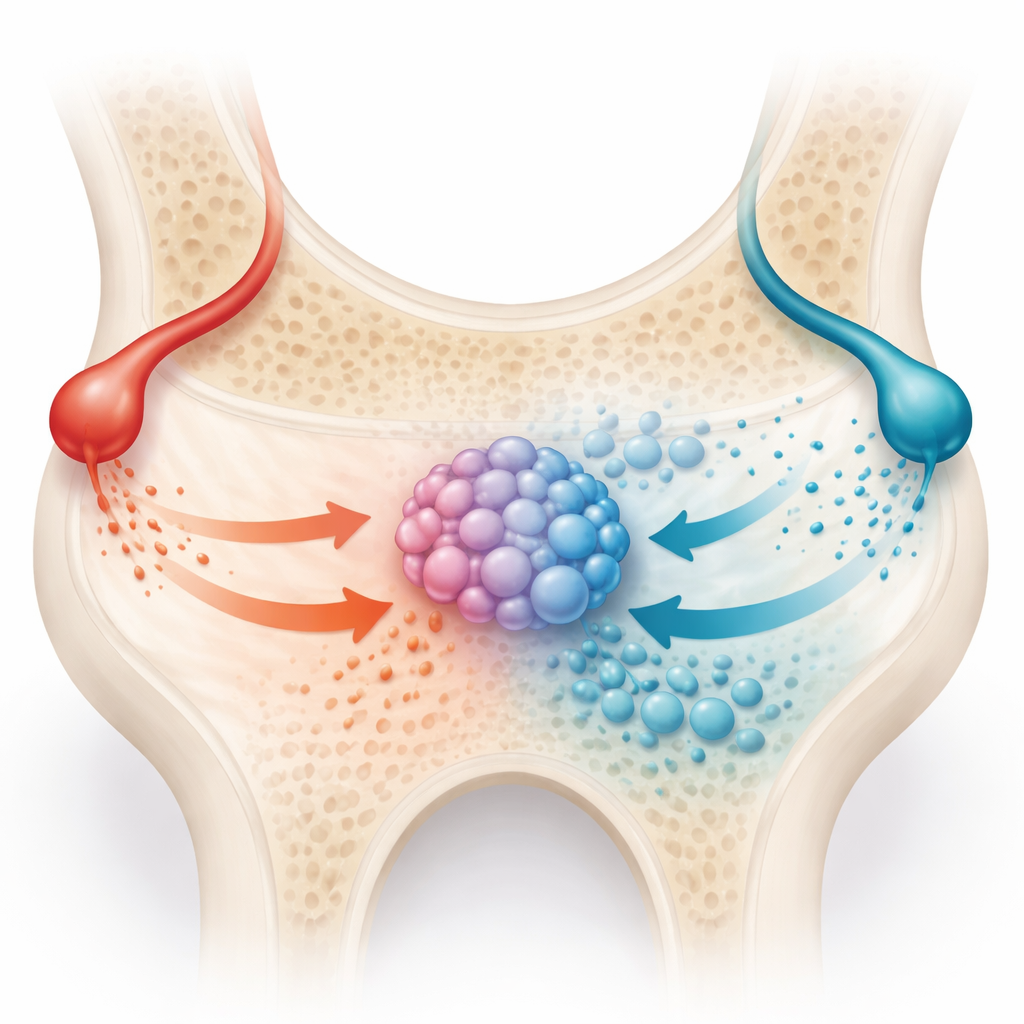
One of the most forward-looking sections of the review zooms in on skeletal stem and progenitor cells—the rare cells in bone marrow that replenish bone-forming cells throughout life. These cells live in a specialized “niche” alongside blood vessels, immune cells, and nerve endings. The authors describe a striking yin–yang pattern: sympathetic nerves, through specific secreted proteins, tend to restrain these stem cells and limit their renewal, while sensory nerves release factors that do the opposite, encouraging stem cells to multiply and form new bone. This push–pull balance helps determine how well bones grow, maintain themselves, and recover after fractures.
From Pain and Fragility to New Treatments
For a lay reader, the key message is that nerves are not just messengers of bone pain; they are active architects of bone strength and repair. Central brain circuits, peripheral nerve fibers, hormones, and internal clocks form a single integrated “neuro–skeletal axis” that keeps bones in dynamic balance. When this axis is disturbed—by aging, chronic stress, metabolic disease, or nerve injury—bones can become fragile and heal poorly. By learning to fine-tune nerve activity or mimic pro-healing nerve signals, future therapies might simultaneously ease bone pain and speed repair, moving beyond drugs that act only on bone cells to strategies that rewire the entire nerve–bone conversation.
Citation: Chen, Z., Luo, Z., Greenblatt, M.B. et al. Neural regulation of bone: from central neural circuits to peripheral innervation of the skeletal stem cell niche. Bone Res 14, 44 (2026). https://doi.org/10.1038/s41413-026-00534-4
Keywords: neuro-osteology, bone remodeling, skeletal stem cells, sympathetic nervous system, fracture healing