Clear Sky Science · en
Bacterial specificity of the gut microbiome predicts bone density in primary hyperparathyroidism
Why gut bugs and bones matter
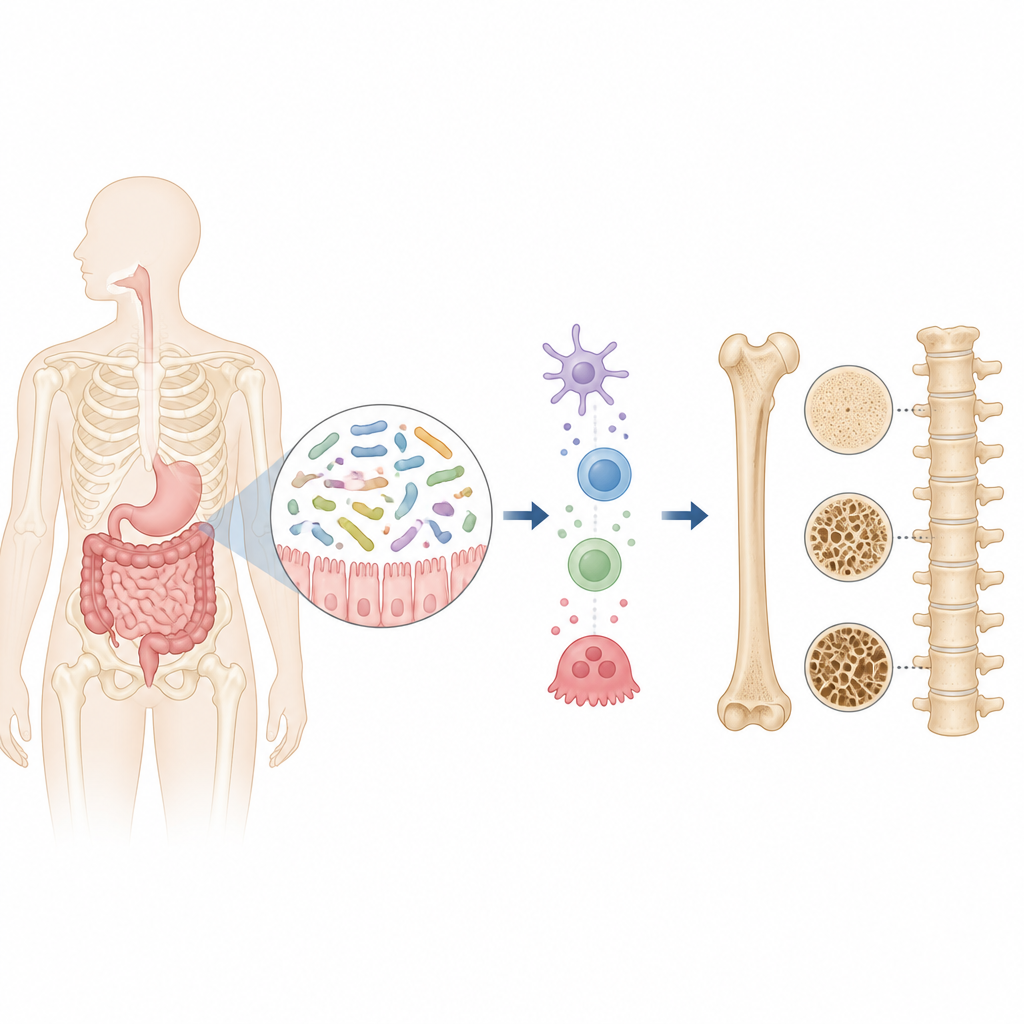
People with primary hyperparathyroidism often lose bone, but not everyone is affected in the same way. This puzzling variation matters because thinning bones raise the risk of fractures and disability. In this study, researchers asked whether tiny organisms living in the gut help explain who develops fragile bones and who stays relatively protected. By combining careful tests in patients with experiments in mice, they uncovered a surprising link between a common gut bacterium, the immune system, and bone strength.
A hormone problem with many faces
Primary hyperparathyroidism is caused by overactive parathyroid glands that release too much parathyroid hormone, or PTH. This hormone normally keeps calcium and bone turnover in balance. When PTH is persistently high, some patients develop clear osteoporosis, others have mild bone thinning called osteopenia, and some maintain near normal bone density. Traditional tests, such as hormone levels or routine blood work, do not reliably predict who will lose the most bone. Earlier animal work hinted that immune cells and gut microbes might shape how bones respond to PTH, but this had never been tested in people with the condition.
The gut microbiome as a storyteller
The team studied 50 adults with primary hyperparathyroidism. They measured bone density and bone structure at several skeletal sites, analyzed stool samples with DNA sequencing to map gut bacteria, and counted specific immune cells in the blood that produce inflammatory molecules called TNF and IL-17. They then transferred stool from a subset of patients with osteoporosis, osteopenia, or normal bone density into germ-free mice raised without any microbes. When these mice were challenged with a low-calcium diet to raise PTH, their bone changes mirrored those of the human donors: mice that received stool from patients with osteoporosis developed thinner, more porous femurs and higher bone turnover than mice colonized with microbiota from patients with stronger bones.
Immune cells on the move
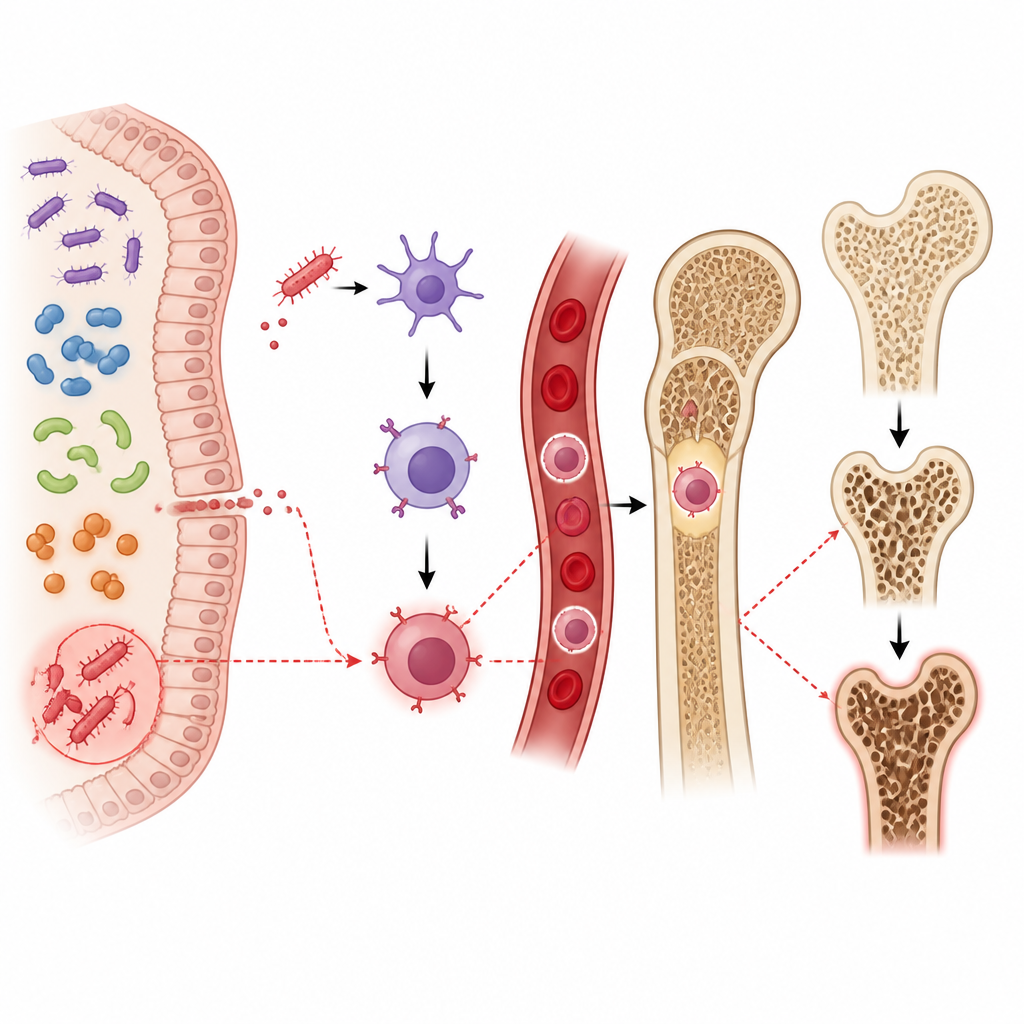
In both people and mice, the abundance and activity of TNF-producing T cells and a related group called Th17 cells closely tracked with bone loss. Mice receiving microbiota from osteoporotic patients showed more of these cells in gut immune tissues and in the bone marrow. Using special “color-changing” mice, the researchers directly visualized immune cells migrating from the intestine to the marrow, where they can drive bone breakdown. In patients, higher levels of TNF and IL-17 made by circulating T cells predicted lower bone density and weaker bone structure, especially in the forearm and leg, where cortical bone is prominent.
A single bacterial player with big influence
When the scientists dug deeper into which microbes might be responsible, they focused on species whose abundance was tied to TNF and IL-17 activity. A statistical approach pointed to Bifidobacterium longum, a usually friendly gut bacterium, as a key mediator between the microbiome and bone density. Patients with more of this species tended to have lower bone density at the radius. In mice raised germ-free, adding only Bifidobacterium longum was enough, under high-PTH conditions, to boost TNF and IL-17 in the gut and bone marrow and to trigger loss of both trabecular and cortical bone. Giving the same bacterium to conventional mice with an existing microbiome had similar effects, again only when PTH was elevated by a low-calcium diet.
What this means for patients
The findings suggest that, in primary hyperparathyroidism, certain gut bacteria can prime immune cells that travel to bone and release signals that hasten bone loss. In particular, Bifidobacterium longum appears to shape how strongly bones respond to excess PTH, helping explain why some patients develop osteoporosis while others do not. For a lay reader, the takeaway is that bone health in this hormonal disorder is not just about glands and calcium, but also about gut microbes and the immune system. In the future, analyzing a patient’s microbiome might help identify those at higher risk of fractures, and careful adjustment of gut bacteria with targeted antibiotics or precision probiotics could become part of strategies to protect bones in people living with primary hyperparathyroidism.
Citation: Dar, H.Y., Fang, J., Patil, S. et al. Bacterial specificity of the gut microbiome predicts bone density in primary hyperparathyroidism. Bone Res 14, 57 (2026). https://doi.org/10.1038/s41413-026-00529-1
Keywords: gut microbiome, primary hyperparathyroidism, bone density, immune cells, Bifidobacterium longum