Clear Sky Science · en
IPSS-M downstaging before transplantation does not improve the prognosis of patients with myelodysplastic neoplasms
Why this research matters for patients and families
For people with myelodysplastic neoplasms (MDS)—a group of bone marrow disorders that can progress to leukemia—stem cell transplantation offers the only real chance of cure. But there is a long-standing dilemma: should doctors first try to shrink or “calm down” the disease with chemotherapy-like drugs before transplant, or move to transplant as soon as a suitable donor is found? This study takes a close, modern look at that question using detailed genetic risk scores and comes to a clear, and somewhat surprising, conclusion.
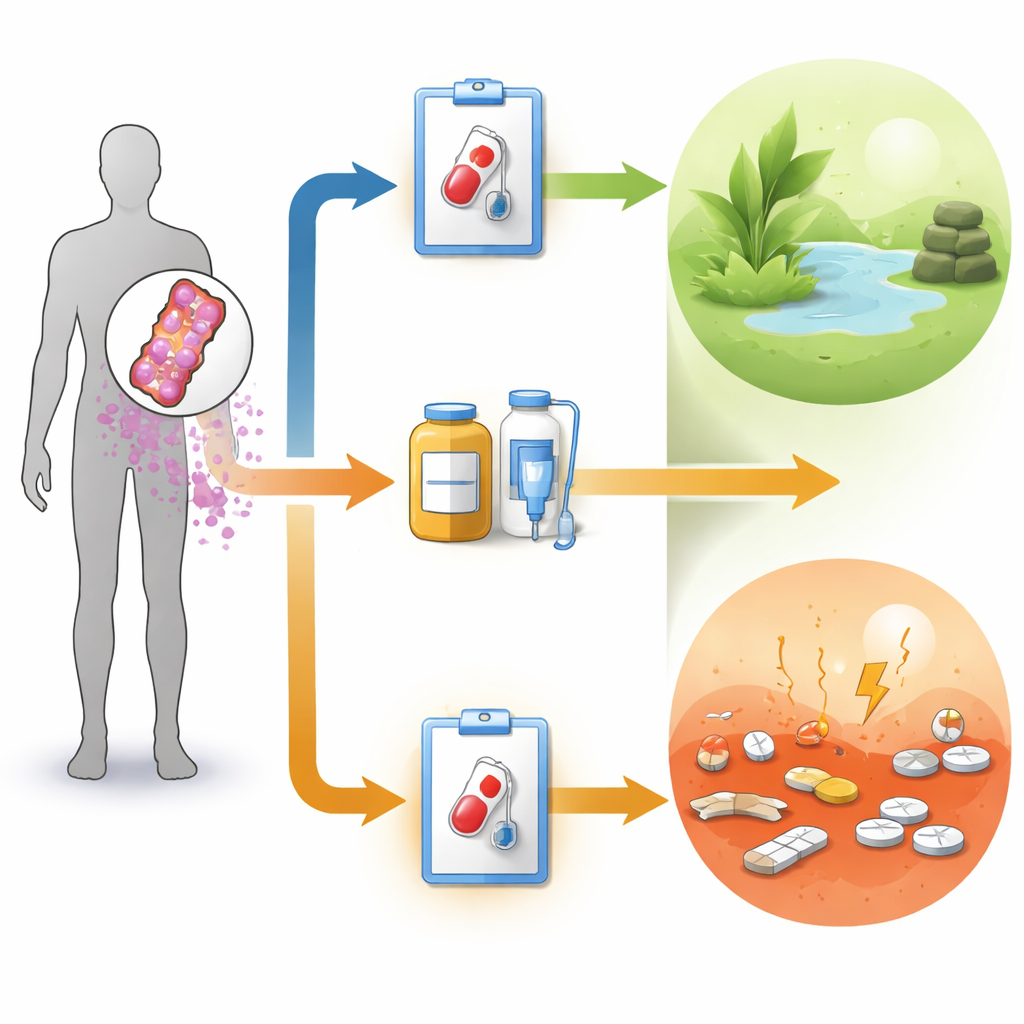
Two different paths to transplant
The researchers examined 128 adults with MDS who received a donor stem cell transplant at a single German center between 2013 and 2024. One group went straight to transplant after diagnosis, while the other received so‑called cytoreductive treatment first—drugs intended to lower the number of abnormal cells or reduce disease activity. These pretreatments included hypomethylating agents (a standard MDS therapy), sometimes combined with the newer drug venetoclax, or more intensive chemotherapy similar to regimens used in acute leukemia. Importantly, the two groups were broadly similar in age, disease stage, and other medical conditions, making the comparison more balanced.
Looking beyond the microscope to genetic risk
Traditionally, doctors have judged MDS severity mainly by what they see under the microscope: how many immature cells (“blasts”) are present and how abnormal the blood counts look. But modern care also relies heavily on genetics—specific chromosome changes and gene mutations that shape how the disease behaves. This study used a new tool called the Molecular International Prognostic Scoring System (IPSS‑M), which combines clinical features with results from next‑generation DNA sequencing of 31 key genes. Each patient’s IPSS‑M risk category was calculated twice: at diagnosis and again right before transplant, allowing the team to see whether pretreatment truly “downstaged” (improved) a patient’s underlying risk profile.
What actually changed—and what did not
Across all patients, IPSS‑M scores did shift over time: about one third improved, roughly 40 percent stayed the same, and around 30 percent worsened. In those who went straight to transplant, most changes came from shifts in blast counts or blood counts. In the pretreatment group, however, changes more often reflected deeper genetic evolution: new high‑risk mutations appeared or small, dangerous clones expanded. When the investigators examined outcomes from the time of diagnosis, patients who went directly to transplant lived longer overall and spent more time free from relapse or severe transplant complications. Those who received pretreatment had higher rates of death not caused by relapse, suggesting that additional therapy and delay may have taken a toll without providing lasting benefit.
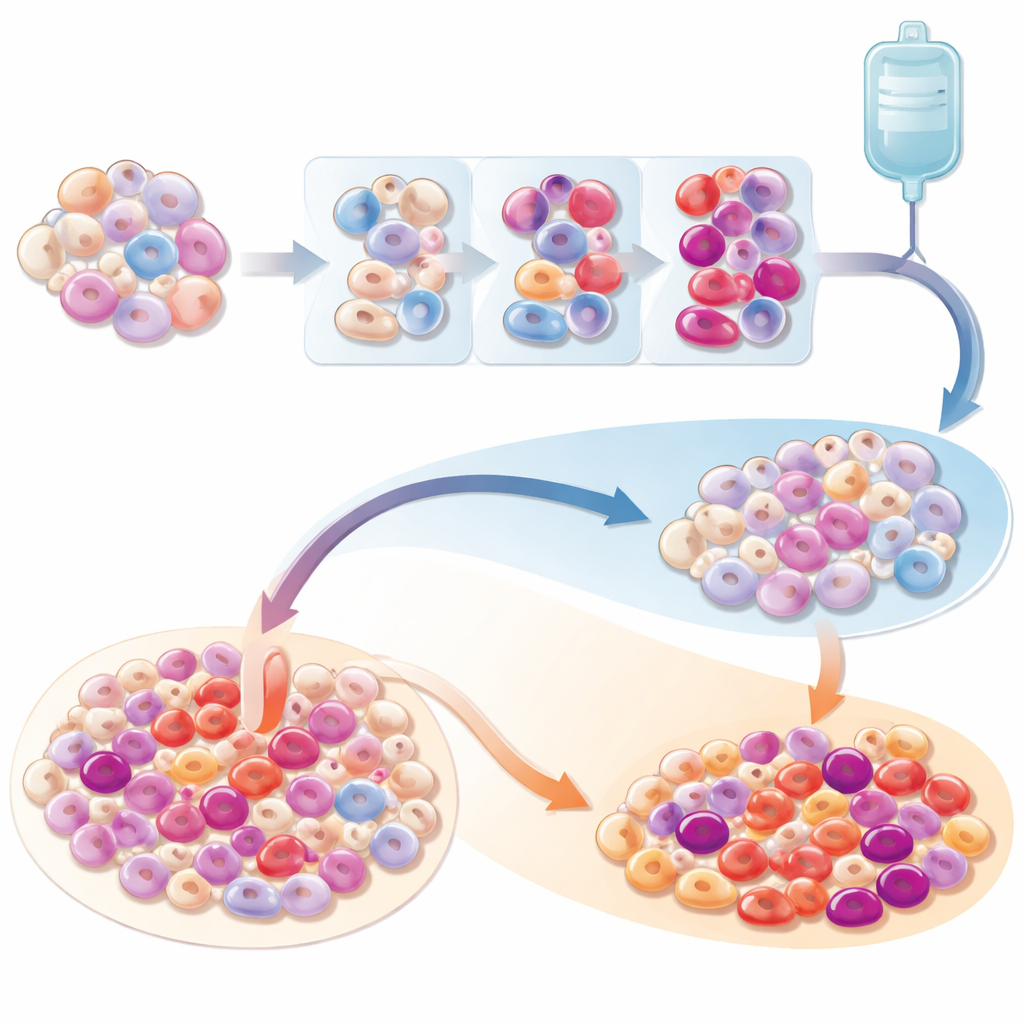
Genetic score improvements that did not pay off
A key question was whether patients whose IPSS‑M category improved before transplant actually did better afterward. The answer was no. When patients were grouped by whether their molecular risk improved, stayed stable, or worsened, there was no meaningful difference in survival after transplant or in the time spent free from relapse and serious graft‑versus‑host disease. Even more telling, when statisticians considered the exact IPSS‑M scores as a continuous measure, they found that the direction of change over time—especially any worsening—was more important than the initial score at diagnosis. In other words, how the disease evolved genetically during the wait for transplant mattered more than how it looked at the start, and pretreatment did not reliably steer that evolution in a favorable direction.
What this means for care today
The study supports a shift in thinking: rather than using extra treatment cycles simply to push blast counts down or nudge risk scores into a lower category, doctors should focus on the disease’s deeper genetic behavior and move to allogeneic stem cell transplantation as soon as a suitable donor is available in patients with high molecular risk. In this real‑world cohort, trying to improve the IPSS‑M score before transplant did not translate into better outcomes and sometimes coincided with the emergence of more aggressive disease and higher treatment‑related mortality. For patients and families, the message is that earlier, genetically guided transplantation—backed by rapid donor search—may offer a safer and more effective path than prolonged attempts to “optimize” the disease with additional therapy beforehand.
Citation: Richardson, T., Schütte, D., Gödel, P. et al. IPSS-M downstaging before transplantation does not improve the prognosis of patients with myelodysplastic neoplasms. Bone Marrow Transplant 61, 584–590 (2026). https://doi.org/10.1038/s41409-026-02845-w
Keywords: myelodysplastic syndromes, stem cell transplantation, molecular risk scoring, pretreatment cytoreduction, clonal evolution