Clear Sky Science · en
Functionally high-risk disease is associated with poor outcomes after late-line CAR T-cell therapy for multiple myeloma
Why this matters for people with myeloma
For people living with multiple myeloma and their families, new treatments like CAR T cell therapy offer real hope. But an important question remains: does it still work as well if used only after many other treatments have failed, especially in patients whose disease comes back quickly after first therapy? This study looks at how timing and disease behavior shape the benefits and limits of CAR T for such high-risk patients.
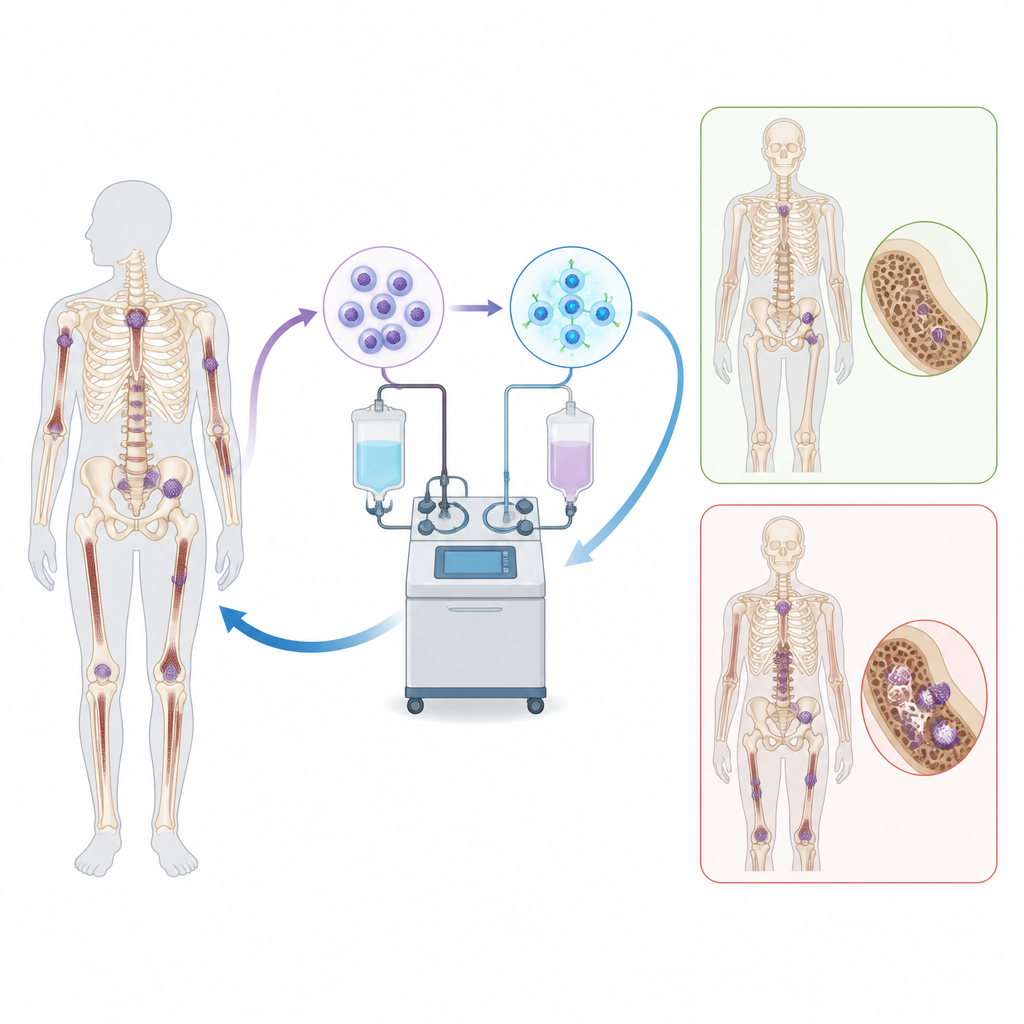
Different kinds of relapse risk
Doctors have long sorted myeloma patients into risk groups using lab values and genetic changes in cancer cells found at diagnosis. Yet some people who appear middle of the road at first later show very aggressive disease, with relapse within about two years of starting treatment or within a year of a stem cell transplant. The authors call this pattern “functionally high risk,” because it is defined by how the disease behaves over time rather than by a single test result. Earlier research has shown that people with this type of early relapse tend to live for a shorter time overall, no matter what their initial lab tests looked like.
Who was studied and how
The research team reviewed records from 208 adults with hard-to-treat myeloma cared for at a single cancer center between 2018 and 2025. All had already tried at least two types of modern drug combinations and had been exposed to the three main drug classes used for myeloma. Most had also undergone a stem cell transplant. Everyone in the study then received a BCMA-directed CAR T product, most commonly ciltacabtagene autoleucel, after a median of five previous treatment courses. More than half of the patients fit the “functionally high risk” pattern because their cancer had come back within 24 months of their very first therapy.
How patients responded to CAR T
In this heavily pretreated group, CAR T still worked impressively in the short term. About 86 percent of all patients saw their cancer shrink by at least half, and many reached complete remission. Response rates were similar whether or not patients had functionally high-risk disease. On average, patients went about a year before the disease grew again, with very similar times for high-risk and non-high-risk groups. Common side effects of CAR T, such as fever related to immune activation and short-term confusion, were frequent but usually mild. Serious brain-related side effects were somewhat more common in the functionally high-risk group, but still affected only a small number of patients.
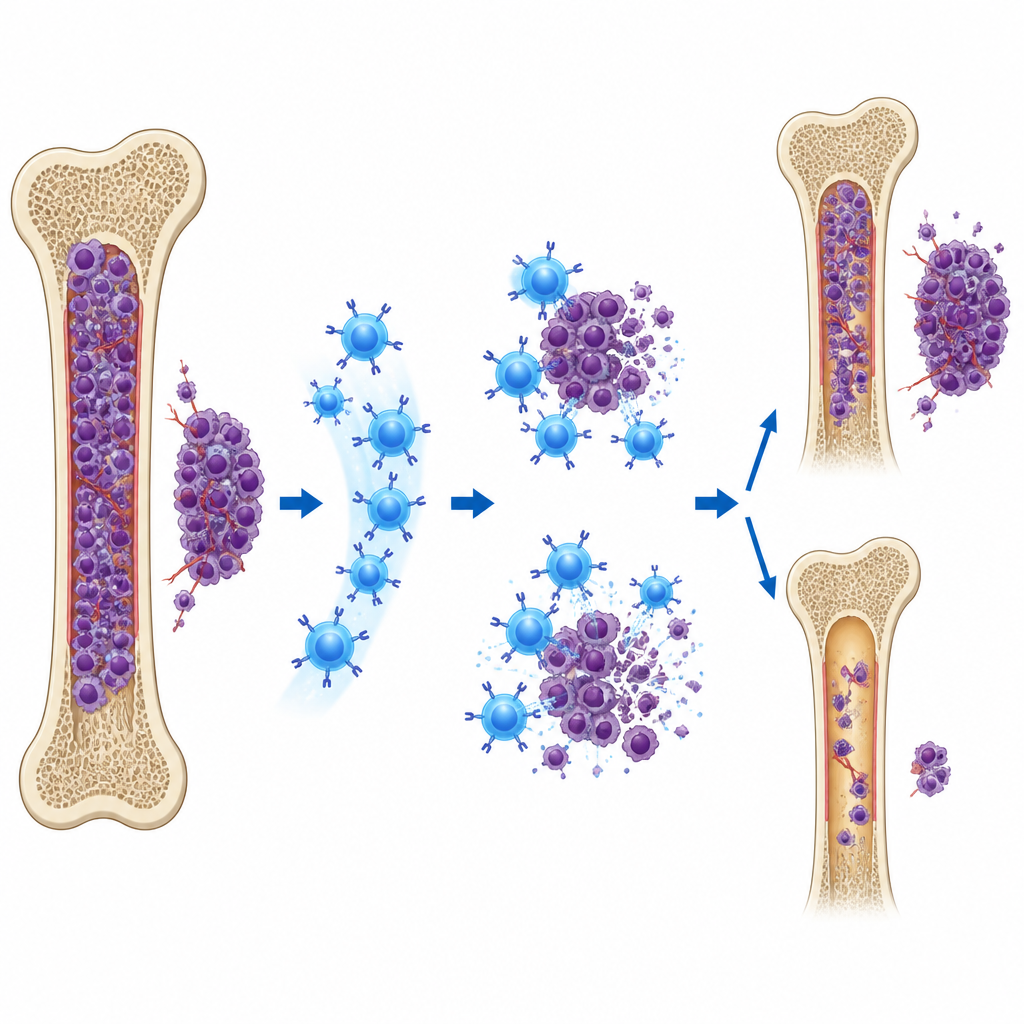
Why long-term survival differed
Although early responses looked alike, long-term survival told a different story. Patients with functionally high-risk disease lived a median of 34 months after CAR T, compared with 55 months for those whose disease had relapsed later. When the researchers looked more closely, two features clearly stood out as driving worse outcomes: tumors growing outside the bone marrow, known as extramedullary disease, and a very high level of cancer cells in the bone marrow at the time of CAR T. Prior exposure to other BCMA-targeting drugs also signaled a higher chance of earlier relapse after CAR T. These patterns suggest that waiting until the cancer is bulky, widely spread, or previously treated with similar targets may limit what CAR T can achieve.
What this means for treatment decisions
For patients whose myeloma comes back within two years of starting therapy, this study suggests that delaying CAR T until many other options are exhausted may shorten how long they live, especially if disease outside the marrow or very heavy tumor load develops. While CAR T remains an effective and often safe option even in late stages, its power appears greatest when used earlier in the course of aggressive disease, before tumors become too extensive or resistant. In plain terms, for people with fast-returning myeloma, choosing CAR T sooner rather than later may offer a better chance at longer-lasting control.
Citation: Hashmi, H., Sebastian, T., Rajeeve, S. et al. Functionally high-risk disease is associated with poor outcomes after late-line CAR T-cell therapy for multiple myeloma. Blood Cancer J. 16, 74 (2026). https://doi.org/10.1038/s41408-026-01494-y
Keywords: multiple myeloma, CAR T cell therapy, high-risk relapse, extramedullary disease, BCMA targeting