Clear Sky Science · en
Aberrant glycosylation in hematologic malignancies: mechanisms, immune evasion, and therapeutic targeting
Sweet Coatings with Deadly Consequences
Cancer of the blood, such as leukemia, lymphoma and multiple myeloma, is often described in terms of genes and rogue cells. This review adds another layer: the sugar-like chains that coat proteins on cell surfaces. These tiny decorations, known as glycans, turn out to be powerful switches that help blood cancers grow, hide from the immune system and resist treatment. Understanding how this sugary code is rewritten in cancer is opening fresh paths for diagnosis and therapy.
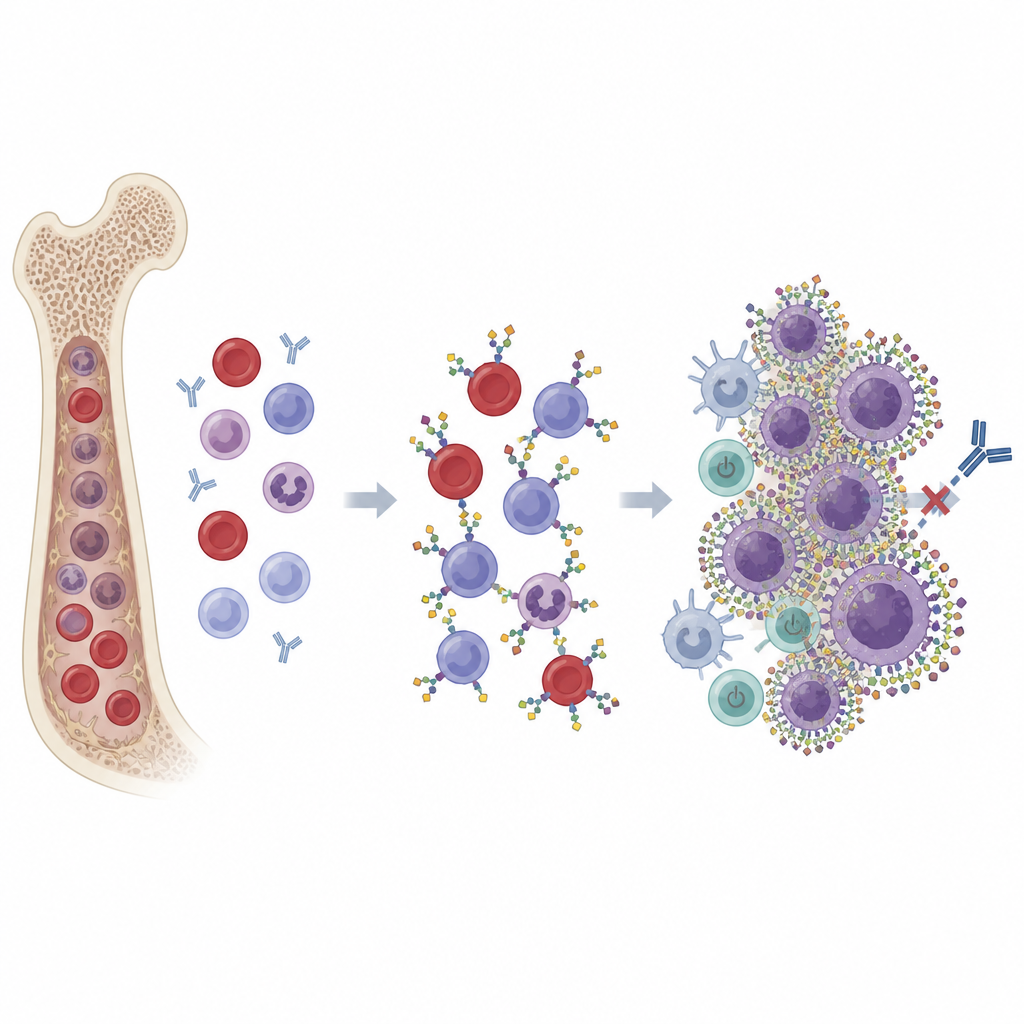
How Cells Wear Their Sugar Coats
Every cell in the body is wrapped in a forest of complex sugars attached to proteins and fats. These coats help proteins fold correctly, guide cells to the right tissues and control how the immune system sees them. In healthy cells, sugar patterns are tightly regulated. In blood cancers, these patterns change. The review explains that different types of glycosylation attach sugars to different parts of proteins or anchor them in the cell membrane, and that further tweaks, such as adding sialic acid or fucose, fine-tune how cells communicate. When this system goes wrong, it can push normal blood cells toward malignancy.
Helping Lymphoma Cells Stay Switched On
In several B-cell lymphomas, including follicular lymphoma and certain diffuse large B-cell lymphomas, altered sugars sit directly in the antibody-like receptors that B cells use to sense threats. These added sugar sites are rare in normal B cells but common and stable in tumor cells, suggesting the cancer depends on them. The sugars act like sticky handles for lectins, sugar-binding proteins in the tumor’s surroundings. When these lectins grab the coated receptors, they deliver a constant low-level signal that keeps lymphoma cells alive without needing real germs or antigens. Enzymes that install these sugars, and the machinery that transfers them, are therefore attractive targets to quiet this survival signal.
Sugar Shields that Block Drugs and Immune Attack
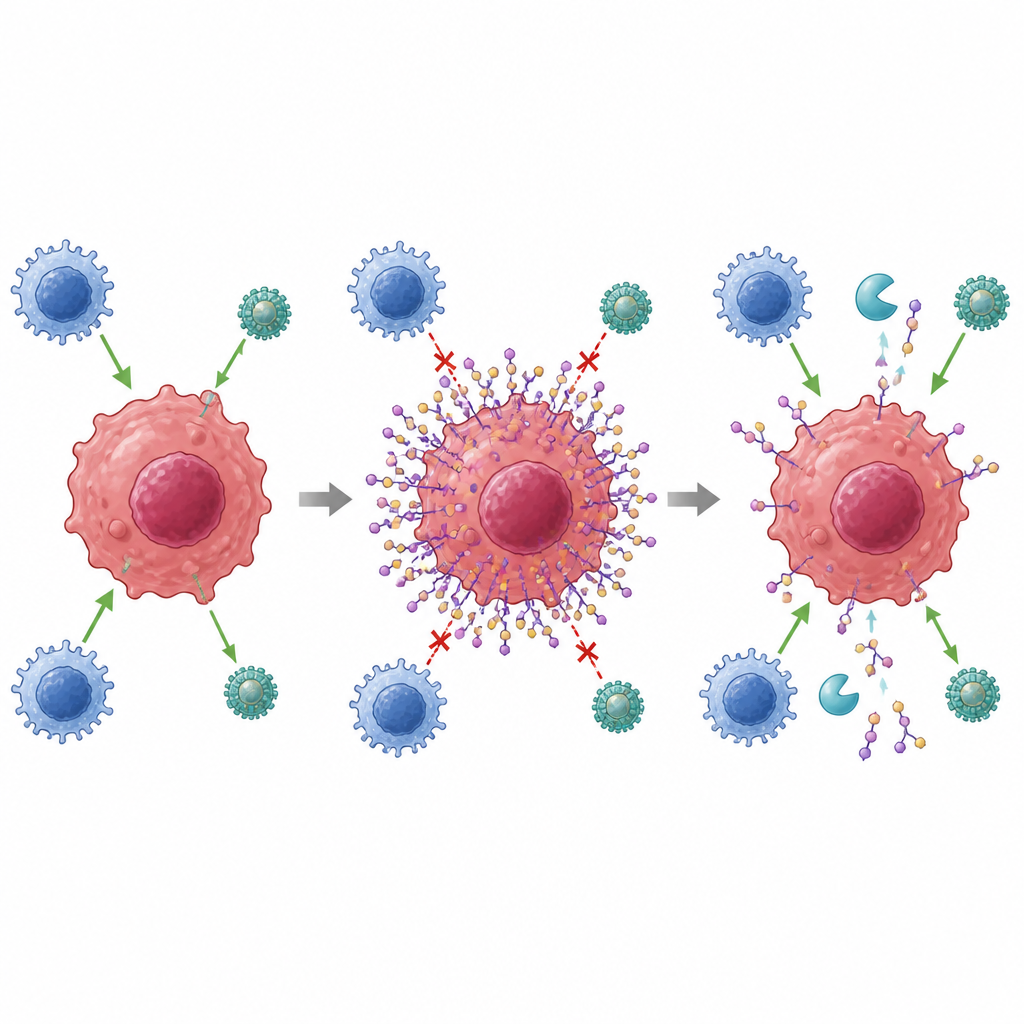
The same sugar coats can also act as physical armor. In diffuse large B-cell lymphoma, extra sugar branches and sialic acids on a protein called CD79B can partially cover the docking site for an antibody–drug conjugate, making this advanced treatment less effective. In multiple myeloma, myeloma cells build a “glycan shield” rich in sialic acid on their surface. This shield engages sugar-sensing receptors on natural killer cells, sending a calming signal that dampens their ability to kill. At the same time, the shield can hide other targets, such as CD38, from therapeutic antibodies. The review highlights that trimming or blocking these sugars in laboratory and animal studies restores drug binding and revives immune attack.
Guiding Cancer Cells to Safe Havens
Abnormal sugars also change where blood cancer cells travel and settle. In multiple myeloma and certain forms of acute myeloid leukemia, specific sugar motifs act like postal codes that help malignant cells latch onto blood vessel linings and bone marrow niches. These safe havens feed the tumor and blunt the effects of chemotherapy. Enzymes that create these motifs, including sialyltransferases such as ST3GAL6, are linked to worse survival and greater resistance to treatment. Blocking their activity in models reduces homing to bone marrow, lowers tumor burden and increases sensitivity to standard drugs.
Turning Sugar Weakness into a Treatment Strength
To a non-specialist, the idea that cancer can be fought through its sugar coat may seem surprising, but this review shows that these patterns behave like a shared language across many blood cancers. By reading that language, doctors can potentially classify disease more precisely and predict which patients will respond to certain therapies. By rewriting it, using small-molecule inhibitors, antibody–enzyme pairs that clip sugars, or drugs that block sugar-based adhesion, researchers aim to strip away the cancer’s protective shell. The article concludes that “glyco-oncology” could become a key part of combining chemotherapy, antibodies and cell therapies, turning the very sugar changes that empower blood cancers into new vulnerabilities.
Citation: Lu, X., Song, Z., Wang, C. et al. Aberrant glycosylation in hematologic malignancies: mechanisms, immune evasion, and therapeutic targeting. Blood Cancer J. 16, 75 (2026). https://doi.org/10.1038/s41408-026-01493-z
Keywords: glycosylation, blood cancer, immune evasion, lymphoma, multiple myeloma