Clear Sky Science · en
CMML2AML: machine-learning discovery of co-mutations and specific single mutations predictive of blast transformation in chronic myelomonocytic leukemia
Why this matters for people with blood cancer
Chronic myelomonocytic leukemia is a rare blood cancer that can stay stable for years or suddenly shift into an aggressive form similar to acute leukemia. Doctors struggle to predict which patients will take this dangerous turn. This study uses modern computer techniques to read patterns in leukemia DNA, aiming to tell who is at highest risk so that treatment decisions, including stem cell transplant, can be better timed.
Looking for patterns in a complex blood cancer
CMML is a cancer of bone marrow cells that produce an excess of a type of white blood cell called monocytes. Some patients live many years with controlled disease, while others quickly progress to acute myeloid leukemia, called blast transformation. Traditional risk tools look at single gene changes or broad groups of changes, but different studies have disagreed about which individual mutations truly matter. The authors reasoned that the real danger might lie not in single hits, but in particular combinations of gene changes acting together.
Letting machines sort patients by hidden genetic signals
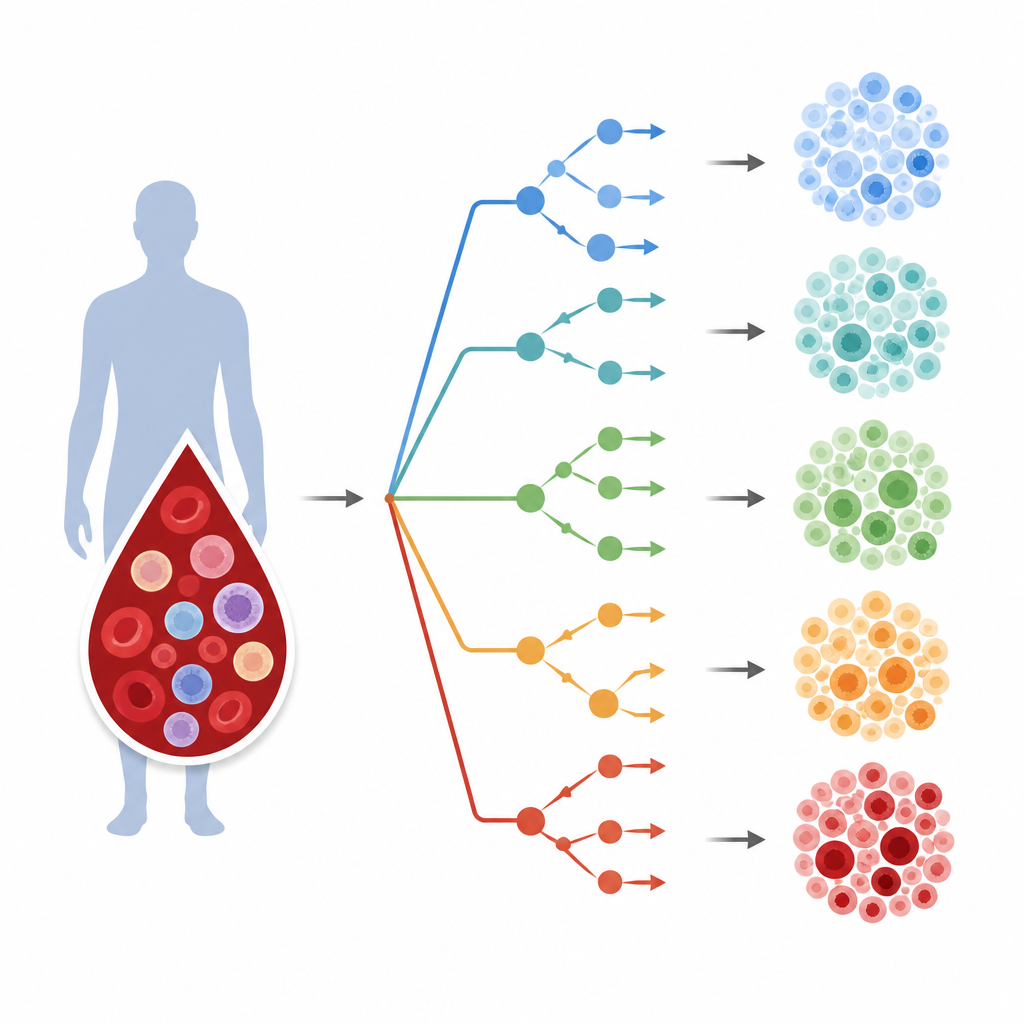
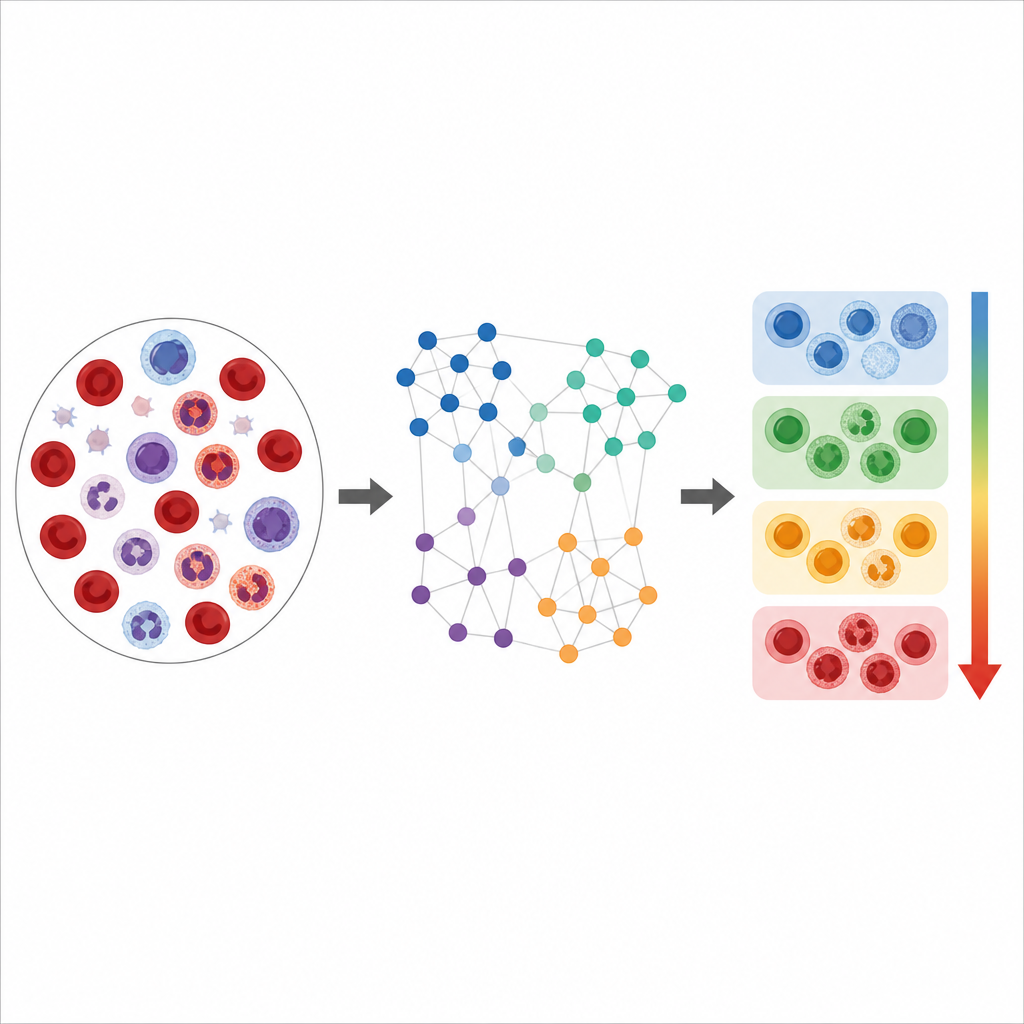
The team studied 605 patients with CMML from Mayo Clinic, and later checked their findings in 501 patients from Italy. Using next generation DNA sequencing, they cataloged mutations across 47 genes commonly altered in blood cancers. They then built a custom machine learning system to cluster patients based on which mutations occurred together and how long patients remained free of blast transformation. The algorithm grew many simple decision trees, each splitting patients into groups with shared mutation patterns, and then merged similar groups according to how their survival curves matched.
Five genetic risk groups from very safe to very dangerous
The computer analysis revealed five molecular clusters with strikingly different chances of turning into acute leukemia. One small group with changes in a gene called PHF6 but without changes in ASXL1 had essentially no transformations over several years, forming an ultra low risk group. At the other extreme, patients with either NPM1 mutations, a pairing of NRAS and SETBP1, or a pairing of ASXL1 and BCOR had extremely high transformation rates, nearing 100 percent within three years. Between these ends, other combinations, such as ASXL1 with RUNX1 or ASXL1 with TET2, defined high and intermediate risk clusters, while patients without these patterns formed a broader low risk group.
Building a simple score doctors can use
To turn these findings into a practical tool, the researchers combined the most powerful single mutations and co-mutations into a new scoring system they call CMML2AML. They assigned points according to how strongly each genetic pattern was linked to blast transformation. NPM1 mutation carried the heaviest weight, followed by NRAS with SETBP1 and by BCOR, with smaller weights for ASXL1 and the ASXL1 plus RUNX1 pair. Adding these points sorted patients into four tiers from low to high risk, with the highest tier facing nearly one in two odds of transformation within a year. This same score worked similarly in the Italian group, supporting its wider usefulness.
A special warning sign: NPM1 mutations
One of the most striking results involved NPM1, a gene well known in acute leukemia. In this CMML study, NPM1 mutations were rare but very ominous. Even when the percentage of immature blasts in the blood and marrow was still below standard cutoffs for acute leukemia, patients with NPM1 changes progressed to blast phase and died sooner than others. These cases often lacked other high risk mutations like ASXL1 or RUNX1 and frequently carried DNMT3A changes instead, suggesting they represent a distinct genetic subtype that may deserve to be treated as acute leukemia as soon as it is recognized.
What this means for patients and care
For people living with CMML, this work shows that the pattern of mutations, not just the number of blasts or a single gene result, can strongly shape the outlook. By identifying dangerous combinations of gene changes and packaging them into the CMML2AML score, the study offers a way to pick out patients who may need closer monitoring and earlier discussion of stem cell transplant, as well as those whose disease is unlikely to transform quickly. These findings will need confirmation in additional groups, but they move the field toward more precise, genetics-based guidance for managing this challenging blood cancer.
Citation: Fathima, S., Rokach, L., Yousuf, M. et al. CMML2AML: machine-learning discovery of co-mutations and specific single mutations predictive of blast transformation in chronic myelomonocytic leukemia. Blood Cancer J. 16, 76 (2026). https://doi.org/10.1038/s41408-026-01491-1
Keywords: chronic myelomonocytic leukemia, blast transformation risk, co-mutations, machine learning genomics, NPM1 mutation