Clear Sky Science · en
Clinical outcomes and risk factors of cytomegalovirus reactivation in teclistamab-treated multiple myeloma patients
Why this matters for people living with cancer
People with multiple myeloma increasingly benefit from powerful new immune-based drugs, but these same treatments can weaken the body’s defenses against infection. This study looks at one such drug, teclistamab, and a common virus called cytomegalovirus (CMV) that can "wake up" when the immune system is suppressed. The findings help clarify how often this happens, how serious it usually is, and which patients need the closest watch—all crucial questions for patients and families weighing the risks and benefits of modern myeloma care.
A new weapon against stubborn myeloma
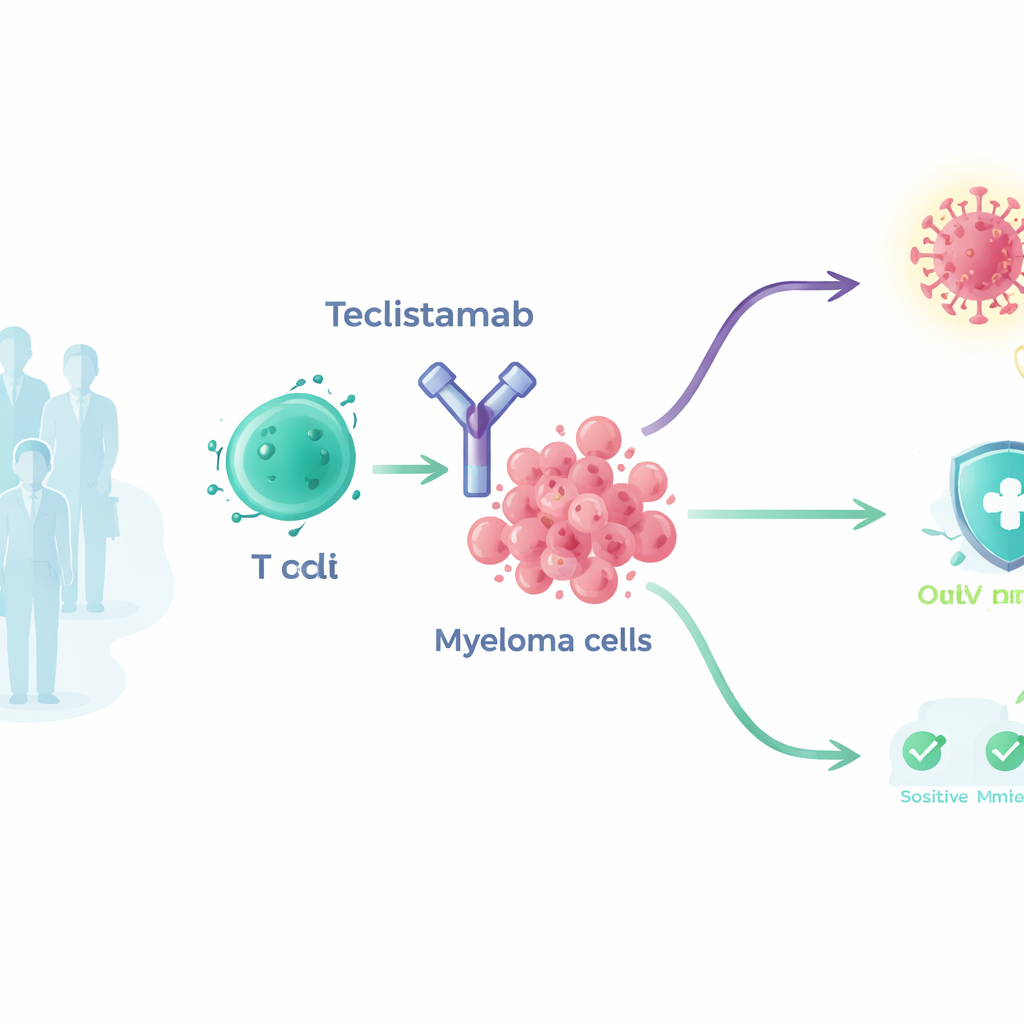
Multiple myeloma is a blood cancer that often comes back after several lines of treatment. Teclistamab is a newer antibody drug designed to bring immune T cells into direct contact with myeloma cells, helping the immune system attack cancer that has resisted other therapies. In clinical trials it produced responses in more than half of heavily pretreated patients, which led to its approval. But because it powerfully reshapes the immune system, doctors have worried that it might also make patients more vulnerable to infections, including dormant viruses like CMV that can reactivate when defenses are down.
What the researchers set out to learn
The team reviewed records from 177 people with multiple myeloma treated with teclistamab at a single cancer center between late 2022 and late 2024. Almost all had regular blood tests for CMV as part of routine care. The researchers asked several practical questions: how often CMV reactivation occurred, when it tended to happen during treatment, how sick patients became, whether it forced changes in cancer therapy, and whether it affected overall survival. They also looked for risk factors—especially whether a history of CMV reactivation before teclistamab made a difference—and tracked other signs of immune weakness such as low antibody levels.
How often CMV came back and how serious it was
Among the 173 patients who were tested for CMV during therapy, 38—about one in five—had CMV reappear in their blood. Reactivation usually happened early, with most cases occurring in the first two to three months after starting teclistamab. Virus levels in the blood were generally low, and nearly 90% of reactivations caused no clear symptoms. Only four patients developed signs like fever or abnormal blood counts that were thought to be related to CMV, and just three needed antiviral drugs. Importantly, no one developed classic CMV-related organ damage, such as serious lung, eye, or gut disease, and no patient had to stop teclistamab because of CMV.
Who was at higher risk and what it meant for survival
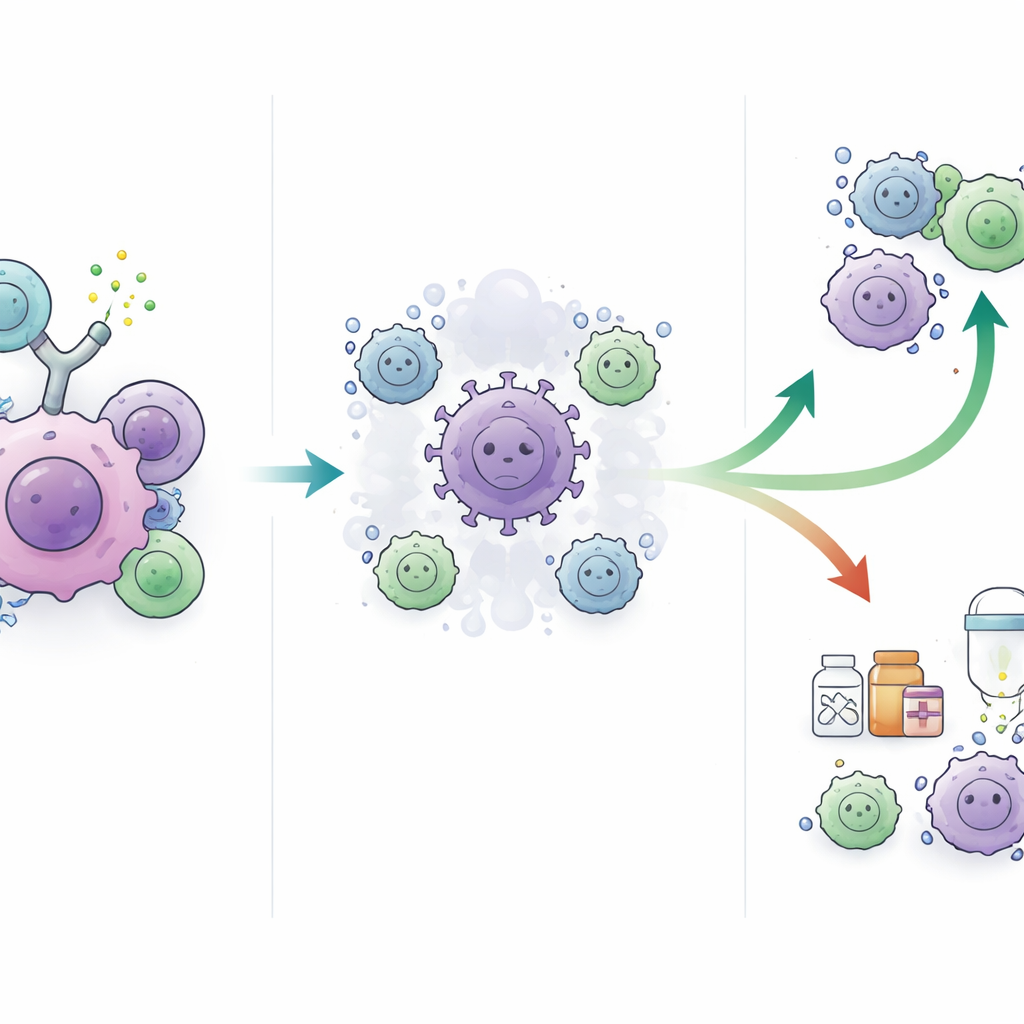
The clearest predictor of CMV reactivation was a history of CMV reappearing before teclistamab: those patients had more than three times the odds of reactivation during treatment. Other factors, such as age, sex, and reactivation of different viruses, were not independently linked to higher risk once prior CMV history was considered. Even though many patients had very low antibody levels and reduced lymphocyte counts—evidence of deep immune suppression—CMV reactivation itself did not shorten life. When the researchers compared overall survival between patients who did and did not experience CMV reactivation, the curves were essentially the same. However, use of preventive intravenous immunoglobulin (IVIG), a pooled antibody infusion, was tied to better survival overall, suggesting it may help counter broader infection risks.
What this means for patients and their care teams
For patients with multiple myeloma receiving teclistamab, this study offers cautious reassurance. CMV reactivation is not rare, but it is usually mild, often unnoticed, and in this group did not lead to serious organ damage or reduced survival. People who have had CMV reactivation in the past are more likely to see it return and may benefit from closer monitoring early in therapy, while others may not need such intensive testing. The findings support a tailored approach: watch most carefully those at highest risk, treat only when virus levels rise or symptoms appear, and consider IVIG to bolster defenses. As immune-based drugs move into earlier stages of myeloma treatment, such evidence will help doctors balance strong anti-cancer effects with safe, sensible infection control.
Citation: Cheema, H., Shrestha, A., Naqvi, S. et al. Clinical outcomes and risk factors of cytomegalovirus reactivation in teclistamab-treated multiple myeloma patients. Blood Cancer J. 16, 51 (2026). https://doi.org/10.1038/s41408-026-01484-0
Keywords: multiple myeloma, teclistamab, cytomegalovirus, bispecific antibodies, infection risk