Clear Sky Science · en
Real-world outcomes with elranatamab in multiple myeloma: a multicenter analysis from the U.S. Multiple Myeloma Immunotherapy Consortium
Why this matters for people living with myeloma
For people with multiple myeloma whose cancer has returned after many treatments, new drugs can offer rare second chances. But results seen in carefully selected clinical trial volunteers do not always match what happens in everyday clinics, where patients are often older, sicker, and have already tried many advanced therapies. This study looks at how the immune‑based drug elranatamab actually performs in real-world U.S. cancer centers, and which patients are most likely to benefit or struggle.
A new immune medicine put to the real-world test
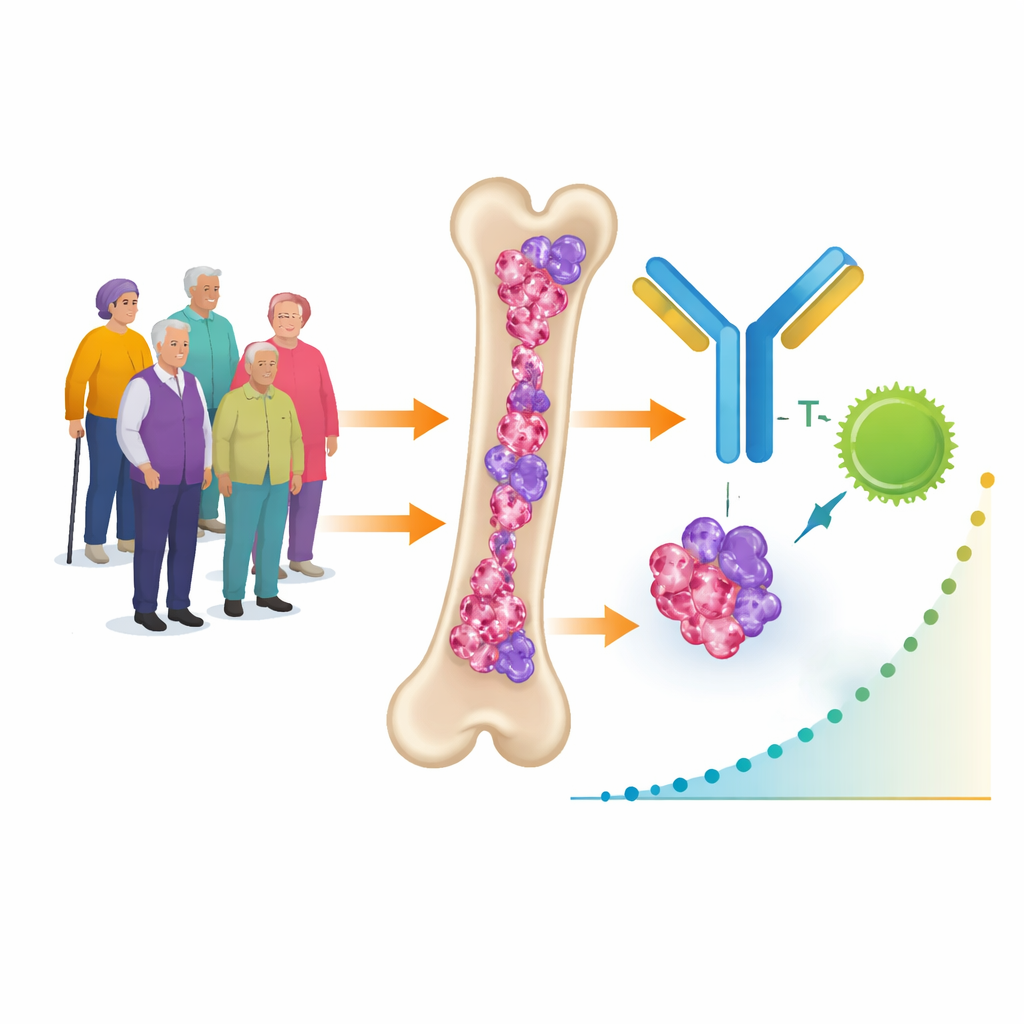
Elranatamab is an engineered antibody that acts like a molecular matchmaker: it grabs cancerous plasma cells in the bone marrow on one end and a patient’s own T cells on the other, pulling them together so the immune system can attack the tumor. Earlier clinical trials in highly selected patients showed impressive results, with many deep, long-lasting responses. The current study followed 130 people with relapsed or refractory multiple myeloma treated with elranatamab at nine major U.S. centers. These patients were typically in their early seventies and had already been through a median of six prior treatment courses, including stem cell transplants and other cutting‑edge myeloma drugs.
Who received the drug and how they fared
The group in this analysis was far more fragile than those usually allowed into clinical trials. Over one third had clear trouble with daily activities, nearly half had already received other BCMA‑targeted treatments such as CAR‑T cells, and most had disease that had stopped responding to at least three major classes of standard drugs. Despite this, elranatamab still shrank tumors in about two out of three patients, and more than one third achieved very deep remissions where no active disease could be found by standard tests. However, these responses did not last as long as in trials: on average, cancer control without worsening held for just over four months, and half of patients were alive at around fifteen months after starting therapy, noticeably shorter than in the earlier MagnetisMM‑3 trial.
Simple blood tests that forecast benefit
Looking more closely, the researchers found that two routine blood measurements—hemoglobin (a marker of red blood cells and bone marrow “reserve”) and LDH (an enzyme that tends to rise with aggressive, fast‑growing disease)—were powerful predictors of outcome. Patients who started treatment with reasonably preserved red blood cell counts and lower LDH levels were much more likely to respond and to stay in remission longer. Those with anemia and high LDH tended to relapse quickly and to die sooner. Building on this, the team designed a simple two‑point risk score called ALPS, giving one point each for low hemoglobin and high LDH. People with a score of zero had markedly longer survival and cancer control than those with one or two points, suggesting this easy score could help doctors decide who is most likely to benefit from elranatamab.
Side effects, infections, and the role of added protection
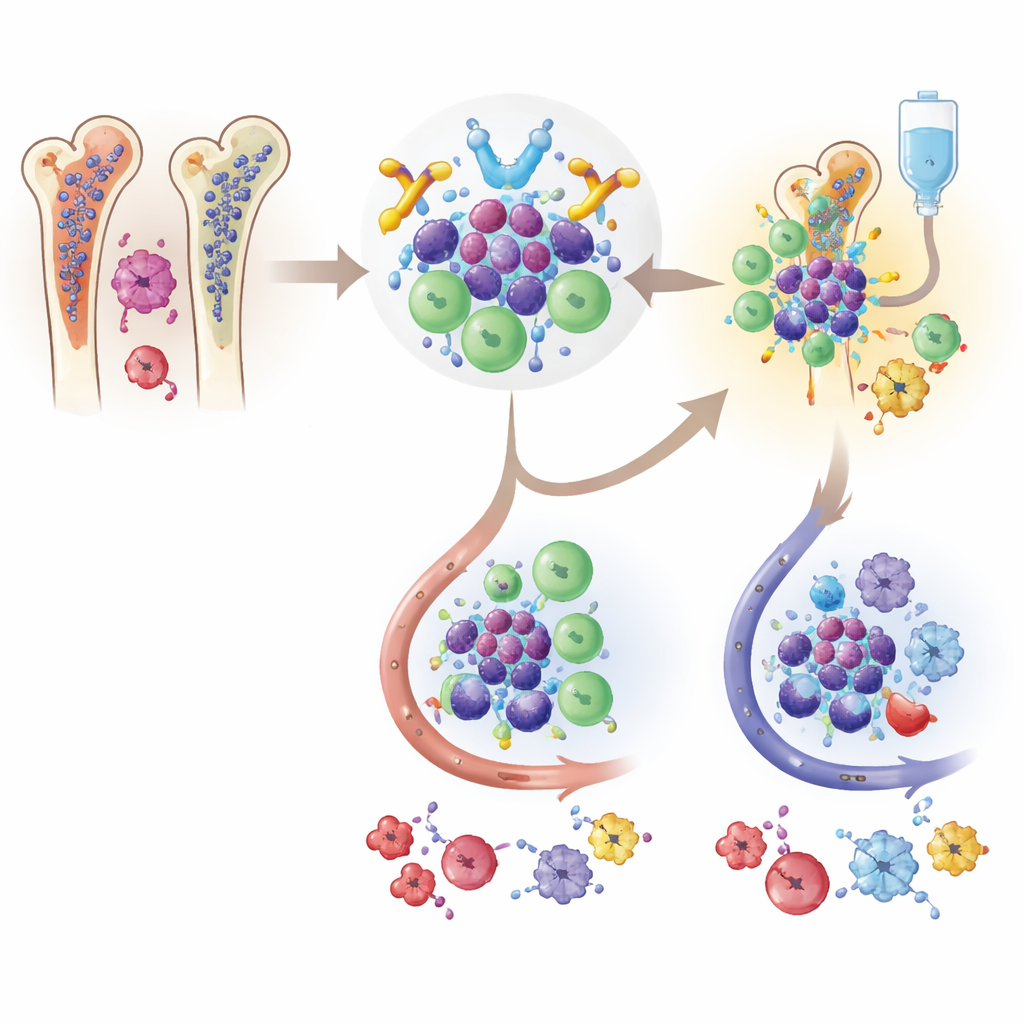
Because elranatamab deeply suppresses healthy antibody‑producing cells along with the cancer, infections were common: more than a third of patients developed infections, and over half of those required hospital care. The study also tracked immune‑related side effects such as cytokine release syndrome (a brief but sometimes intense inflammatory reaction) and neurologic symptoms. These problems remained frequent but were usually short‑lived. Importantly, nearly half the patients received intravenous immunoglobulin (IVIg)—infusions of pooled protective antibodies from donors. Using careful time‑based statistical methods, the researchers found that once patients began IVIg, they had fewer infections and tended to stay alive and progression‑free without infection for longer, suggesting that proactive immune support can meaningfully improve the safety of treatment.
What this means for patients and clinicians
Overall, the study confirms that elranatamab can still deliver meaningful tumor shrinkage in heavily pretreated, frail people with multiple myeloma seen in everyday practice, but it also underscores that responses are often shorter and complications more frequent than in trials. Two simple lab values—hemoglobin and LDH—combine into an easy bedside score that helps identify patients most likely to gain durable benefit, while those with very low blood counts and highly aggressive disease may need different strategies or additional therapies up front. The findings also highlight the value of preventive measures such as IVIg to reduce infections. Together, these real‑world data argue for using elranatamab thoughtfully rather than automatically, tailoring decisions to each person’s overall health, disease burden, and ability to tolerate intensive immune therapy.
Citation: Portuguese, A.J., Davis, J.A., Raza, S. et al. Real-world outcomes with elranatamab in multiple myeloma: a multicenter analysis from the U.S. Multiple Myeloma Immunotherapy Consortium. Blood Cancer J. 16, 47 (2026). https://doi.org/10.1038/s41408-026-01477-z
Keywords: multiple myeloma, elranatamab, bispecific antibody, BCMA therapy, intravenous immunoglobulin