Clear Sky Science · en
A preliminary evaluation of quercetin-mediated osteogenic gene expression in lipopolysaccharide-treated human periodontal ligament cells: an in vitro study
Why a Plant Compound Matters for Your Teeth
Gum disease is one of the leading causes of tooth loss in adults, and it is notoriously hard to reverse once the supporting bone around teeth starts to disappear. This study explores whether quercetin—a natural compound found in apples, onions, and berries—might help the cells that hold teeth in place switch back into a bone-building mode, even in an inflamed environment similar to severe gum disease. The work was done in the lab, not yet in patients, but it offers an early glimpse of how everyday plant molecules could support future tooth-saving therapies. 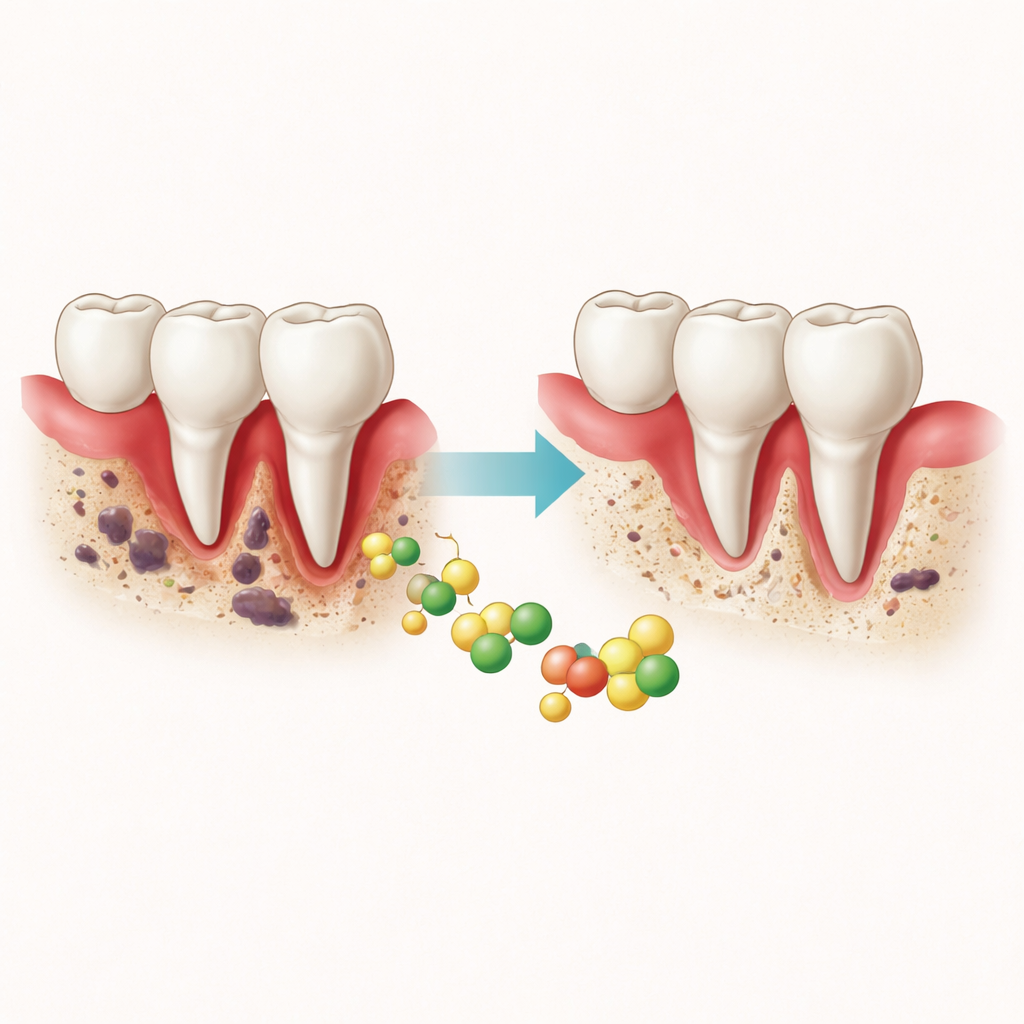
Gum Trouble Beneath the Surface
Periodontal disease is a long-lasting infection of the tissues that surround the teeth, including the gums, ligament, and bone. Bacteria in dental plaque release toxic components, especially a molecule called lipopolysaccharide (LPS), that constantly irritate these tissues. Over time, this chronic irritation leads the body’s own defense system to break down bone and connective tissue instead of protecting them. When enough bone around the teeth is lost, teeth can loosen and eventually fall out, even if they appear relatively healthy above the gum line.
The Tooth-Supporting Cells at the Heart of the Study
The researchers focused on human periodontal ligament cells, the living tissue fibers that anchor the tooth root to the surrounding bone. These cells are not just passive ropes; they can behave a bit like stem cells, with the ability to mature into bone-forming cells under the right conditions. That makes them a useful model for studying how to encourage regeneration of the structures that support teeth. In real gum disease, these ligament cells sit in an inflamed, bacteria-rich environment dominated by LPS, which tends to shift them away from building bone and toward participating in inflammation.
A Plant Molecule Steps In
Quercetin is a flavonoid, a class of plant-derived compounds known for anti-inflammatory and antioxidant actions. To mimic gum disease in the lab, the team exposed human periodontal ligament cells to LPS from a key gum-disease bacterium, creating an inflamed setting. After 24 hours, they added quercetin at three different doses and kept the cells in a bone-promoting culture medium for 14 days. They then measured the activity of two genes, osteopontin and osteocalcin, which are important markers of bone formation and mineralization. Lower levels of these markers signal that cells are not in a bone-building mood; higher levels suggest they are gearing up to help rebuild hard tissue. 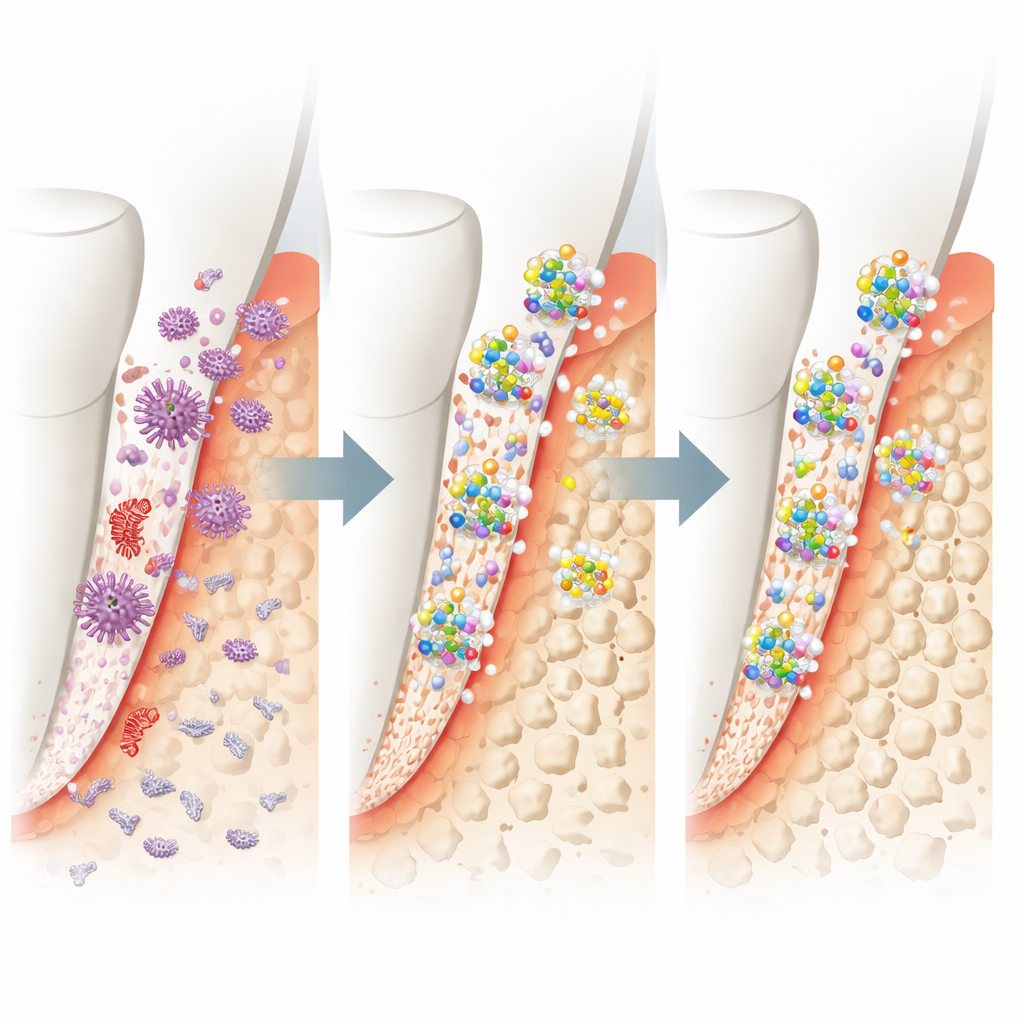
From Suppressed Bone Signals to a Stronger Response
As expected, LPS alone strongly dampened the bone-related markers in these ligament cells, reflecting the harmful effect of inflammation on the tooth-supporting tissues. When quercetin was added after this inflammatory hit, the picture changed. At all three doses tested, quercetin not only restored the markers to around or above normal levels, but did so in a clear dose-dependent fashion: the higher the quercetin concentration, the stronger the gene activity linked to bone formation. At the highest dose tested, expression of both osteopontin and osteocalcin rose several-fold compared to untreated controls, suggesting that quercetin helped the cells overcome the inflammatory shutdown and re-engage their bone-building program.
What This Could Mean for Future Gum Care
For non-specialists, the key takeaway is that a common plant compound helped tooth-supporting cells in a dish recover their bone-forming signals after an inflammatory insult resembling gum disease. This does not mean that quercetin supplements can regrow bone around teeth today; the study measured gene activity only, not actual new bone, and it was done in isolated cells, not in people. Still, the findings provide an encouraging proof of concept: under hostile, bacteria-driven conditions, it may be possible to nudge the body’s own cells back toward repair rather than destruction. With further research in animals and clinical studies, quercetin or related molecules might one day become part of targeted treatments to better preserve or restore the foundation that keeps our teeth firmly in place.
Citation: Radhakrishnan, S., M, P.B.R., Shankar, P.L.R. et al. A preliminary evaluation of quercetin-mediated osteogenic gene expression in lipopolysaccharide-treated human periodontal ligament cells: an in vitro study. BDJ Open 12, 42 (2026). https://doi.org/10.1038/s41405-026-00434-z
Keywords: gum disease, periodontal regeneration, quercetin, bone-forming cells, oral inflammation