Clear Sky Science · en
Black is the new blue? A cross-sectional Gulf Cooperation Council (GCC) survey of colour preferences for scrubs, PPE and the dental clinical environment
Why the colors in your dentist’s office matter
Most of us notice the drill, the chair, and the bill at the dentist—but not the colors on the walls or the scrubs our dentist wears. Yet these colors quietly shape whether we feel calm, anxious, or confident in the care we receive. This study asked young adults in three Gulf countries which colors they prefer for dental uniforms, protective gear, and clinic interiors, revealing a surprising role for black and a clear appetite for warm, comforting light.
Asking future patients what looks right
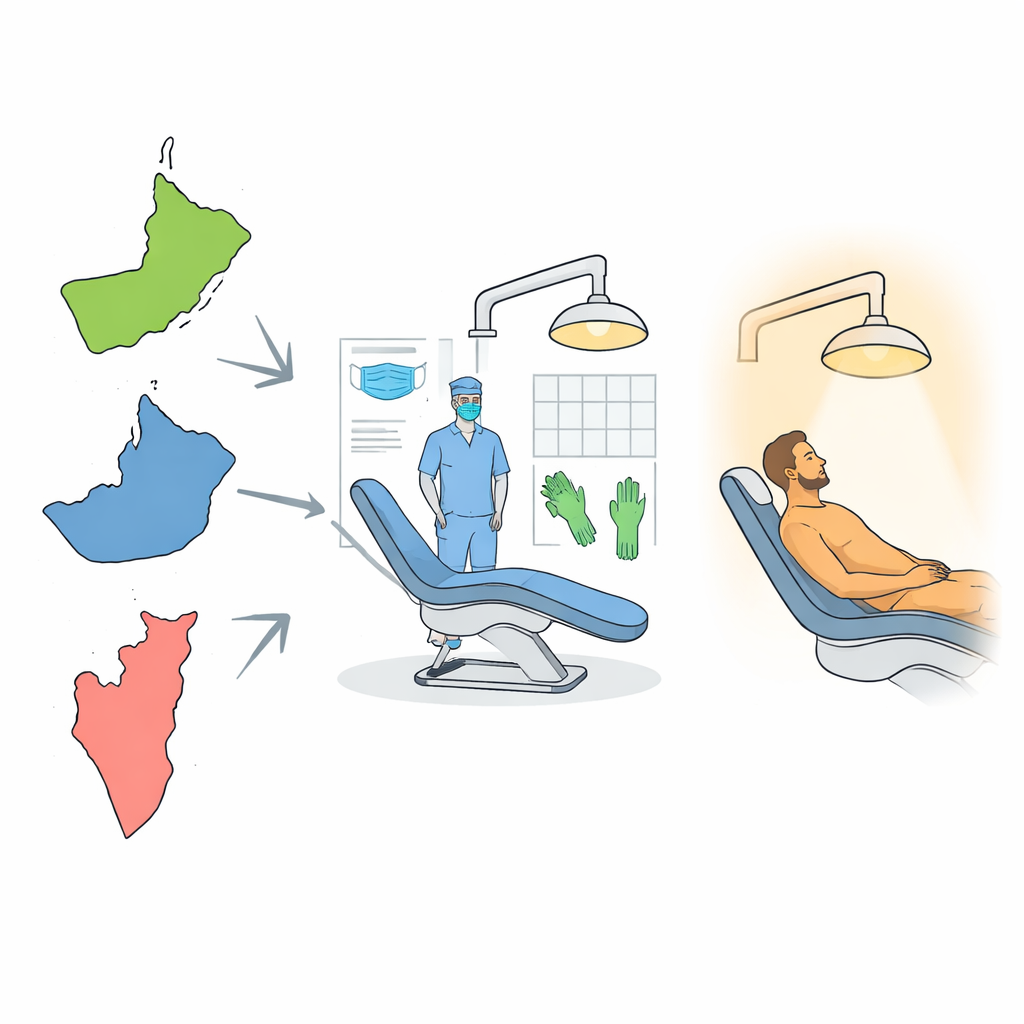
Researchers surveyed 613 non-medical university students in Oman, the United Arab Emirates, and Bahrain—people who are educated, frequent users of care, but not influenced by professional training. Online, participants chose favorite colors for scrubs and many everyday dental items: masks, gloves, suction tips, bibs, cups, even wall paint and lighting. They also picked scrub colors for three situations—routine treatment, surgery, and children’s visits—marked all the colors they found “comfortable,” and rated statements about trust, cleanliness, modesty, and anxiety. The team then compared answers across countries and scenarios.
Classic colors still rule the clinic
Across the region, preferences clustered around a familiar “classic” palette: blue, black, white, and green. For scrubs overall, blue and black dominated in all three countries, with only modest differences in which one came first. Blue was also the top choice for masks, dental chairs, and bibs, while walls and small disposables tended to be white or another neutral shade. Warm, slightly yellow-tinted lighting clearly beat bright white lighting in every country, suggesting that a softer, homier glow feels more comfortable than the stark “operating theatre” look. When people were allowed to tick every color they found comfortable, blue and white scored above 90%, with green and black close behind, confirming that the classic set feels safest to most respondents.
Black scrubs challenge old assumptions
A striking finding was the popularity of black, especially for scrubs in everyday care. In some Western studies, black uniforms have been viewed as less friendly or less clean. Here, however, black often competed head-to-head with blue and sometimes came out on top. Most respondents across all three countries disagreed with the idea that dark colors look less hygienic. Differences between countries on this point were small and driven mainly by a slightly larger minority in the UAE who did feel darker colors seemed less clean. Overall, the results suggest that in Gulf settings, black has moved from “risky” to “acceptable classic,” likely shaped by local fashion and visual culture.
When treating children, color rules can bend
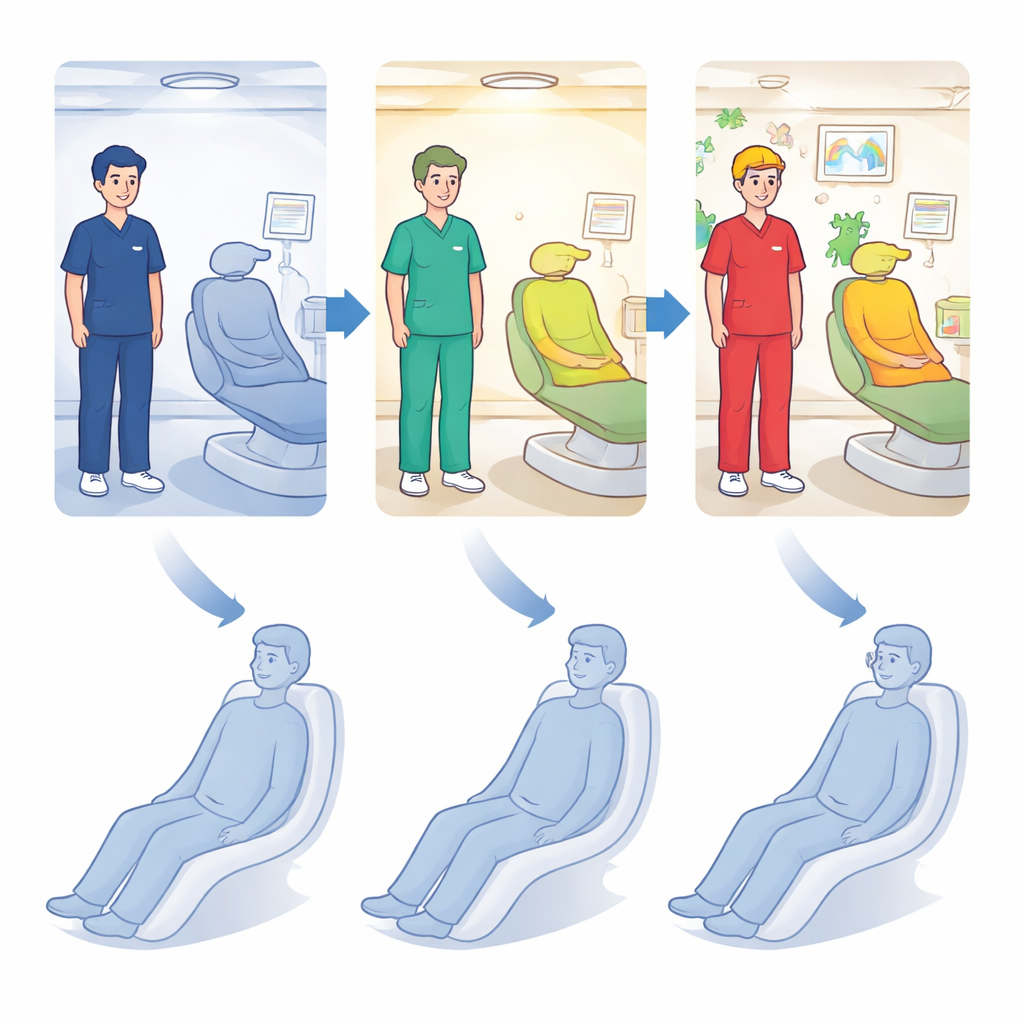
Color choices shifted noticeably once the scenario changed. When participants imagined scrubs for routine adult care or surgery, they mostly stuck to the classic palette. But in a pediatric setting they were much more open to brighter “non-classic” tones like red and yellow. Only about one in six respondents kept the same scrub color across all three scenarios, showing that people do not hold a single fixed favorite—they adjust what feels right depending on context, risk, and the emotional tone of the visit. Some smaller items, such as disposable kits or suction tips, also showed country-specific tastes—for example, Bahrain respondents were more accepting of black in certain items—offering room for local customization without discarding the shared core palette.
What this means for designing calmer dental visits
For clinic managers and manufacturers in the Gulf region, the message is practical. A stable base palette of blue, black, white, and green is widely accepted for scrubs, protective gear, and equipment, and black can safely be included rather than avoided. At the same time, color choices should flex with the situation: brighter, playful hues and patterns can be introduced thoughtfully in children’s areas, while adult and surgical spaces stay more restrained. Perhaps the simplest change of all is tuning the lighting: warm, yellowish light was clearly preferred and could make dental environments feel more welcoming without disrupting clinical routines. In short, careful use of color and light offers a low-cost way to help patients feel more at ease in the dental chair.
Citation: Qutieshat, A., Al Amry, R.T., Mustafa, Z. et al. Black is the new blue? A cross-sectional Gulf Cooperation Council (GCC) survey of colour preferences for scrubs, PPE and the dental clinical environment. BDJ Open 12, 37 (2026). https://doi.org/10.1038/s41405-026-00426-z
Keywords: dental clinic design, color preferences, scrubs and PPE, patient comfort, Gulf Cooperation Council