Clear Sky Science · en
The association between systemic immune-inflammation index and periodontitis in adults with and without hyperlipidemia: a population-based study
Why your gums and blood tests may be linked
Most people think of bleeding gums and high cholesterol as separate problems—one for the dentist, one for the cardiologist. This study brings the two together, asking whether a simple blood marker of inflammation can help explain why some people with unhealthy blood fats are more likely to develop gum disease, and whether there is a “sweet spot” where the body’s defenses protect the mouth instead of harming it.
What the researchers wanted to find out
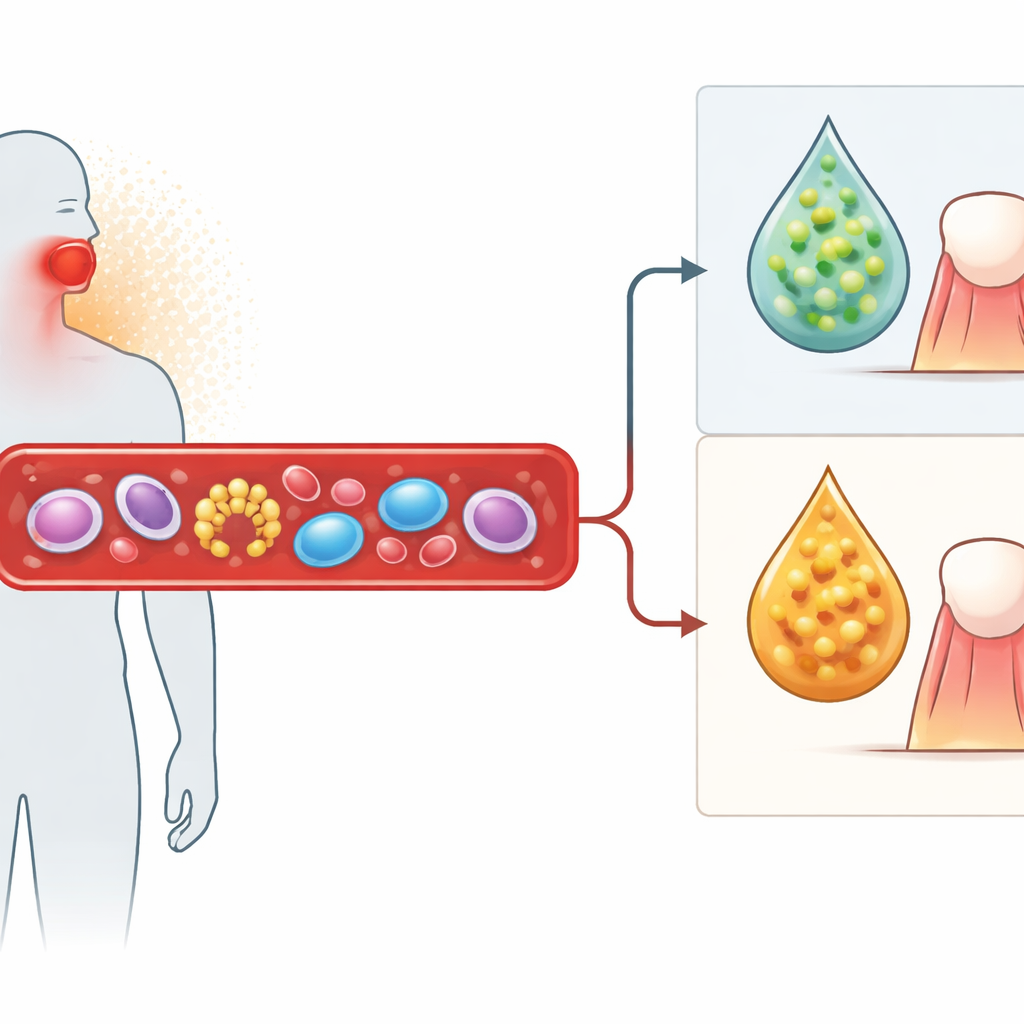
Gum disease, or periodontitis, is a long-lasting infection that damages the tissues and bone supporting the teeth. It starts with bacterial buildup on the teeth, but how severely it progresses depends heavily on how the body’s immune system reacts. At the same time, conditions like high cholesterol and triglycerides—often grouped as hyperlipidemia—are known to stir up low-level inflammation throughout the body. The researchers focused on a blood-based measure called the Systemic Immune-Inflammation Index (SII), which combines counts of three common blood cells. They asked two main questions: Is SII related to the chances of having periodontitis, and does that relationship change in people with versus without hyperlipidemia?
Who was studied and how
The team analyzed data from 21,283 adults who took part in the U.S. National Health and Nutrition Examination Survey between 1999 and 2014. All participants had undergone a standardized dental exam to determine whether they had mild, moderate, or severe periodontitis, and had routine blood tests that allowed calculation of the SII. They were also classified as having or not having hyperlipidemia based on cholesterol measurements, triglyceride levels, use of cholesterol-lowering drugs, and whether a doctor had ever told them they had high cholesterol. Using statistical models, the authors accounted for many other factors that can affect gum health, including age, sex, income, smoking, drinking, physical activity, body weight, high blood pressure, and diabetes.
A curve with a turning point
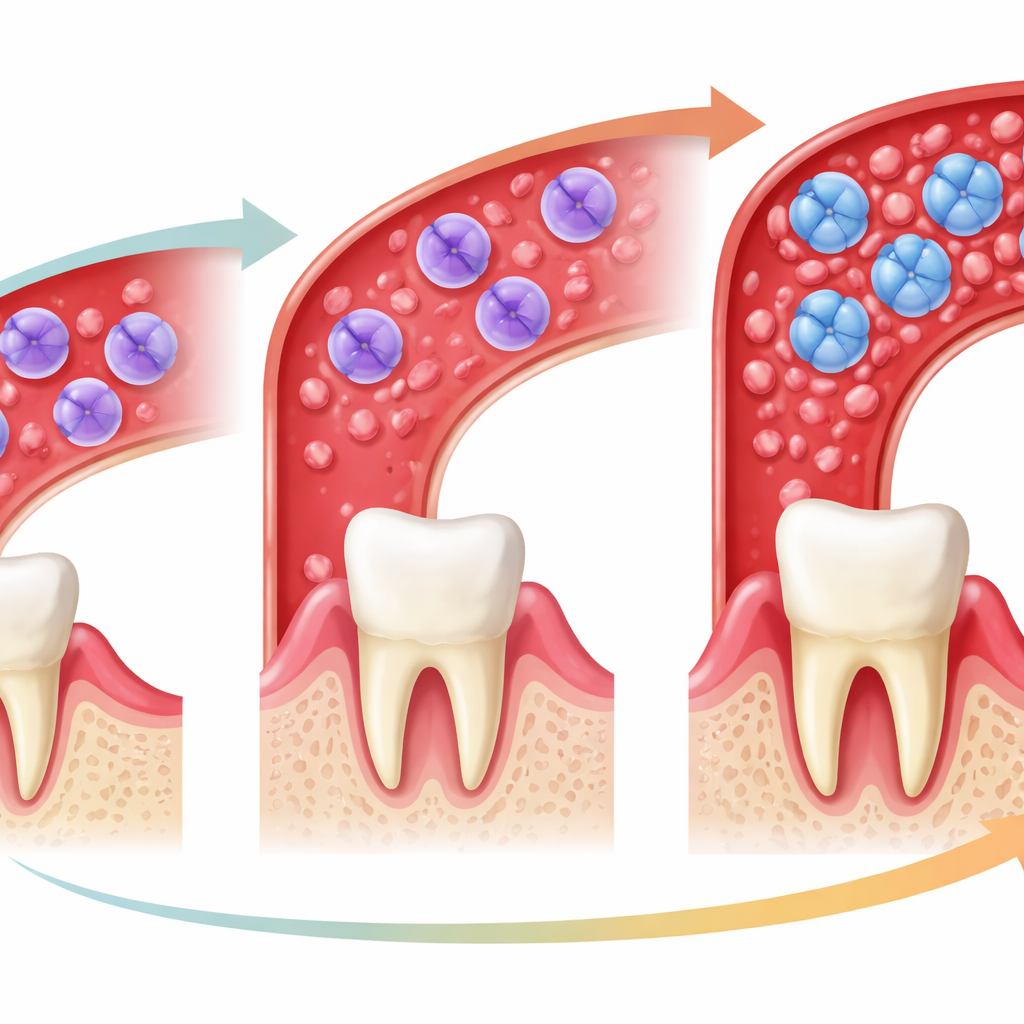
Overall, about one in three participants had periodontitis. When the researchers examined the entire group together, the picture was complex. They therefore looked separately at adults with and without hyperlipidemia. Among people with hyperlipidemia, they discovered a clear non‑linear pattern: when SII values were in a moderate range, higher SII was actually linked to lower odds of gum disease, but once SII rose beyond a certain level—around 522 on their scale—further increases went hand‑in‑hand with a higher chance of periodontitis. In practical terms, for hyperlipidemic adults below this turning point, a modest rise in SII was associated with about an 18% reduction in risk, whereas above the turning point the same rise corresponded to about a 15% increase in risk. Statistical tests confirmed that this “J‑shaped” curve was unlikely to be due to chance.
When blood fats are normal, the link disappears
In contrast, among adults without hyperlipidemia, SII did not show a meaningful relationship with gum disease: people with higher or lower SII were no more or less likely to have periodontitis once other influences were taken into account. The authors also checked whether their results might be thrown off by serious illnesses, by differences between men and women, or by using stricter versus looser definitions of gum disease. Repeating their analyses under these different conditions yielded very similar findings, suggesting that the observed pattern in people with hyperlipidemia is robust.
What this might mean for patients
The J‑shaped curve suggests that, in people with unhealthy blood fats, both too little and too much immune activity may be unfavorable for gum health. A moderately active immune system may keep harmful oral bacteria under control without causing excessive damage to the tissues that hold teeth in place. If immune activity is too low, infection may smolder and progress; if it is too high, inflammation and clot‑related processes may erode the gums and bone. Because SII is calculated from routine blood counts, the authors propose that, in people with hyperlipidemia, unusually low or high SII values might flag those who deserve especially careful dental monitoring.
Take‑home message
This population-based study suggests that the connection between whole‑body inflammation and gum disease depends strongly on whether a person has high blood lipids. In adults with hyperlipidemia, there appears to be an optimal balance of immune activity, with both lower‑than‑usual and higher‑than‑usual SII linked to greater odds of periodontitis. In adults with normal lipid levels, everyday fluctuations in this inflammation index do not seem to translate into major differences in gum health. While the study cannot prove cause and effect, it underscores how closely oral health is tied to broader metabolic and inflammatory states—and hints that managing cholesterol and other blood fats may pay dividends not only for the heart and blood vessels but for the gums as well.
Citation: Xie, Y., Zhou, S. The association between systemic immune-inflammation index and periodontitis in adults with and without hyperlipidemia: a population-based study. BDJ Open 12, 29 (2026). https://doi.org/10.1038/s41405-026-00422-3
Keywords: gum disease, systemic inflammation, high cholesterol, oral-systemic health, immune balance