Clear Sky Science · en
Multimodal phenotypic classification of generalized anxiety and panic using structural MRI data and psychosocial factors: machine learning results from the German National Cohort (NAKO) study
Why worry and panic matter to everyday life
Many people live with constant worry or sudden waves of fear that seem to come out of nowhere. These experiences, known as generalized anxiety and panic attacks, can drain energy, disrupt work and family life, and increase the risk of other health problems. This study asked a simple but important question: when it comes to spotting who is struggling with these conditions, what tells us more, people’s life stories and current stress, or detailed scans of their brains? 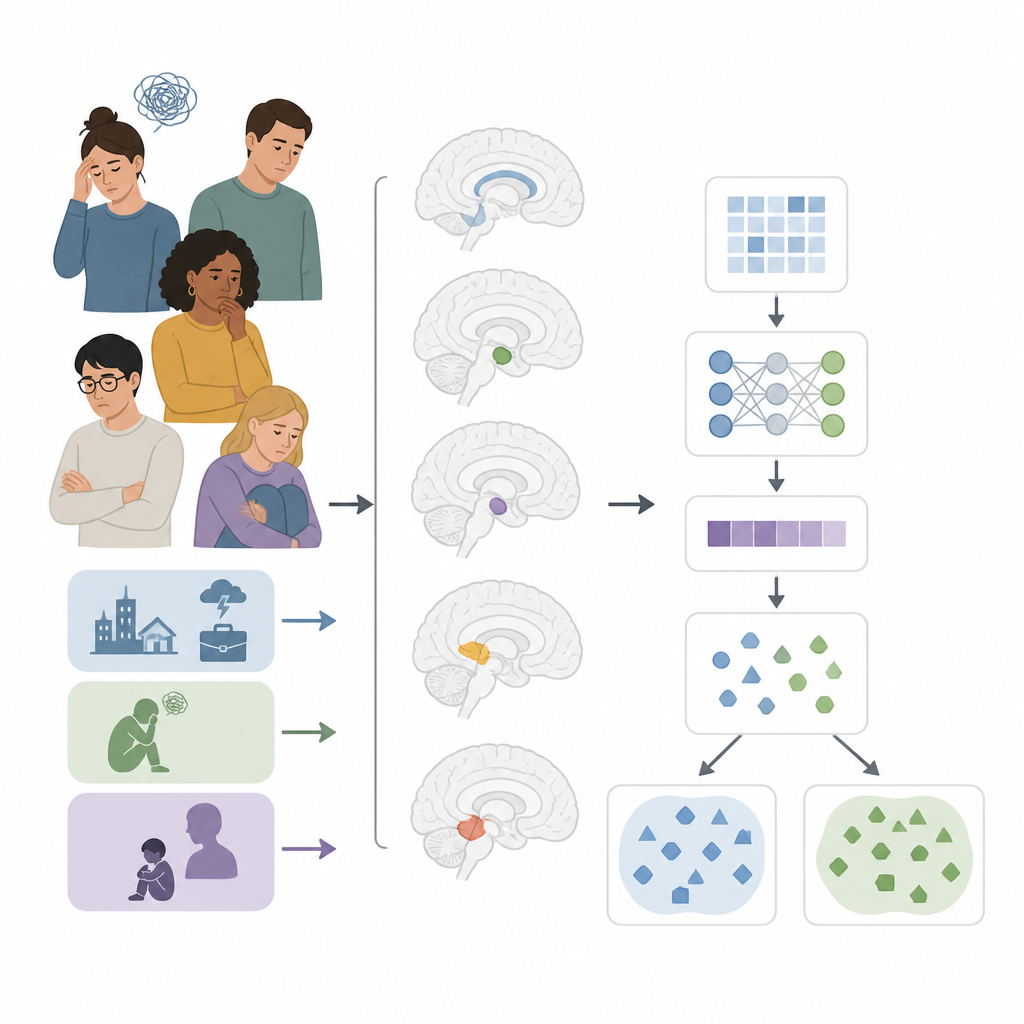
Looking at both minds and brains
Researchers drew on data from more than 26,000 adults who took part in the German National Cohort, a large health study. Participants answered questions about anxiety, panic attacks, depression, daily stress, smoking, and experiences of abuse or neglect in childhood. They also underwent high-resolution brain scans that measured the size and thickness of 246 different brain regions. Using modern computer techniques from machine learning, the team tried to teach algorithms to tell apart people with strong anxiety symptoms or panic attacks from those without.
Life experiences speak louder than brain scans
When the models relied only on brain scans, they did only slightly better than guessing. In contrast, when the models used only psychosocial information such as depression scores, current stress, and childhood trauma, they were very accurate in identifying people with high levels of generalized anxiety or panic attacks. In particular, symptoms of depression and stress, a history of difficult childhood experiences, and being a woman were among the strongest clues. Panic attacks and generalized anxiety also helped predict each other, reflecting how often they occur together.
What brain scans still add
Adding brain data to the psychosocial information did not boost overall accuracy, but it did make the models better at avoiding false alarms. In other words, combining brain structure with life history helped the system more confidently recognize people who were unlikely to have clinically important anxiety or panic. Certain brain areas kept appearing as helpful pieces of the puzzle, especially regions involved in fear and attention, such as parts of the amygdala and a patch of tissue near the side of the frontal lobe that supports thinking and worry. These brain features, however, were subtle and only became informative when considered together with many other factors. 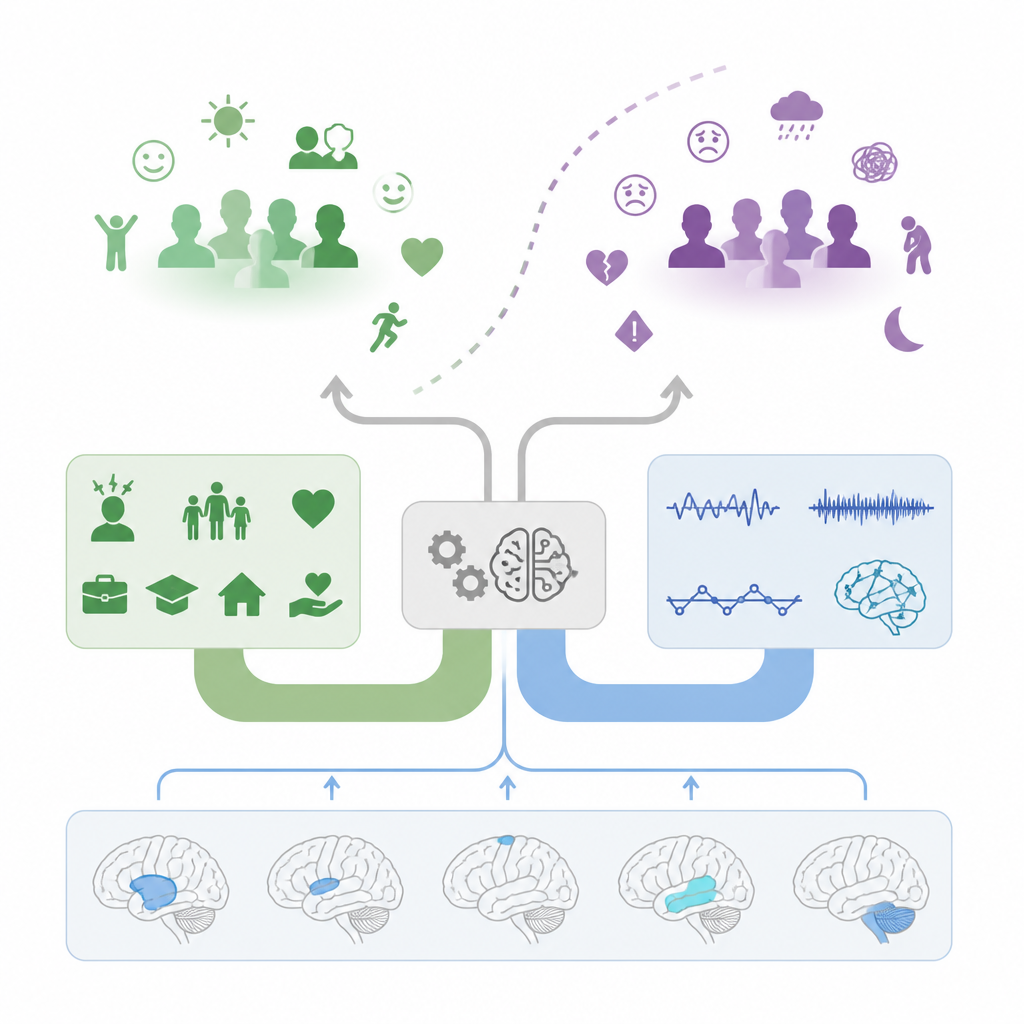
Why this matters for care and future research
The findings highlight that simple tools already available in clinics, like brief questionnaires about mood, stress, and past adversity, remain the most powerful way to flag people at risk for serious anxiety and panic. Brain scans on their own are not ready to serve as stand-alone tests. Still, the study suggests that brain structure may carry extra, fine-grained information that can sharpen risk estimates, especially for ruling out problems or defining subgroups of patients. Larger and more diverse studies that follow people over time, and that add other biological measures, may eventually turn such multimodal approaches into useful guides for more tailored treatment.
The bottom line for readers
For now, what people report about their feelings, stress, and life history tells doctors much more about generalized anxiety and panic than a structural brain scan does. Brain imaging contributes smaller, supporting clues rather than clear-cut answers. This work suggests that the best way forward is to combine careful listening to patients with smart use of brain and biological data, aiming one day to offer more personalized care without relying on brain scans as magic detectors of anxiety.
Citation: Gutzeit, J., Weiß, M., Kuhn, T. et al. Multimodal phenotypic classification of generalized anxiety and panic using structural MRI data and psychosocial factors: machine learning results from the German National Cohort (NAKO) study. Transl Psychiatry 16, 287 (2026). https://doi.org/10.1038/s41398-026-04131-1
Keywords: generalized anxiety, panic attacks, psychosocial factors, brain MRI, machine learning