Clear Sky Science · en
Advancing translational research in binge-eating: Integrating insights from clinical practice into animal models
Why this research matters to everyday eating
Binge eating is more than just having an extra dessert; for many people it is a distressing pattern that harms health, mood, and daily life. Because scientists cannot ethically trigger this behavior in people to study its roots, they often turn to animals to explore what is happening in the body and brain. This review looks at how well current animal models capture real human experiences of binge eating, and how these models can be improved to guide better treatments.
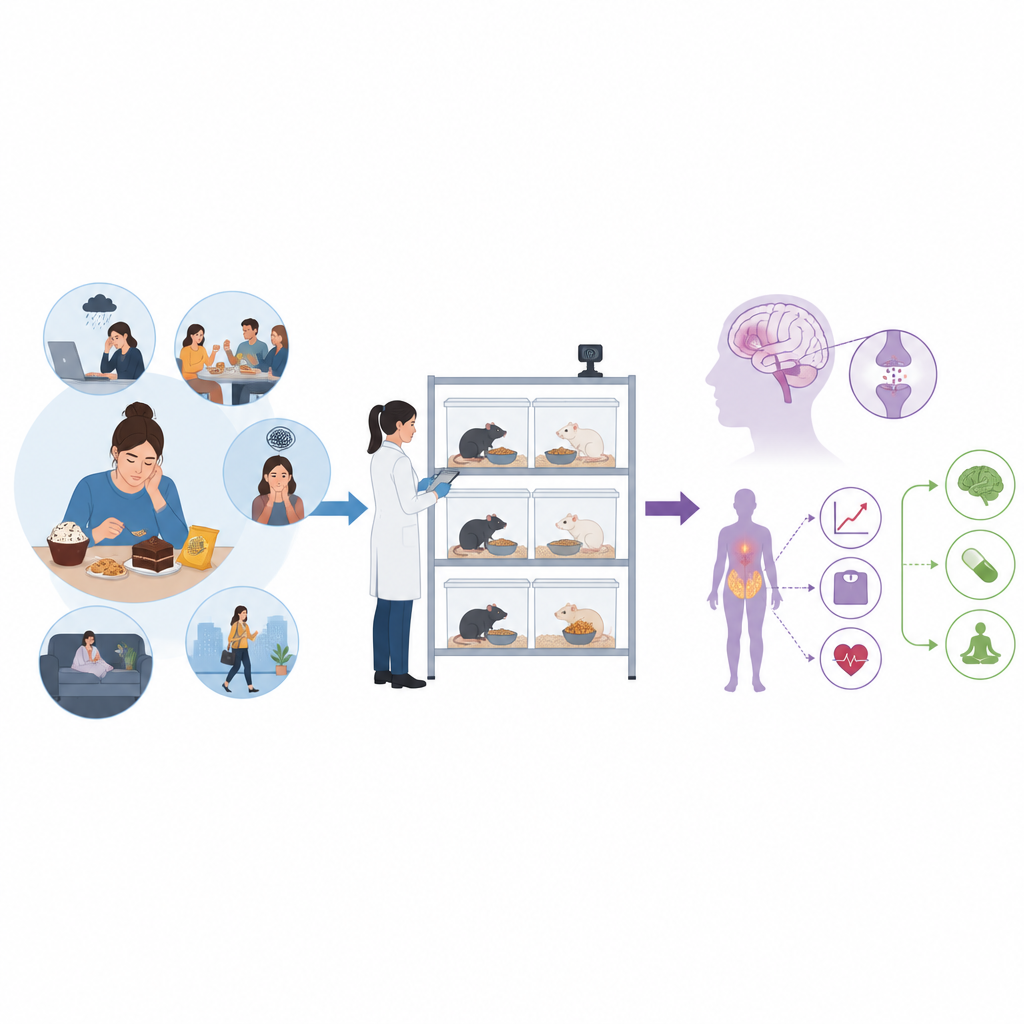
How animals are used to study binge eating
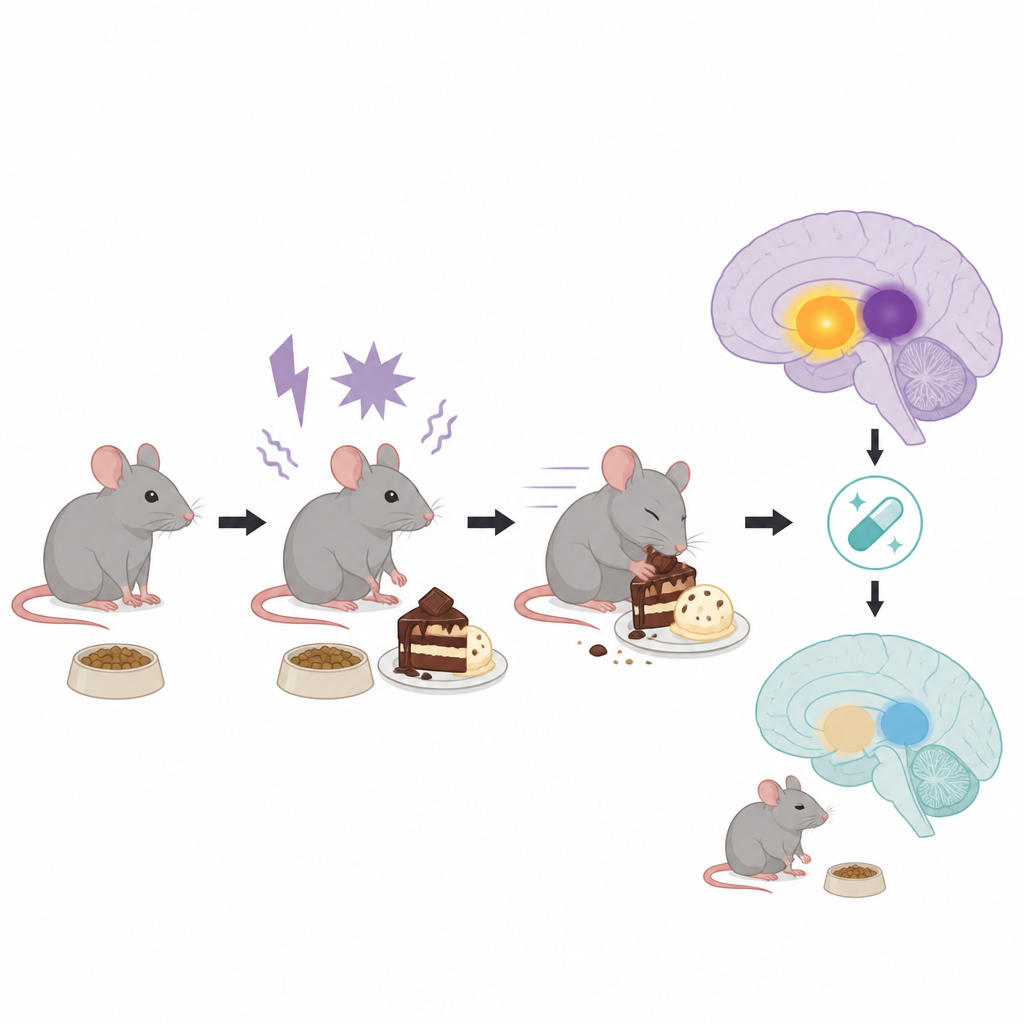
Researchers have developed several ways to prompt binge-like eating in rodents. Some models rely on food restriction, where access to tasty high-fat or high-sugar foods is limited in time or made unpredictable, encouraging animals to eat large amounts quickly. Others borrow ideas from addiction research, asking whether certain foods can trigger patterns similar to drug seeking and relapse. There are also stress-based models that pair restricted food with physical or emotional stress, and conditioning setups where animals must work for palatable food under controlled schedules. These approaches help isolate biological and behavioral drivers of overeating that would be hard to study directly in people.
What current models miss from real life
Even the best animal model can only capture part of the human story. Rodent studies focus on measurable actions like how much or how fast an animal eats, but they cannot directly reflect feelings such as shame, fear of weight gain, or the painful sense of being out of control. Many models emphasize a narrow set of foods, such as sugar or fat, and often depend on strong food restriction, which rarely mirrors why people diet or binge. They also tend to blur the line between binge-eating disorders and obesity, even though not everyone with binge-eating problems has a high body weight, and the emotional impacts can differ greatly. These gaps raise questions about how well findings from animals translate to clinics.
Five key bridges between lab and clinic
The authors outline five priorities to better align animal work with what doctors and patients see. First is loss of control and compulsive eating, which appears more central to suffering than the sheer amount of food eaten; new tasks that track effort, persistence despite discomfort, or eating without hunger can mimic this better than simple intake counts. Second is negative mood and stress, since many people binge to cope with emotions rather than single dramatic stressors; repeated or emotional stressors in animals, together with measures of anxiety- or depression-like behavior, may be closer to real experience. Third, timing and sex matter: binge eating often starts in adolescence and is more common in females, so models need to include puberty, hormone shifts, and both sexes by design.
Individual vulnerability and testing treatments
The fourth priority is individual differences. Just as not everyone exposed to diet culture or stress develops an eating disorder, only some animals show strong binge-like patterns. Rodent strains that differ in their tendencies to binge, along with studies of genes and epigenetic marks, offer a window into why some individuals are more vulnerable. The fifth priority is treatment responsiveness. Animal studies have begun to test drugs, brain stimulation, and other interventions that alter reward and stress pathways, some of which overlap with treatments already tried in humans. The review argues that success should not be judged only by smaller meals, but also by reduced relapse-like behavior and weaker drive to overeat despite negative outcomes.
What this means for future help
Overall, the article concludes that animal studies have been very useful for uncovering how reward circuits, stress hormones, and genes may contribute to binge eating, but they need to be tuned more carefully to reflect human reality. By designing models that better capture loss of control, emotional triggers, developmental stages, sex differences, and varied responses to treatment, researchers can create a tighter link between the lab and the clinic. This closer fit could make it easier to identify biological markers that matter for patients and to develop safer, more effective ways to prevent and treat binge-eating problems.
Citation: Dufour, R., Shalev, U. & Booij, L. Advancing translational research in binge-eating: Integrating insights from clinical practice into animal models. Transl Psychiatry 16, 253 (2026). https://doi.org/10.1038/s41398-026-04035-0
Keywords: binge eating, animal models, eating disorders, stress and reward, translational psychiatry