Clear Sky Science · en
Early life adversity increases striatal dopamine D1 receptor density and promotes social alcohol drinking in mice, especially males
How early hardship may shape drinking later
Many people who face hardship in childhood are more likely to struggle with alcohol use as adults, but the brain changes behind this link are not well understood. This study used mice to explore how a brief period of early-life stress affects brain chemistry and voluntary alcohol drinking, with the goal of uncovering biological clues that might one day inform prevention and treatment strategies.
Setting up different childhoods for mice
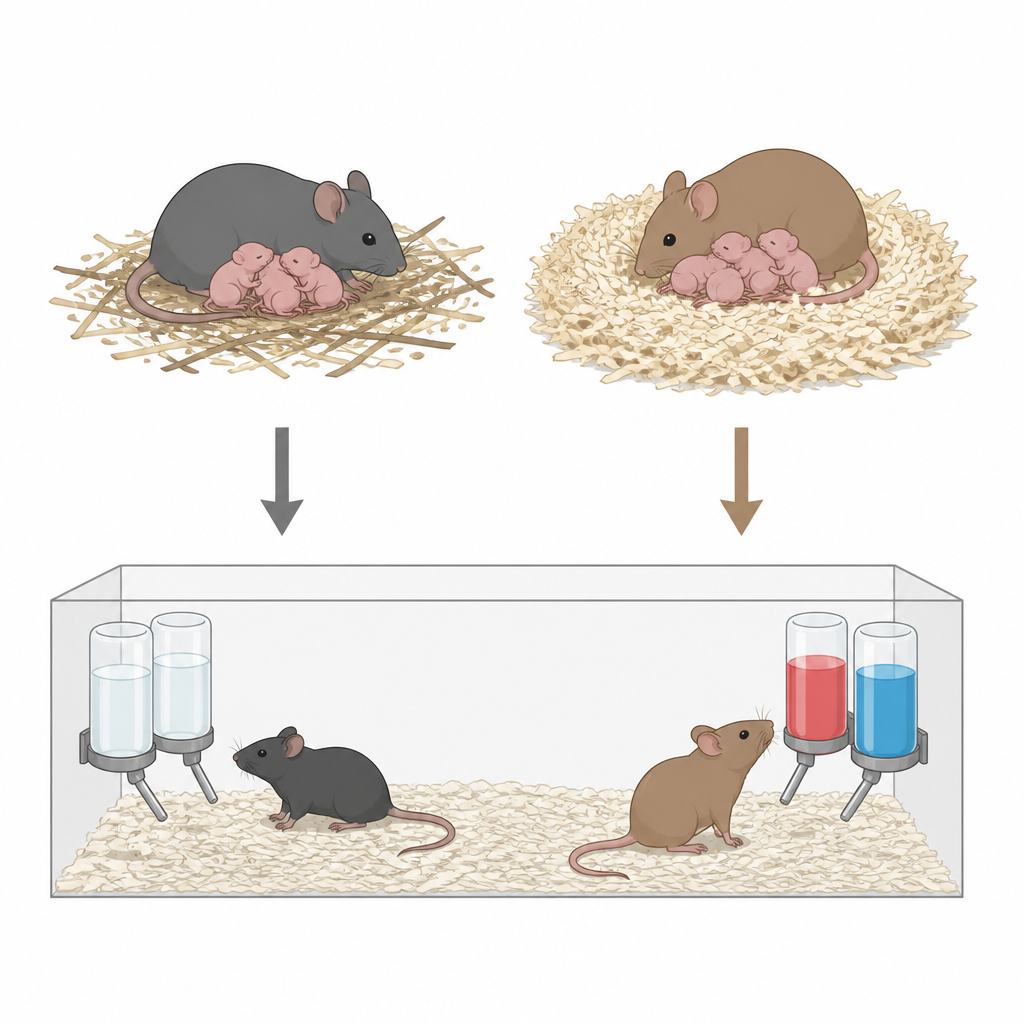
Researchers created a model of early hardship by limiting the bedding and nesting materials available to mouse mothers for one week shortly after birth. This disrupted normal caregiving, making it more fragmented and unpredictable, similar in spirit to neglect or resource scarcity in human childhood. Another group of mouse families was raised with standard, comfortable nesting. After this early period, all mice lived in the same standard housing so that any long-lasting differences could be traced back to that brief early experience.
Lasting changes in behavior and alcohol intake
As the mice grew into young adults, those that had experienced early hardship were smaller in body weight and tended to avoid bright, exposed areas in standard anxiety-like tests, a sign of greater risk avoidance. The scientists then placed groups of same-sex mice into a large, socially shared cage where they could work to access alcohol or water from special corners. In this naturalistic setup, mice that had faced early hardship drank more alcohol than their well-cared-for peers, particularly males and those that were more risk-avoidant. These differences were not due to a greater willingness to drink alcohol that had been made bitter, suggesting that hardship did not simply make them ignore negative consequences.
Hidden adjustments in the brain’s reward hub
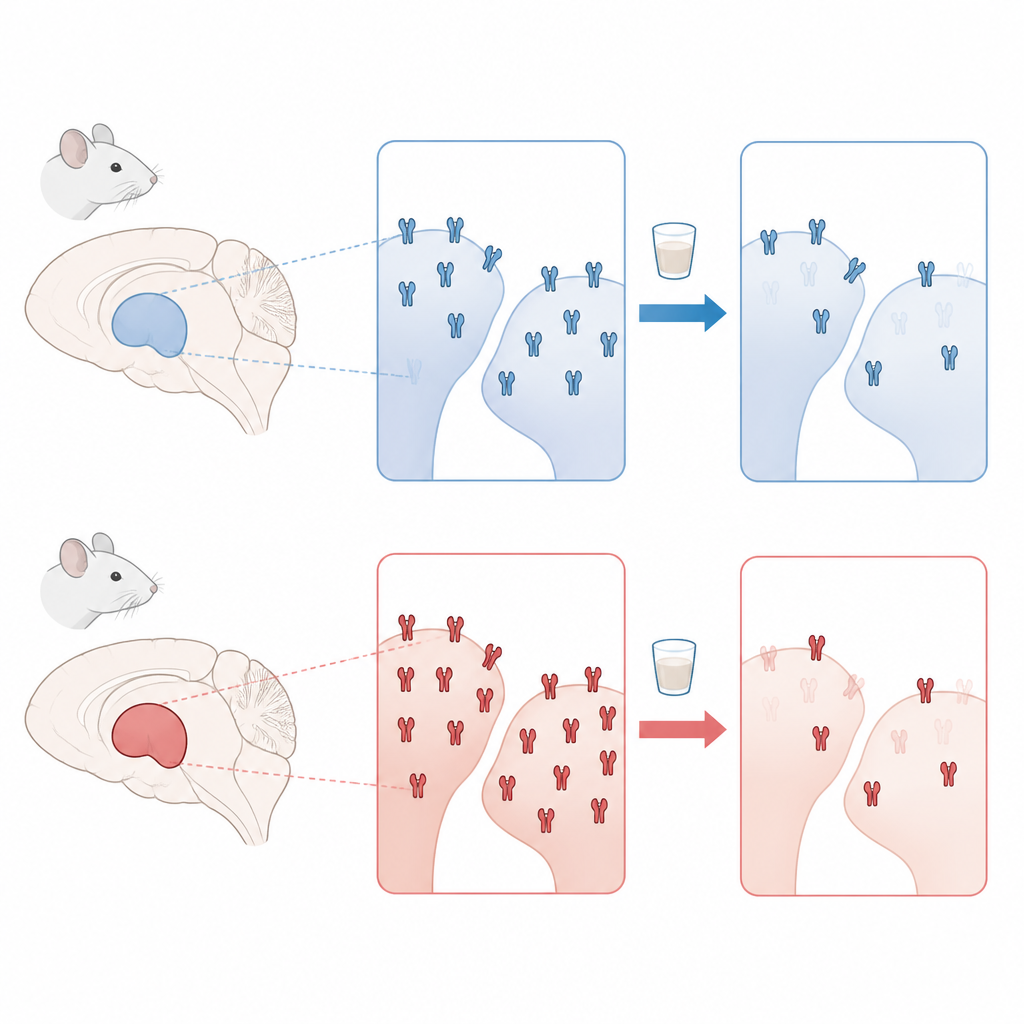
The team next turned to the striatum, a key reward and motivation area that responds strongly to alcohol. They focused on two types of docking sites on brain cells, known as D1 and D2 dopamine receptors, which help regulate how rewarding or risky an experience feels. Before any alcohol exposure, mice that had experienced early hardship showed higher levels of D1-type receptors in the nucleus accumbens, a central hub for pleasure and reinforcement. This shift increased the balance of D1 relative to D2 receptors, a pattern previously linked to stronger attraction to alcohol and greater risk avoidance in other mouse studies. Interestingly, the changes in receptor protein levels were larger than the changes in the corresponding gene activity, hinting that hardship acts not only on which genes are turned on but also on how receptor proteins are processed and placed on cells.
Alcohol pushes the system back toward balance
When both groups of mice were given repeated access to alcohol, the picture changed dramatically. Alcohol exposure strongly reduced D1-type receptor levels and, to a lesser extent, D2-type receptors across key parts of the striatum. These reductions were especially marked in mice that had faced early hardship, effectively erasing the earlier difference in D1 receptor levels and in the D1-to-D2 balance between groups. Measurements of gene activity showed some decreases as well, particularly for the D2 receptor in hardship-exposed males, but these shifts still did not fully explain the large drop in receptor protein, again pointing to powerful post-gene regulatory effects of alcohol.
What this means for understanding vulnerability
To a layperson, the main message is that a tough start in life can quietly rewire the brain’s reward system in ways that make alcohol more appealing, especially for males and for individuals who are already more cautious or anxious. In these mice, early hardship boosted a specific type of dopamine receptor in a key reward region, which likely heightened the stimulating effects of alcohol and encouraged higher drinking. Later alcohol use then drove the brain to dial down these receptors, bringing the system in hardship and control animals closer together. These findings do not directly translate to people, but they suggest that the path from early adversity to later alcohol problems may run through subtle, sex-dependent changes in how brain cells respond to rewards and to alcohol itself.
Citation: Anderson, L.G., Tischer, A.E., Bock, R. et al. Early life adversity increases striatal dopamine D1 receptor density and promotes social alcohol drinking in mice, especially males. Transl Psychiatry 16, 278 (2026). https://doi.org/10.1038/s41398-026-04033-2
Keywords: early life adversity, dopamine receptors, alcohol use disorder, mouse model, reward circuitry