Clear Sky Science · en
Identification of an immune-metabolic biosignature linking depressive symptoms and breast cancer in a clinical population
Why mind and body matter together
For many women, a breast cancer diagnosis brings not only physical challenges but also emotional ones. Feelings of sadness, anxiety and constant tension are common, yet it can be hard to tell when these mood changes signal a deeper problem that might affect overall health. This study asks a simple but powerful question: can a blood test and a few basic health measures help flag which women with breast cancer are most vulnerable to serious depressive symptoms?
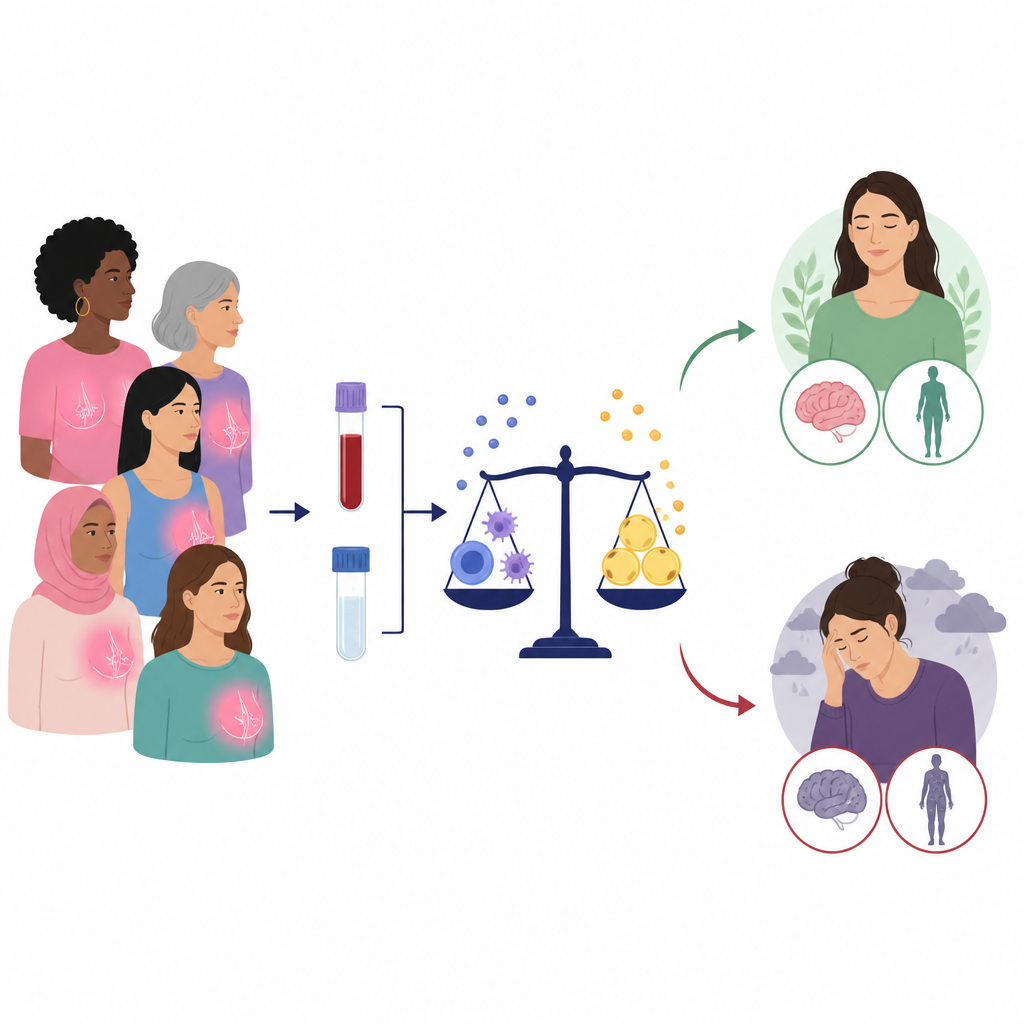
Looking for warning signs in the blood
The researchers followed 44 women who had recently undergone surgery for early breast cancer, before they started chemotherapy. At this point, treatment side effects are limited, but stress and worry are already high. Each woman filled out standard questionnaires that measured depression, anxiety and stress. On the same days, the team collected blood samples to measure molecules involved in inflammation and metabolism, such as immune messengers and hormones from fat tissue, and saliva samples taken across the day to track the pattern of the stress hormone cortisol.
Connecting mood with body chemistry
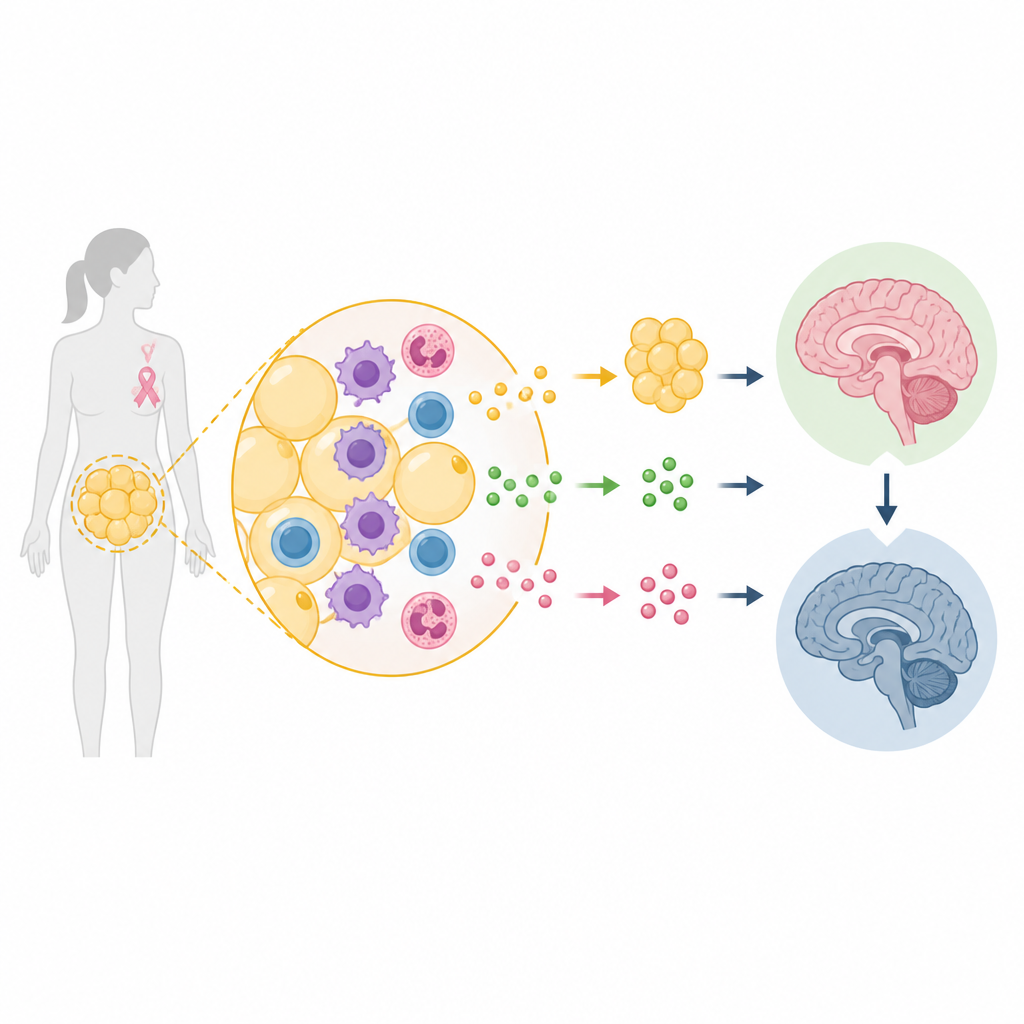
Instead of focusing on just one marker, the scientists used statistical tools to look for patterns across many biological signals at once. They asked whether certain combinations lined up with higher scores for depression, anxiety or stress. For depression, a clear cluster emerged: women with more severe depressive symptoms tended to have higher body mass index (a measure related to body weight), higher blood levels of an immune signal called IL-5, and lower levels of the hormone leptin, which is released by fat tissue and helps regulate appetite and energy use.
A three-part fingerprint of depression risk
From these data, the team built a model that uses body mass index, IL-5 and leptin together as an immune-metabolic “biosignature” of depression risk. When they tested how well this three-part fingerprint could separate women with high versus low depressive symptoms, it performed well: most women were correctly classified, and the model remained stable under a strict cross-checking procedure. The authors even derived a practical formula and a cut off value that, in principle, could one day help clinicians decide which patients may need closer psychological follow up or early support.
Anxiety, stress and other signals
The researchers also explored whether similar signatures could be found for anxiety and stress. They saw hints that women with higher anxiety might show a different pattern, combining lower daily cortisol levels, higher levels of another immune signal (IL-6) and a particular tumor marker called HER2. For stress, they observed a possible role for a brain related protein called BDNF. However, when these models were tested for robustness, they did not hold up as reliably as the depression signature, likely because the study included a relatively small number of participants.
What this means for patients and care
This work suggests that, in women with breast cancer, depressive symptoms are closely tied to shifts in immune activity and metabolism, particularly body weight, leptin and IL-5. In everyday terms, the study supports the idea that what happens in the body’s fat stores and immune system is linked to how the mind feels. While more and larger studies are needed before such tests could guide routine care, the findings argue for paying early and systematic attention to mental health in breast cancer clinics, so that women at higher risk of depression can be identified and offered tailored support alongside their cancer treatment.
Citation: Giona, L., Collacchi, B., Capoccia, S. et al. Identification of an immune-metabolic biosignature linking depressive symptoms and breast cancer in a clinical population. Transl Psychiatry 16, 249 (2026). https://doi.org/10.1038/s41398-026-04029-y
Keywords: breast cancer, depression, immune-metabolic, leptin, biomarkers