Clear Sky Science · en
Brain energetic landscapes shape state dysregulation in major depressive disorder: a morphological network controllability perspective
Why Brain Energy Matters in Depression
Depression is often described in terms of feelings and thoughts, but underneath those experiences lies a physical organ that runs on energy. This study asks a simple question with profound implications: does the depressed brain spend its energy differently, and could those energy patterns help explain why thinking and emotion become stuck? By looking at how much effort the brain needs to switch between activity patterns, the researchers offer a fresh view of major depressive disorder as a condition of disrupted brain energy use, not just low mood.
Mapping the Brain’s Activity States
The team began by treating the brain as a set of large-scale networks that support vision, movement, attention, memory, and emotion. Using brain scans from two independent groups of people, they tracked how activity naturally shifted among seven such networks while participants rested quietly. Each network was treated as a "state" the brain could occupy. The researchers then applied a mathematical framework called control theory to estimate how much energy the brain would need to move from one state to another over time. This gave them a landscape of energy demands for different regions as the brain’s activity pattern changed during rest. 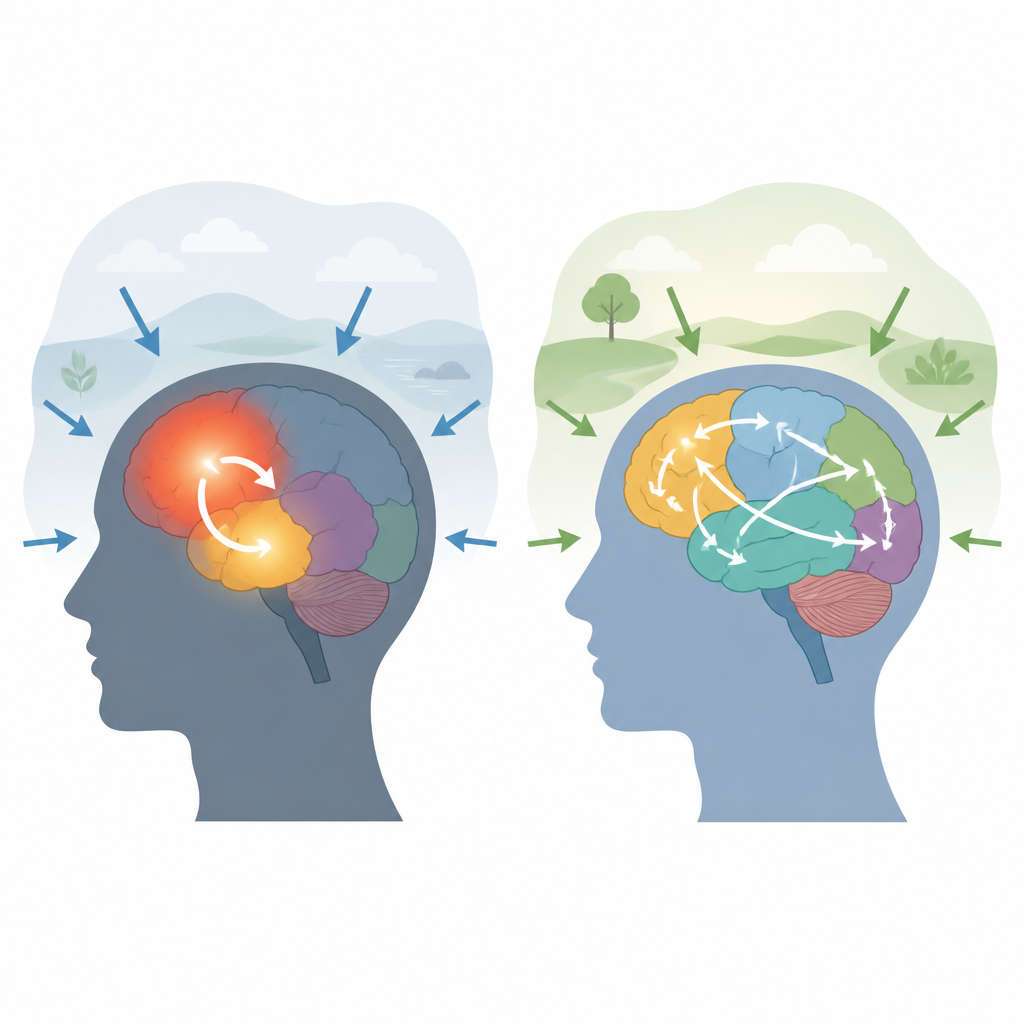
Energy Costs Are Higher and Flexibility Is Lower
Compared with healthy volunteers, people with major depression showed higher overall energy demands for shifting between brain states. In other words, their brains appeared to work harder just to maintain everyday patterns of activity. At the same time, their brains cycled more frequently within the same state and less often between different states. This combination points to a less flexible system that is energetically strained yet behaviorally stuck. The effect was especially strong in the default mode and limbic networks, which are involved in self-focused thought, memory, and emotional processing. Regions such as the posterior cingulate cortex and temporal pole stood out as key hubs where energy regulation seemed most disturbed.
From Brain Energy to Symptoms and Thinking
The study went beyond group averages and asked how these energy differences related to real-world symptoms. Patterns of unusually high or low energy demand in certain regions were tied to scores on standard depression and anxiety scales. Regions in the cingulate and lateral prefrontal cortex, which help manage attention, memory, and emotion, were particularly important. Where these areas required more energy to support state changes, people tended to report more severe symptoms. The affected regions also lined up with brain areas known from other studies to support social understanding, memory encoding, and emotional control, suggesting that energy inefficiency may undercut these mental abilities in depression.
Linking Brain States to Cells, Molecules, and Rhythms
To ground their energy measure in biology, the researchers compared the brain’s energy-demand map with independent data on how cells and molecules handle fuel. They found that regions with altered control energy in depression overlapped with areas showing distinctive mitochondrial properties, such as respiratory capacity, and with specific energy-producing pathways, including the tricarboxylic acid cycle and lactate metabolism. They also related the findings to larger-scale measures of glucose use in the brain. Finally, they examined fast electrical rhythms measured with magnetoencephalography in a separate healthy sample. Differences in energy demand across regions matched patterns of theta and alpha oscillations, two brain rhythms often altered in depression. Together, these links suggest that disturbed energy use in depression spans from tiny powerhouses inside cells up to whole-brain activity patterns. 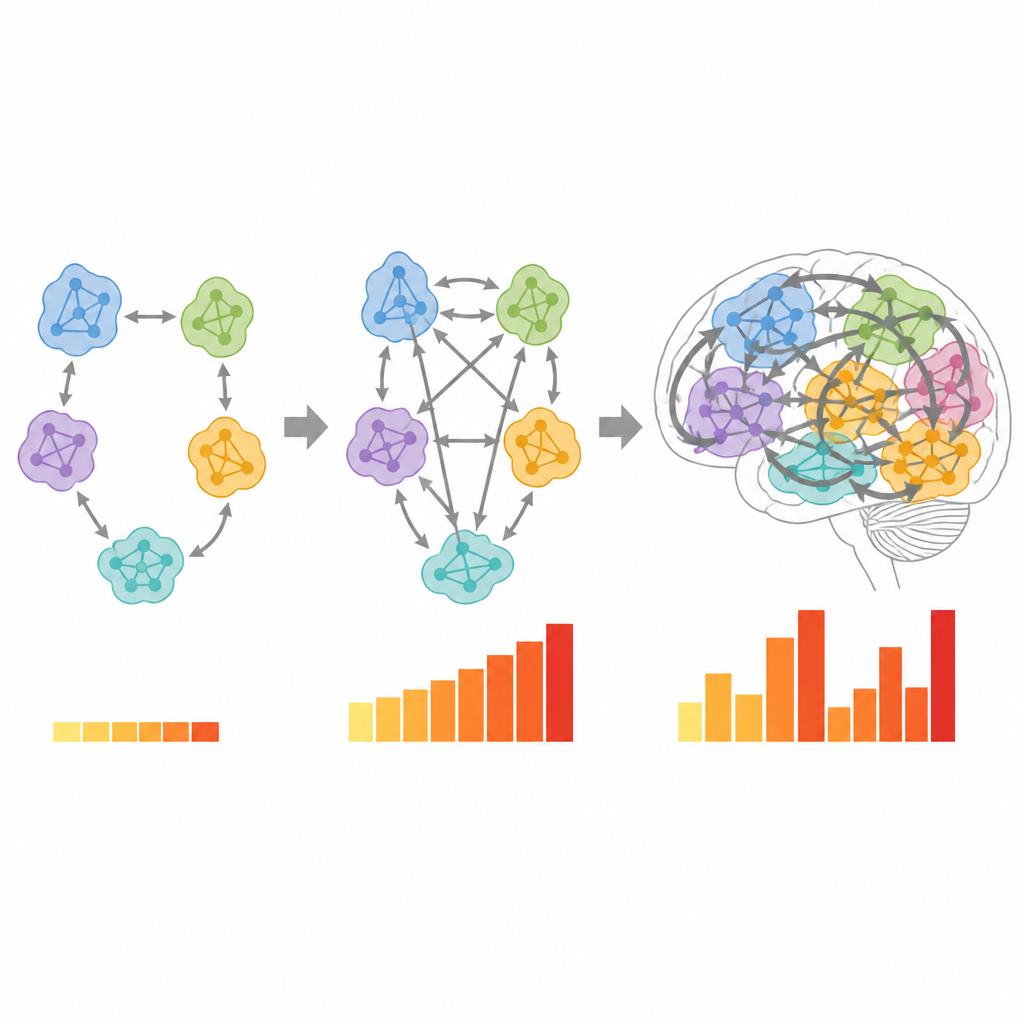
What This Means for Understanding Depression
Instead of viewing depression only as a chemical imbalance or a wiring problem, this work highlights it as a disorder of how the brain spends and manages energy. Depressed brains in this study needed more energy to shift between activity patterns and tended to linger in a narrower set of states, especially in networks tied to memory and emotion. These changes were connected to symptom severity and to known features of cellular metabolism and brain rhythms. Identifying the brain regions and networks that are most energy-vulnerable could inform future approaches to monitoring brain health and designing interventions that aim to restore more efficient, flexible brain dynamics in people living with depression.
Citation: Niu, J., Xia, J., Liu, Q. et al. Brain energetic landscapes shape state dysregulation in major depressive disorder: a morphological network controllability perspective. Transl Psychiatry 16, 270 (2026). https://doi.org/10.1038/s41398-026-04025-2
Keywords: brain energy, major depressive disorder, brain networks, neural dynamics, mitochondria