Clear Sky Science · en
Distinct neural substrates of obsessions and compulsions in adolescent obsessive compulsive disorder
Why teens’ brains and daily rituals matter
Obsessive compulsive disorder in teenagers can shape everyday life, from endless worrying to repeated rituals that are hard to stop. Many treatments help, but not all teens improve in the same way. This study asks a simple question that matters to families and clinicians alike: do the brain circuits for upsetting thoughts differ from those that drive repetitive actions, and could that difference guide more precise care?
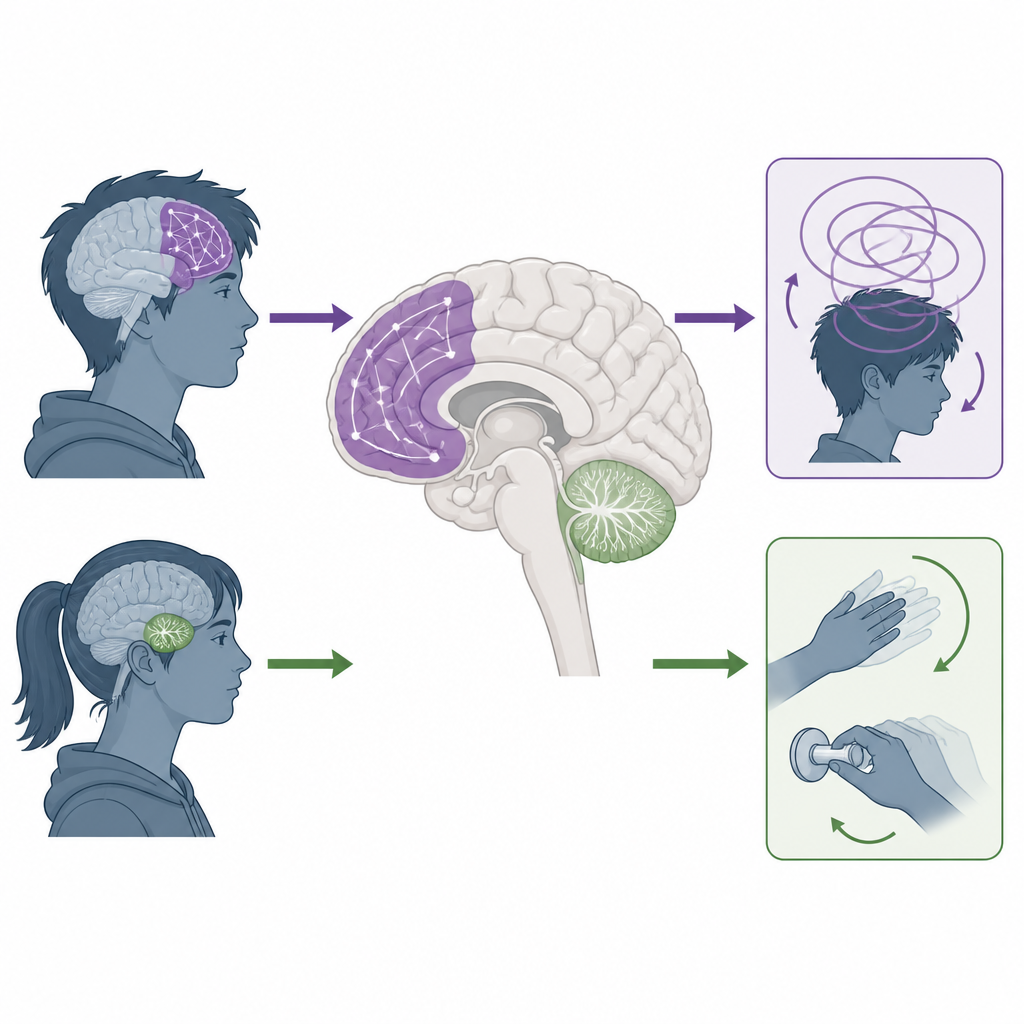
Two kinds of symptoms, two core processes
Doctors often describe OCD by what teens worry about, such as germs, mistakes, or symmetry. The authors instead focus on how the problem shows up: as intrusive thoughts, called obsessions, and as repeated actions, called compulsions. Using a well known checklist for children with OCD, they scored these two sides of the disorder separately. The scores were related, but not identical, suggesting that obsessive thoughts and compulsive acts overlap yet still tap into partly different processes in the mind and brain.
Peeking at resting brains
The team scanned the brains of 40 adolescents with OCD and 40 similar teens without the disorder while they rested quietly in the scanner. Rather than testing them on tasks, the researchers looked at how different brain regions naturally talk to each other over time. They used a data driven method that examines the whole "wiring map" of the brain at once, searching for spots where patterns of connections changed with obsession scores or compulsion scores.
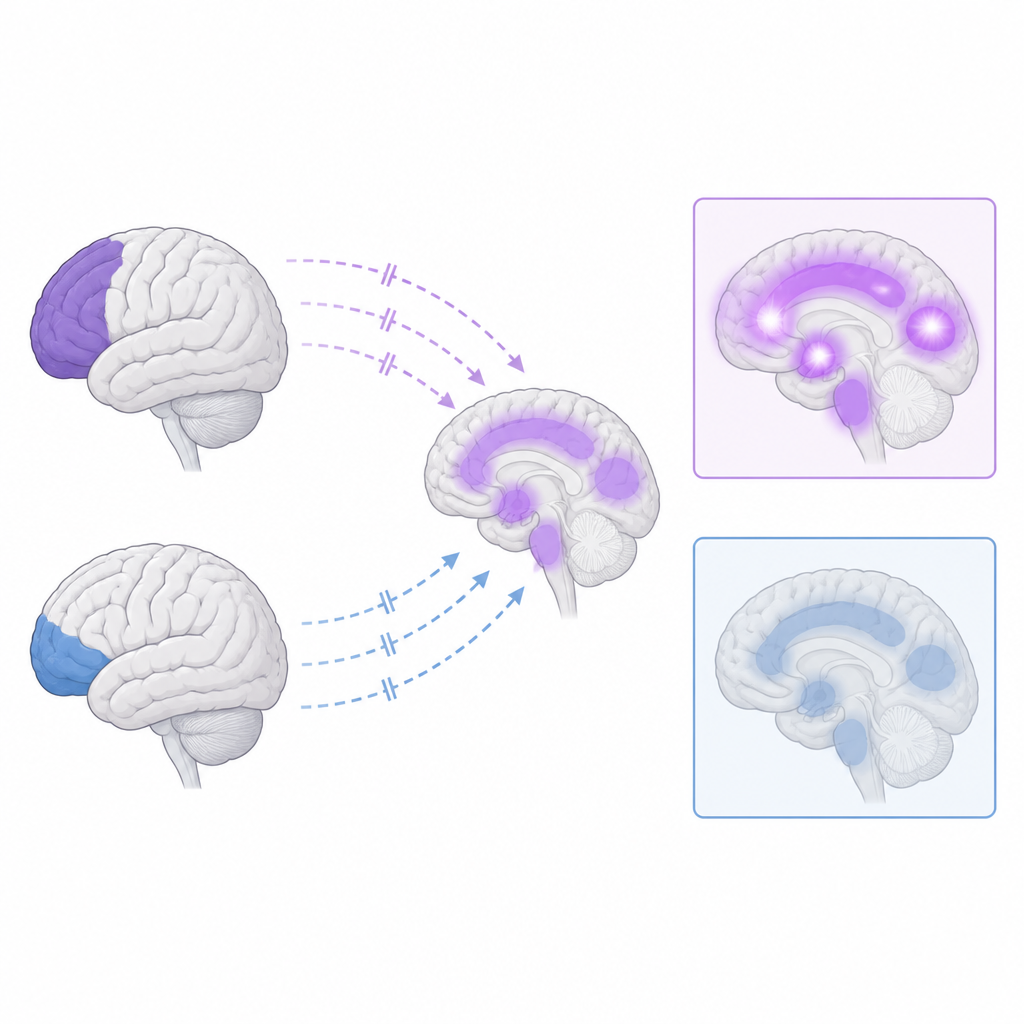
Different control hubs for thoughts and actions
For obsessive thoughts, two regions stood out. One was a patch on the outer front of the brain, the dorsolateral prefrontal cortex, which helps people hold information in mind and shift their focus. The other was a back area of the cerebellum, a structure long linked to movement but also involved in thinking and emotion. In teens with stronger obsessions, these areas were less in sync with a set of brain regions known as the default mode network, which supports inward focused mental activity such as daydreaming and self reflection. Weaker ties between these control hubs and inner thought networks may make it harder to step back from intrusive ideas.
Circuits that shape urges and stopping power
Compulsive rituals showed a different signature. Here the key player was the ventrolateral prefrontal cortex on the right side, a region important for braking or changing actions, along with nearby insula tissue that tracks bodily signals and urges. In teens with more severe compulsions, this area was less strongly linked to limbic and deep brain regions involved in emotion and habits, and also showed weaker connections with the default mode network. This pattern fits with the idea that compulsive acts grow from a mix of strong bodily urges and weakened stopping signals, making it difficult to resist repeating the same behavior.
Chemical clues inside the circuits
The researchers went one step deeper by comparing their brain maps with public data on brain chemistry and gene activity. Places where connections tracked with obsessions tended to sit in areas richer in certain dopamine markers and a transporter that moves this messenger, and the related genes were most active in brain immune cells called microglia. In contrast, regions tied to compulsions lined up with areas richer in a glutamate receptor called mGluR5, and their gene patterns were strongest in excitatory nerve cells that drive signals forward. These links do not prove cause and effect, but they hint that different cell types and chemical systems may underlie the two sides of OCD.
What this means for teens and treatment
Taken together, the findings suggest that obsessive thoughts and compulsive actions in adolescent OCD rest on partly distinct brain circuits that both interact with inner thought networks in different ways. Thought control seems to rely more on front of brain and cerebellar hubs, while action control centers on a frontal region that helps stop or change behavior. Because these circuits also show different chemical and gene patterns, they might respond to different forms of brain stimulation or medicine. In the long run, separating obsessions and compulsions at the brain level could help tailor treatments so that each teen gets help aimed at the specific part of their symptom pattern that troubles them most.
Citation: Li, K., Zhang, C., Li, R. et al. Distinct neural substrates of obsessions and compulsions in adolescent obsessive compulsive disorder. Transl Psychiatry 16, 268 (2026). https://doi.org/10.1038/s41398-026-04024-3
Keywords: adolescent OCD, obsessions, compulsions, brain networks, resting state fMRI