Clear Sky Science · en
Decoding kratom: molecular mechanisms and epigenetic factors in use and dependence
Why this plant matters
Kratom, a tree native to Southeast Asia, has moved from village fields into Western shops, where people use it for pain relief, energy, and easing withdrawal from other drugs. As its popularity grows, so do questions about how it really works inside the body and how safe it is over time. This review pulls together modern lab and animal studies to show what kratom’s main ingredient, mitragynine, does to the brain, heart, and genes that control how our cells behave.
From village use to modern powders
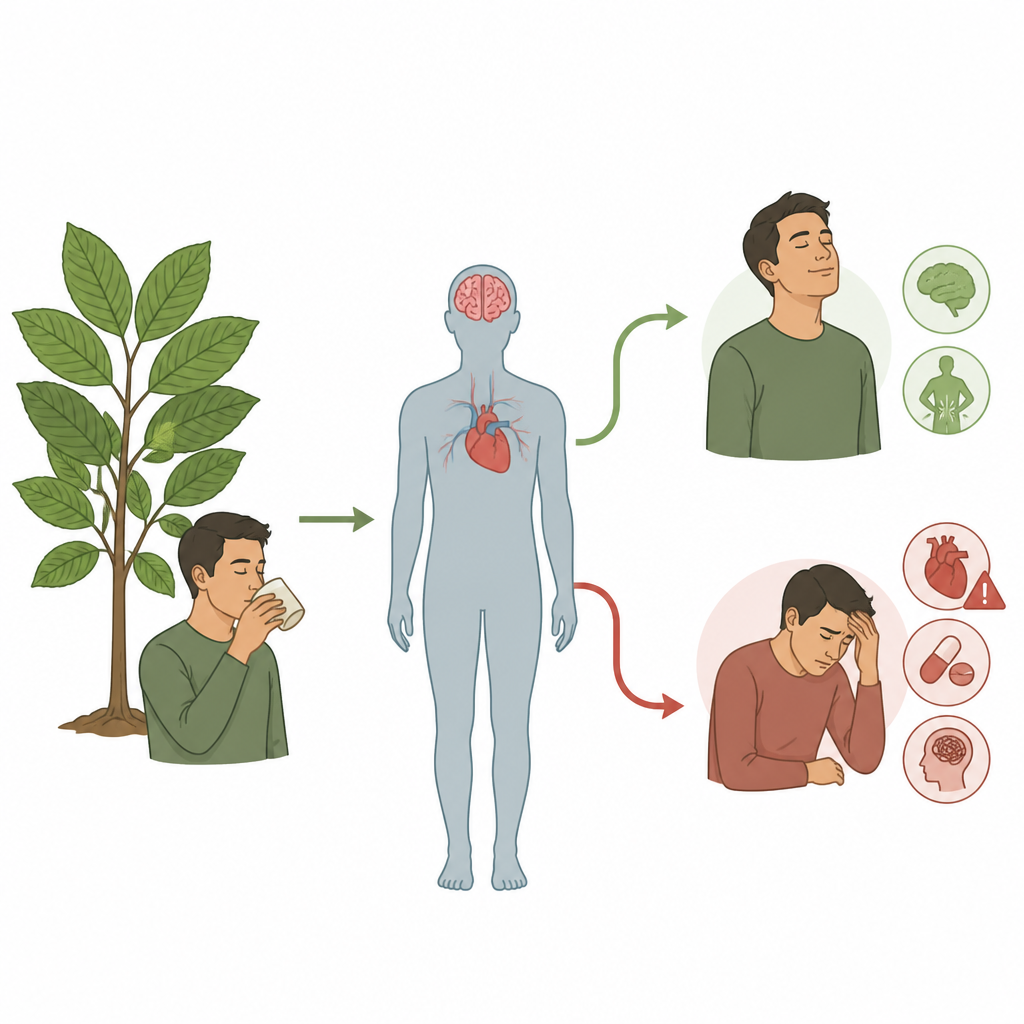
For generations, workers in Southeast Asia chewed kratom leaves or drank simple leaf teas to fight fatigue and aches. These traditional uses involved whole leaves with modest and variable amounts of active compounds. Today, in North America and Europe, people are more likely to buy capsules, concentrated extracts, and resins that can deliver much higher and less predictable doses. Surveys suggest many users take kratom to manage chronic pain, anxiety or low mood, and symptoms of opioid withdrawal. At the same time, doctors and poison centers report problems such as liver injury, seizures, high blood pressure, and mental health symptoms, especially when kratom is used with other substances. This mix of reports has fueled debate among regulators about whether kratom is more help or harm.
How kratom talks to brain circuits
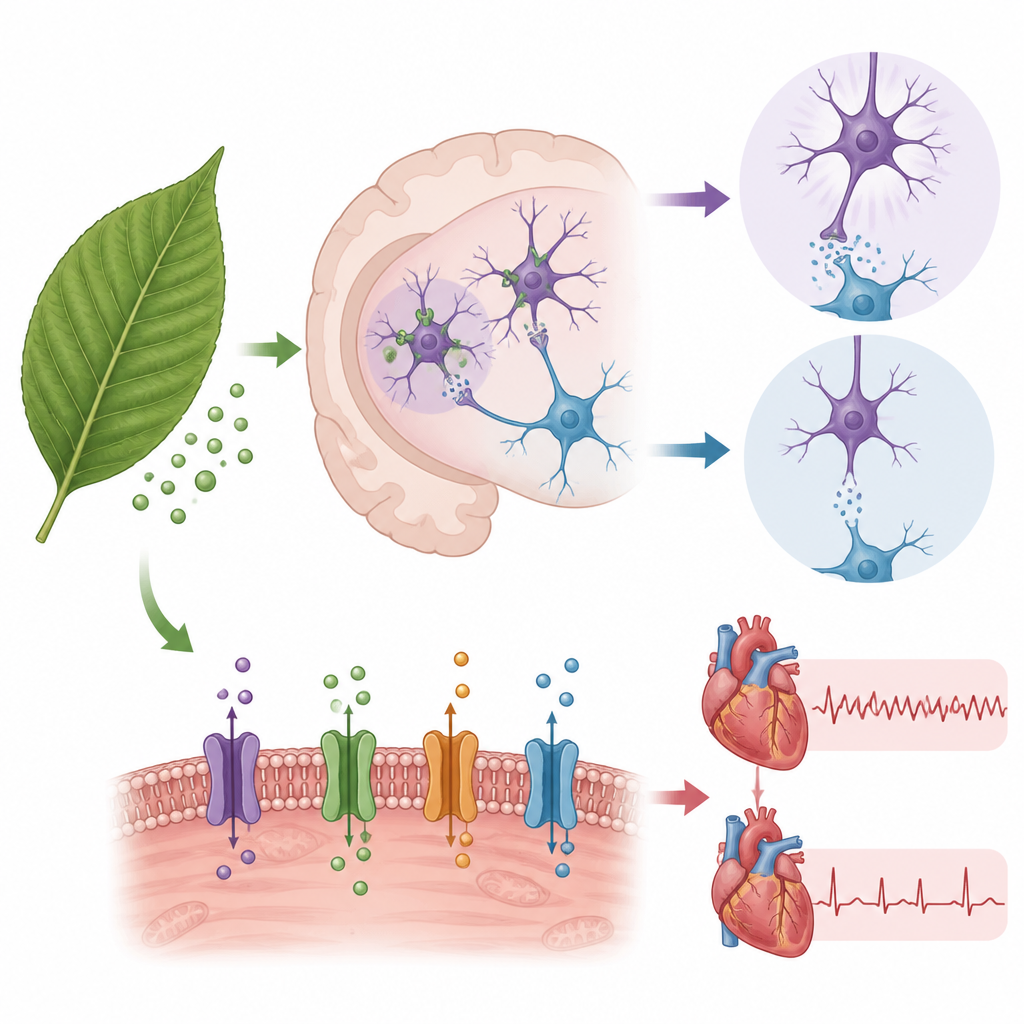
Modern lab techniques show that mitragynine and related kratom chemicals can latch onto several types of brain receptors. They partly activate the same opioid receptors that respond to medicines like morphine, while also acting on certain adrenaline and serotonin receptors. In animal studies, these actions alter brain systems that handle reward, motivation, and mood. Repeated mitragynine use in rats changes dopamine signaling in regions linked to planning and drive, and weakly affects glutamate pathways that help shape learning and memory. Other experiments show reduced activity in pain-sensing nerve channels and lower levels of a heat and pain sensor in key brain areas. Together, these findings support user reports that kratom can ease pain and shift mood, but they also show that its effects are broad and complex rather than cleanly targeted.
Hidden changes in inflammation and gene control
Beyond the brain, kratom’s compounds appear to calm certain immune responses in cell cultures. In mouse immune cells pushed into an inflammatory state, mitragynine-rich extracts reduce key inflammatory messengers and signaling molecules. The review also highlights early evidence that long-term mitragynine use followed by withdrawal can leave deeper marks on the brain. In rats, this pattern lowers specific chemical tags on histone proteins that help wrap and organize DNA, while raising levels of an enzyme that tightens that wrapping. These shifts tend to make genes harder to switch on, hinting at lasting changes in how brain cells respond during withdrawal. Proteomic studies add to this picture by showing altered levels of many brain proteins, including one, called Rab35, that could serve as a marker of mitragynine withdrawal in future research.
Signals of risk for the heart and other drugs
The same studies that reveal potential benefits also point to safety concerns. In heart-related cell models, mitragynine blocks important potassium channels that help control the electrical rhythm of the heartbeat and reduces the number of these channels on the cell surface. Such effects are linked in other contexts to a dangerous lengthening of the heart’s electrical cycle and to irregular heartbeats. In liver systems, kratom extracts can both speed up and block key drug-processing enzymes, meaning kratom might raise or lower the levels of common medications in unpredictable ways. Notably, many of the lab and animal experiments use doses and routes of exposure that may exceed those seen in typical human use, underscoring that they reveal what is possible rather than what always happens.
What this means for people who use kratom
Overall, the review portrays kratom as a plant with real biological power that reaches pain, mood, stress, and withdrawal pathways, but also touches the heart and the body’s drug-handling systems. The evidence so far comes mostly from cells and animals, not from large, carefully controlled studies in people, and doses in the lab often do not match real-world use. As a result, the authors conclude that kratom’s potential to help with pain and withdrawal cannot be separated from clear signs of possible heart risks and drug interactions. They argue that only well-designed human studies, using standardized preparations and modern tools to track molecules and genes, can show whether kratom can be used safely and when its risks outweigh its benefits.
Citation: Misnan, E., Hasbullah, N.Z.A., Abd Rashid, R. et al. Decoding kratom: molecular mechanisms and epigenetic factors in use and dependence. Transl Psychiatry 16, 284 (2026). https://doi.org/10.1038/s41398-026-04022-5
Keywords: kratom, mitragynine, opioid-like effects, epigenetic changes, cardiac safety