Clear Sky Science · en
Astrocyte-related proteins mediate the association of YWHAG with Alzheimer’s pathology and enhance its diagnostic value
Why brain support cells matter for memory loss
Alzheimer’s disease is best known for its sticky plaques and tangled proteins in the brain, but a quieter set of players may hold new clues for spotting the illness early. These are astrocytes, a type of support cell that helps keep brain circuits healthy. This study looks at how a synaptic protein in spinal fluid, called YWHAG, interacts with proteins released by astrocytes and asks whether this partnership can sharpen our ability to detect Alzheimer’s disease and early memory decline.
Looking beyond classic Alzheimer markers
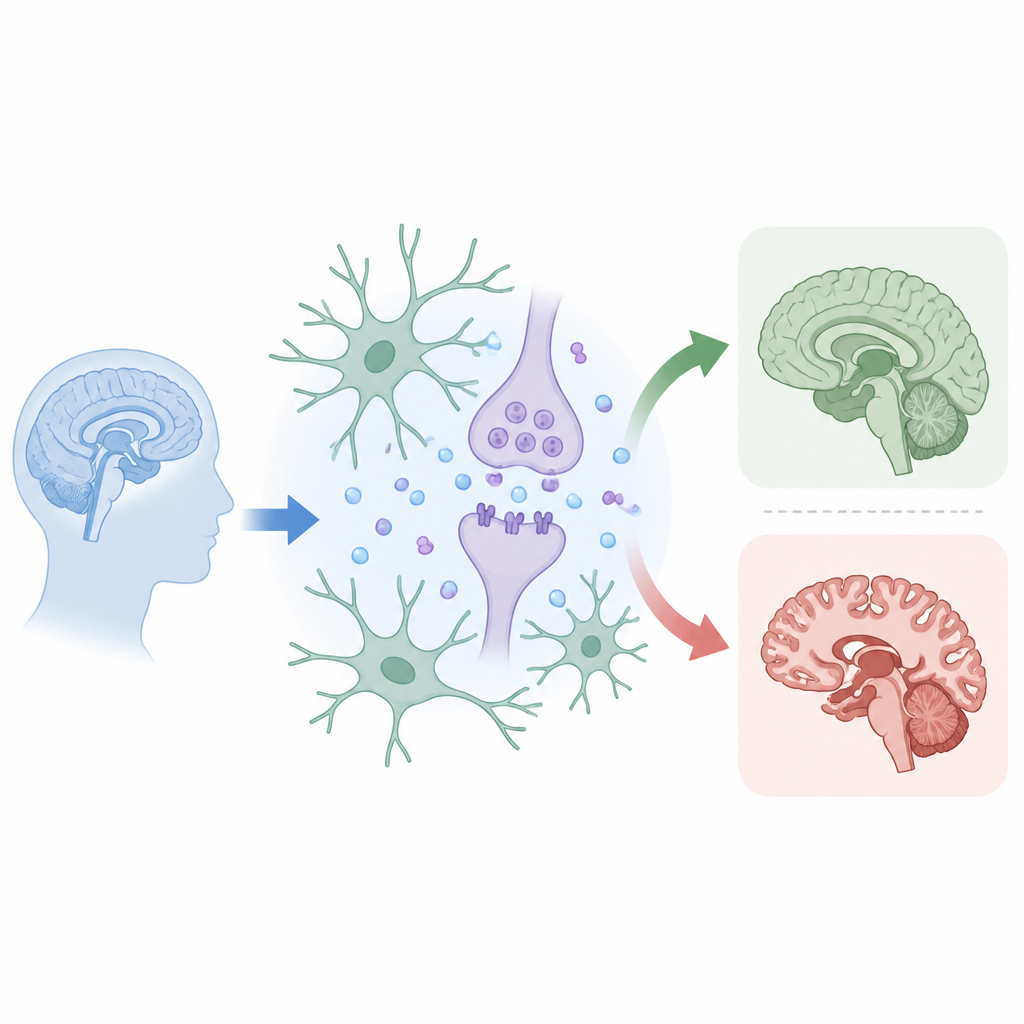
Doctors usually track Alzheimer’s using a few familiar signs: levels of amyloid and tau proteins in spinal fluid or brain scans, and simple memory tests. Yet many people show changes in thinking years before these markers clearly shift, and individual tests often miss the full picture. Astrocytes help clear waste, control inflammation, and support synapses, so damage to them could appear early in the disease. The researchers focused on YWHAG, a synaptic protein that earlier work suggested rises long before symptoms, and on nine astrocyte-related proteins that reflect cell stress, inflammation, and repair processes.
What the researchers measured in people
The team analyzed spinal fluid from 530 older adults enrolled in a large Alzheimer’s research project. Participants ranged from cognitively normal to those with mild memory problems or diagnosed Alzheimer’s disease. For each person, the scientists measured YWHAG, several astrocyte-related proteins, core Alzheimer markers (amyloid and tau), and performance on standard thinking tests. They then used statistical models to see how these measures moved together over time and whether astrocyte proteins might sit in the middle of the chain from YWHAG changes to brain pathology and cognition.
Hidden links between synapses, support cells, and plaques
Higher YWHAG levels were tied to more tau and a harmful form of amyloid in spinal fluid, as well as worse scores on memory and thinking tests, both at the start of the study and over follow-up. YWHAG also tracked closely with several astrocyte proteins that signal cell activation and stress, including GFAP, vimentin, AQP4, and thrombospondins, and showed opposite patterns with others, such as GJα1 and SERPINA3. Detailed path and mediation analyses suggested that some astrocyte proteins partially carry the effect of YWHAG on amyloid and tau, and on thinking ability. One recurring route linked YWHAG to changes in GJα1, then to amyloid levels, and finally to cognition, hinting at a chain that runs from synapses through support cells to memory loss.
Building a better early-warning test
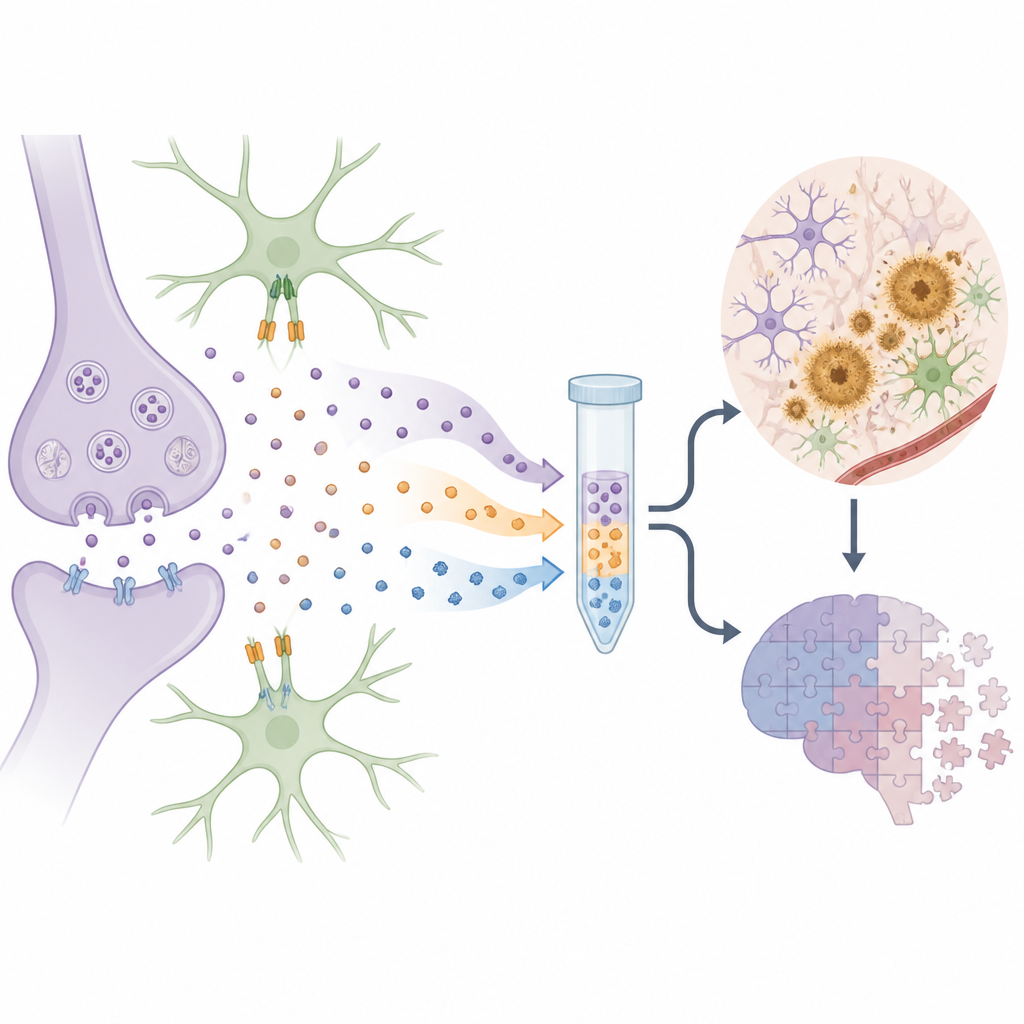
The study also tested whether combining YWHAG with astrocyte proteins could distinguish people with Alzheimer’s from those without it. YWHAG alone already separated groups well, but its performance improved markedly when paired with certain astrocyte markers. A three-protein panel that joined YWHAG with SERPINA3 and thrombospondin-1 almost perfectly identified Alzheimer’s cases in this sample. Another trio involving YWHAG, IGFBP2, and AQP4 was highly accurate at detecting people with abnormal tau, a key sign of ongoing brain injury. These multi-protein models often outperformed traditional risk factors such as age and APOE genetic status.
What this means for future diagnosis
For non-specialists, the take-home message is that Alzheimer’s may be better understood as a network problem involving both nerve cells and their support cells, rather than a story of plaques and tangles alone. The YWHAG protein appears to signal early trouble at synapses, while astrocyte-related proteins reflect how the brain’s caretakers respond. When read together in spinal fluid, these markers can offer a more sensitive picture of who is at high risk for Alzheimer’s and who may be in the earliest stages of the disease, long before severe memory loss appears.
Citation: Zhang, Z., Huang, P., Yang, Y. et al. Astrocyte-related proteins mediate the association of YWHAG with Alzheimer’s pathology and enhance its diagnostic value. Transl Psychiatry 16, 264 (2026). https://doi.org/10.1038/s41398-026-04020-7
Keywords: Alzheimer biomarker, astrocyte proteins, cerebrospinal fluid, synaptic protein, early diagnosis