Clear Sky Science · en
Improvements in resting-state autonomic function precede clinical improvement in adolescent non-suicidal self-injury
Why heart rhythms matter for teen mental health
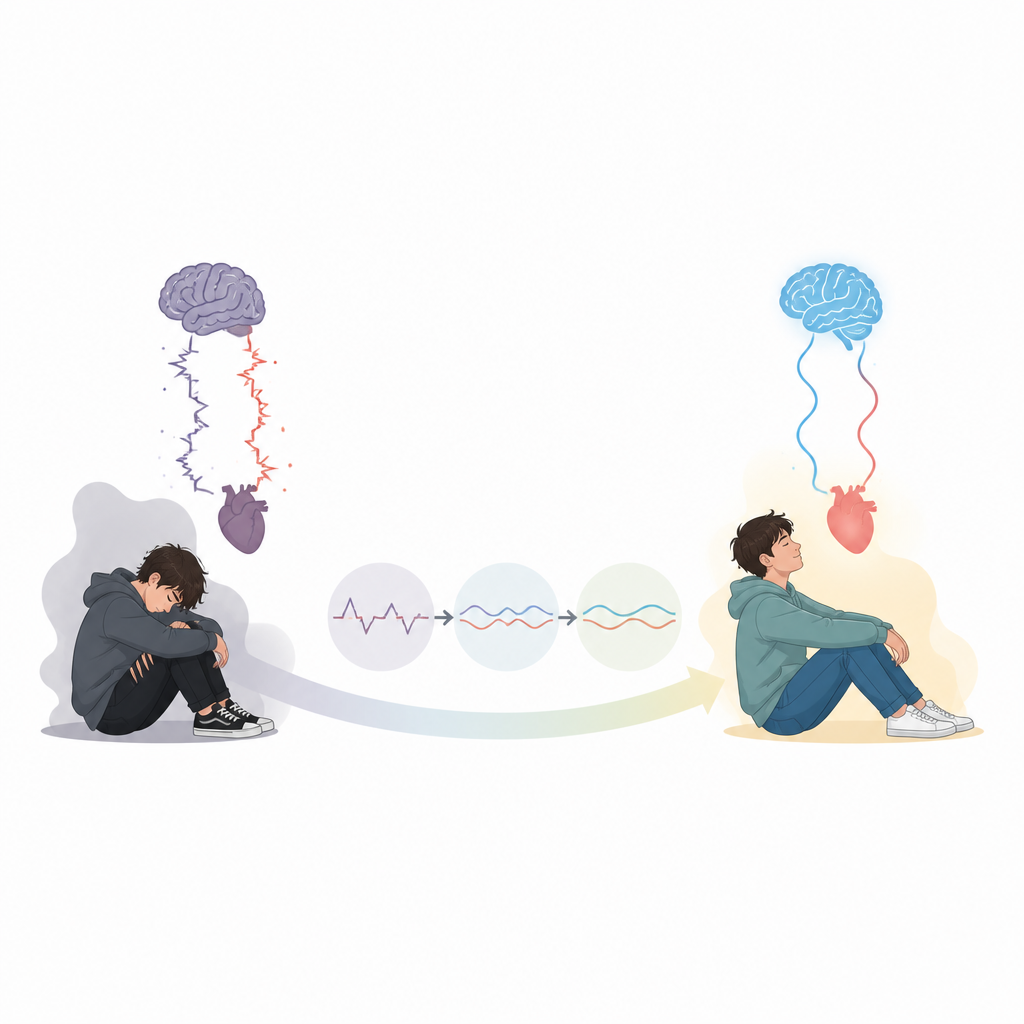
Many teenagers who hurt themselves without wanting to die are struggling with intense emotions and mental health problems. This study explores how the body’s automatic control of the heart, a system we rarely think about, may change before a young person begins to feel and function better. Understanding this link between body and mind could open new ways to spot trouble early and to track whether treatment is helping.
A closer look at teens who self-injure
The researchers followed 227 adolescents who engaged in non-suicidal self-injury and had sought help at a specialized clinic. Most had significant emotional problems, including symptoms of depression and traits linked to borderline personality disorder, a condition marked by unstable moods and relationships. Over two years, the team regularly measured their mental health, everyday functioning, and how often they self-injured. They also recorded heart activity while the teens sat quietly, focusing on heart rate and the natural beat-to-beat variation that reflects how flexibly the body can adapt to stress.
Tracking both feelings and body signals over time
At each yearly visit, the adolescents completed structured interviews and questionnaires about depression, self-injury, and borderline personality traits, and clinicians rated how well they were functioning in daily life. Separately, heart recordings were taken under calm, standardized conditions in the morning to reduce the impact of caffeine, movement, or time of day. The team used advanced statistical models to see how changes in heart measures and changes in mental health moved together over time, while accounting for age, sex, body weight, smoking, and alcohol use.
Heart flexibility predicts emotional improvement
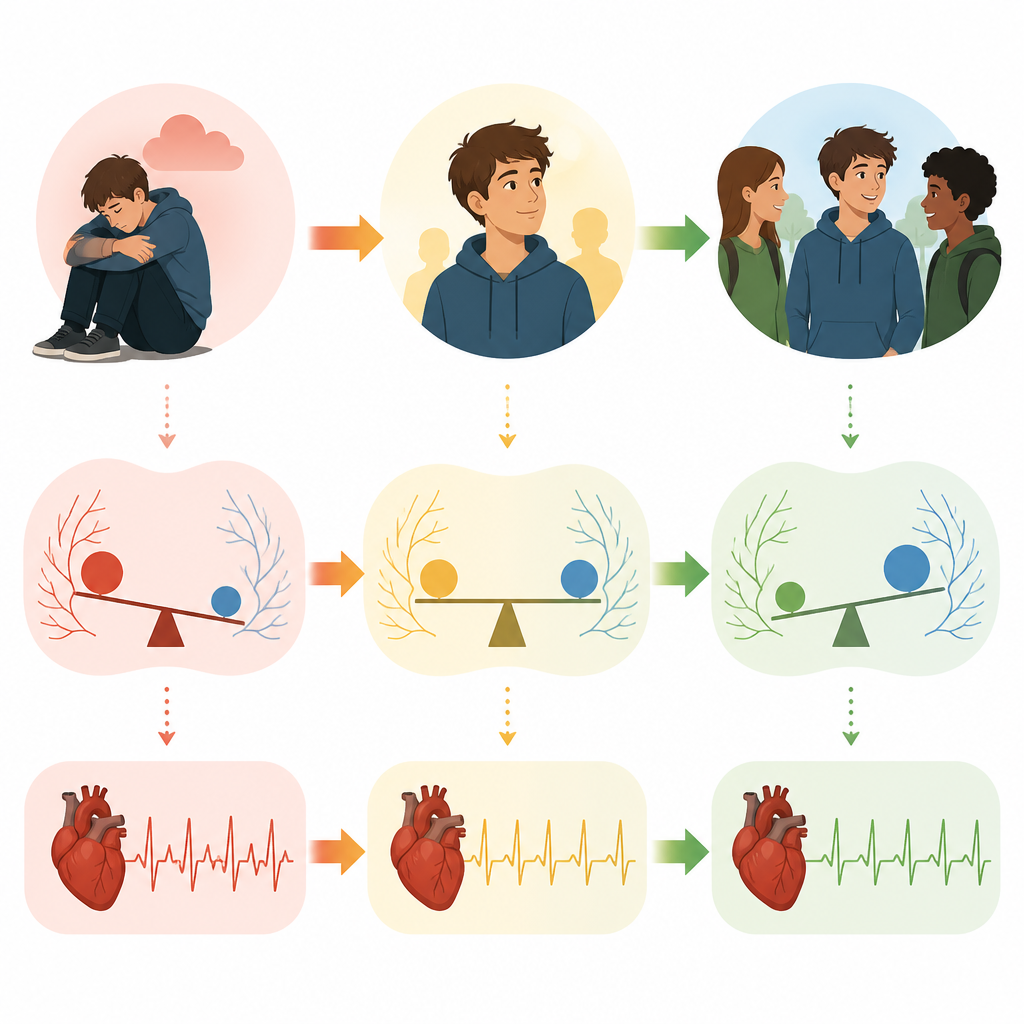
Across the group, most teens showed fewer self-injury episodes, lower depression scores, and fewer borderline traits over the two years, while their overall functioning improved. Surprisingly, average heart measures did not clearly improve; in fact, one key measure of heart flexibility tended to decline slightly, likely reflecting normal developmental changes. The crucial finding emerged at the individual level. Teens who showed increases in heart rhythm flexibility at one time point tended to have lower depression, fewer borderline traits, and better overall functioning at the next assessment. This pattern was not seen for simple heart rate, and it did not reliably predict how often they engaged in self-injury.
What this tells us about body and mind
The results suggest that the body’s ability to adjust heart rhythm may act as an early signal of emotional recovery. Greater heart rhythm flexibility is thought to reflect stronger “braking” and calming processes in the nervous system that support emotion regulation. In this study, such improvements seemed to precede later gains in mood and daily functioning, rather than merely mirroring them. The lack of a clear link to the frequency of self-injury hints that the underlying emotional struggle and the visible behavior do not always change in lockstep.
How this could shape future care
For families and clinicians, these findings point to heart rhythm measures as a potential tool for monitoring how well a teen is regaining emotional balance, even before changes are obvious in daily life. Approaches that support healthier nervous system regulation – such as regular exercise, emotion-focused psychotherapy, or techniques that train breathing and relaxation – might help strengthen this capacity alongside standard treatments. While the study has limits, including many dropouts and no comparison group without self-injury, it supports the idea that quiet shifts in the body’s automatic systems may pave the way for later psychological healing.
Citation: Koenig, J., Mürner-Lavanchy, I.M., Hedinger, N. et al. Improvements in resting-state autonomic function precede clinical improvement in adolescent non-suicidal self-injury. Transl Psychiatry 16, 246 (2026). https://doi.org/10.1038/s41398-026-04012-7
Keywords: adolescent self-injury, heart rate variability, borderline traits, depression in youth, autonomic function