Clear Sky Science · en
Brain network localization of anhedonia
Why Losing Pleasure Matters
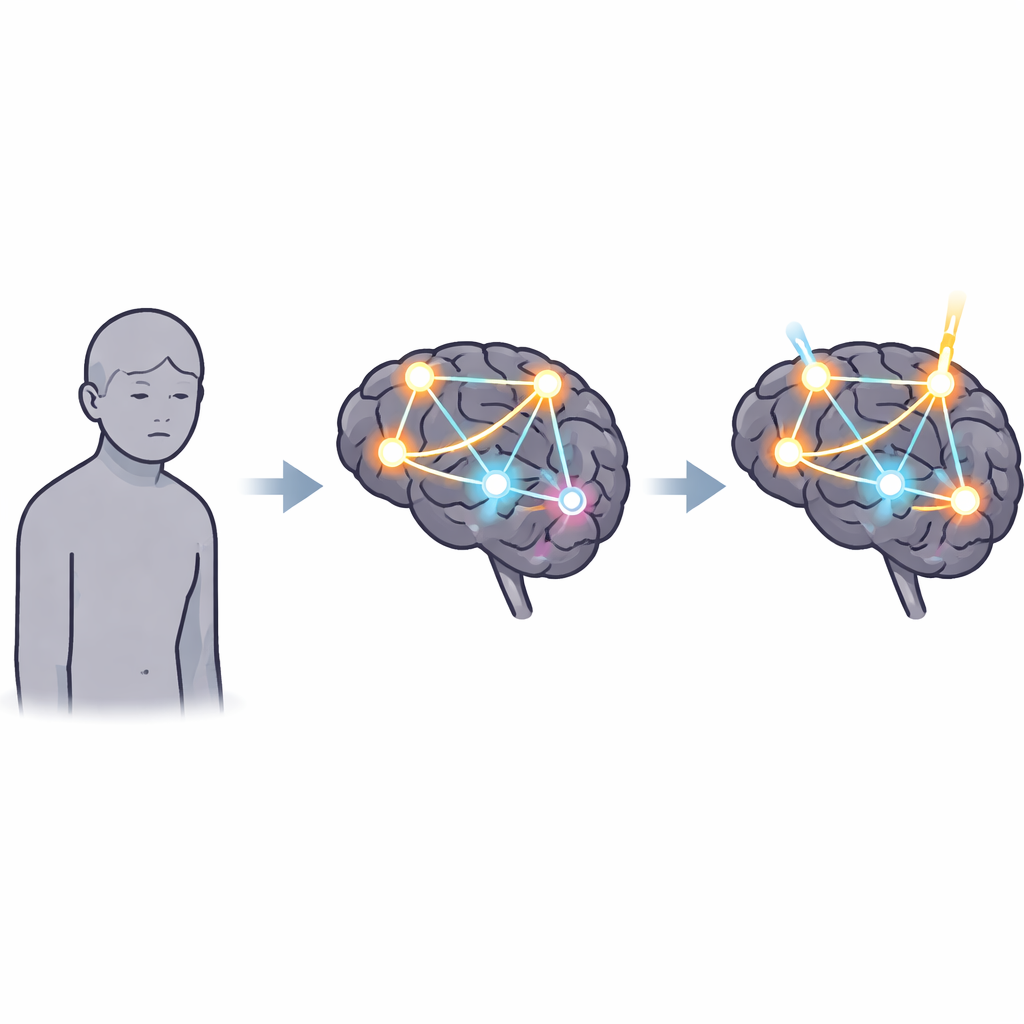
Anhedonia—the loss of pleasure or interest in normally enjoyable activities—is more than just “feeling down.” It is a core feature of major depression, closely tied to treatment resistance and even suicide risk. Yet doctors still lack precise brain-based tools to detect or treat it. This study asks a simple but powerful question: instead of hunting for one “anhedonia spot” in the brain, can we map a whole network of connected regions that consistently underlie this loss of pleasure across different studies and patient groups?
Pulling Together Many Clues
The authors began by combing through decades of brain imaging research on anhedonia, following strict systematic-review guidelines. They included studies that scanned the whole brain and reported precise locations where structure or activity differed in people with versus without anhedonia, or where brain measures tracked how severe the symptom was. These studies covered multiple conditions, including depression, schizophrenia, obsessive–compulsive disorder, and also healthy people with high or low levels of anhedonia. The team grouped findings into two broad flavors of anhedonia: long-standing, trait-like tendencies and shorter-term, state-like experiences of not feeling pleasure.
Turning Spots into a Network Map
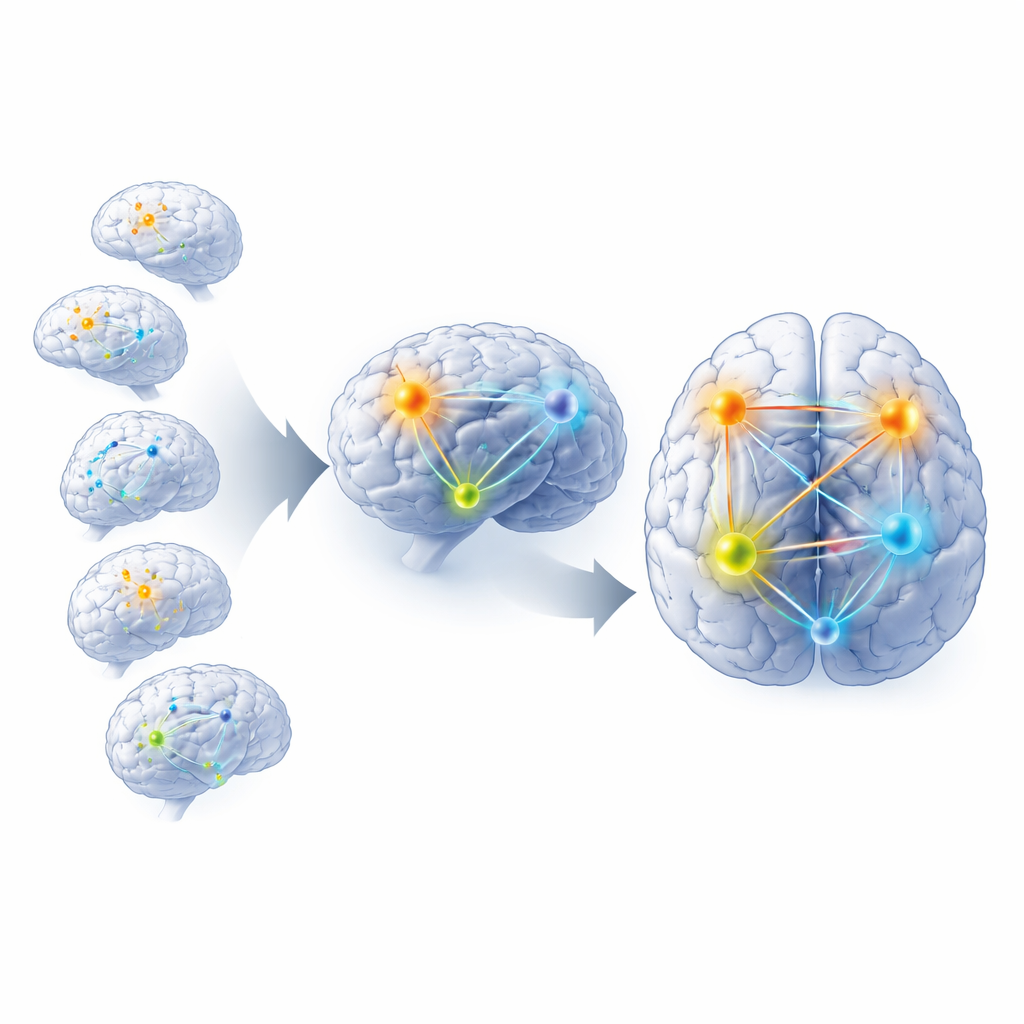
Finding scattered “hotspots” is only the first step; the key advance here is what the authors did next. They fed all of those reported brain locations into a modern technique called functional connectivity network mapping. Using large resting-state brain scans from over 1,100 healthy adults as a discovery sample, plus separate healthy and depression samples for validation, they asked: which regions, across the entire brain, tend to naturally synchronize their activity with those anhedonia-related locations? By overlaying the resulting connection patterns and keeping only regions that showed up reliably across many contrasts, they distilled a common “anhedonia network” that is more than the sum of individual studies.
The Core Pleasure-Loss Circuit
The final network was not a single tiny area, but a set of interconnected hubs. It prominently included the dorsal anterior cingulate cortex (involved in monitoring outcomes and motivation), the insula (which integrates bodily feelings and emotional significance), lateral parts of the prefrontal cortex (important for control and decision-making), and deep structures in the striatum that are central to reward and reinforcement. When the authors compared this network with well-known large-scale brain systems, it lined up most strongly with the ventral attention network and a subcortical network that bundles key deep structures such as the basal ganglia and thalamus. In other words, the loss of pleasure appears rooted in a circuit that helps us notice important events and translate them into rewarding experiences.
Different Flavors of Anhedonia, Different Circuits
When the team separated the data into trait and state anhedonia, two distinct but overlapping maps emerged. The trait network—reflecting longstanding tendencies not to feel pleasure—showed extra involvement of regions in the brain’s default system, including the precuneus and posterior cingulate cortex, as well as parietal and temporal areas linked to self-reflection and internal thoughts. This hints that chronic anhedonia may be tied to how people internally represent themselves and their life experiences. The state network—capturing more momentary loss of pleasure—leaned more on the limbic system, incorporating the orbitofrontal cortex, thalamus, and amygdala, regions closely tied to emotional value, salience, and learning from reward or punishment. Across all analyses, the core ventral attention and subcortical elements remained, suggesting a stable backbone underlying different expressions of anhedonia.
Why This Map Could Change Treatment
By showing that anhedonia is anchored in a reproducible brain network, rather than a single malfunctioning spot, this work offers a clearer biological target for future therapies. The network-level view may help refine noninvasive brain stimulation targets, guide drug development toward specific circuits, and provide imaging-based markers to track who is at risk, who is improving, and which form of anhedonia they have. For patients and clinicians, the take-home message is hopeful: the blunting of pleasure that makes depression so disabling is not a vague, mysterious feeling—it is linked to identifiable, testable brain circuits that can, in principle, be measured and modulated.
Citation: Liu, C., Song, Y., Zhao, X. et al. Brain network localization of anhedonia. Transl Psychiatry 16, 214 (2026). https://doi.org/10.1038/s41398-026-04005-6
Keywords: anhedonia, brain networks, functional connectivity, major depressive disorder, reward processing