Clear Sky Science · en
Genetic evidence for causal relationship between general cognition and treatment resistance in schizophrenia
Why this matters for everyday life
Many people with schizophrenia find that standard medicines never fully relieve their symptoms, leaving them and their families facing years of disability. This form, called treatment-resistant schizophrenia, is especially costly in terms of health, quality of life, and care needs. The study summarized here asks a deceptively simple question with far-reaching implications: are the same inherited factors that influence how well we think and learn also involved in whether schizophrenia becomes resistant to treatment?
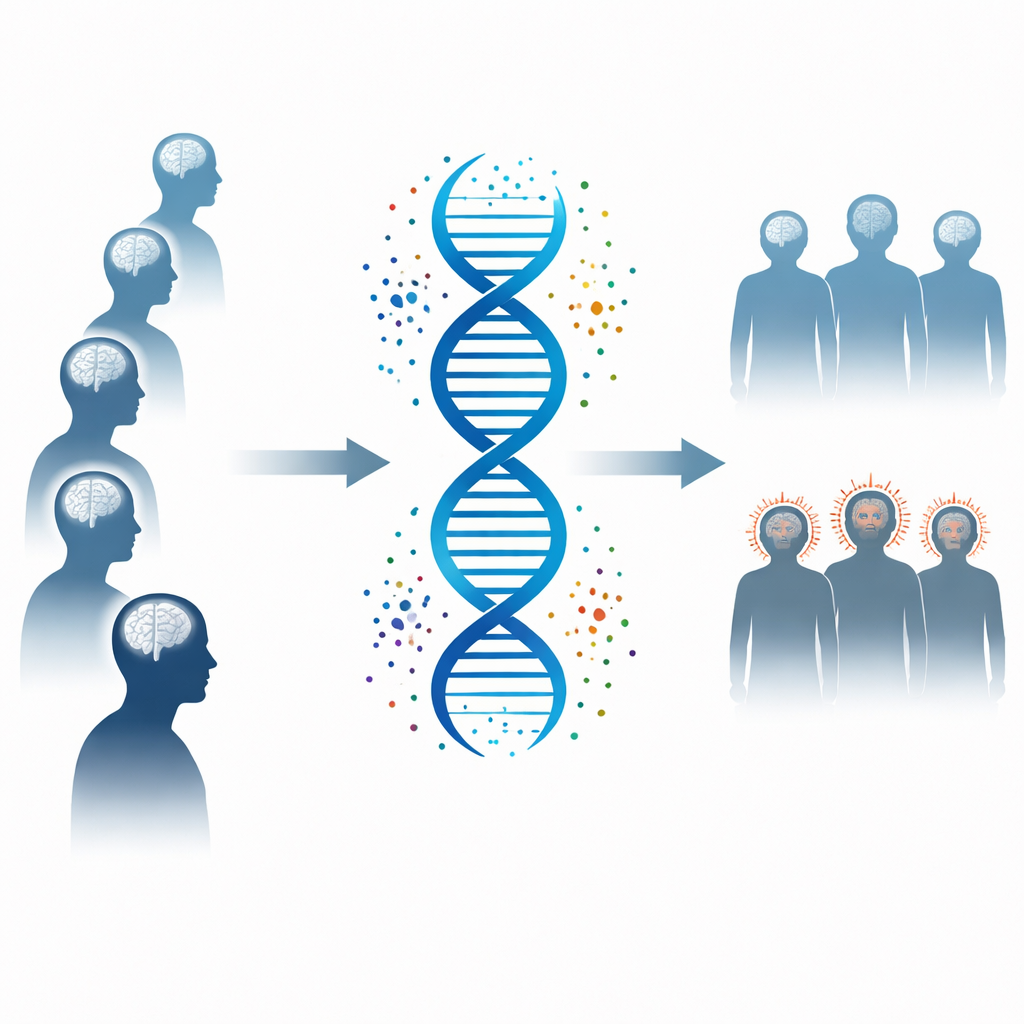
Brains, thinking skills, and hard-to-treat illness
Doctors have long noticed that people with treatment-resistant schizophrenia often have more severe thinking and memory problems than those who respond to medication. They also tend to show signs of brain changes and earlier difficulties in school and everyday functioning. This has led to the idea that treatment resistance might be a particularly severe outcome along a broader brain-development pathway that also affects intelligence, schooling, and vulnerability to mental illness. However, it has been unclear whether this link reflects shared causes written in our DNA, or is simply a consequence of living with a chronic, disabling disorder.
Using genes as nature’s randomized experiment
The researchers used a powerful approach called Mendelian randomization, which leverages naturally occurring genetic differences as a kind of lifelong, randomized trial. Instead of measuring classroom test scores or school records directly, they used large genetic studies that identify thousands of tiny DNA variations associated with general thinking ability, years spent in education, and whether someone completed college. They then tested whether the combined genetic “signals” for better cognition and education were also linked to a lower chance of having treatment-resistant schizophrenia, using data from over 10,000 people with treatment-resistant illness and more than 20,000 with schizophrenia who responded to treatment.
What the genetic patterns reveal
The analysis showed a clear and consistent pattern: genetic profiles associated with better general thinking skills and more years of education were also associated with a lower likelihood of treatment-resistant schizophrenia. For example, a typical step up in the genetic tendency toward longer education corresponded to roughly 40% lower odds of treatment resistance, while a similar step up in general cognitive ability was linked to about 23% lower odds. These effects appeared directional—running from cognition-related genetics to treatment resistance—rather than the other way around. The authors also found that treatment-resistant schizophrenia and cognitive traits share some of the same underlying genetic influences, yet these influences differ from those that simply increase the overall risk of developing schizophrenia in the first place.
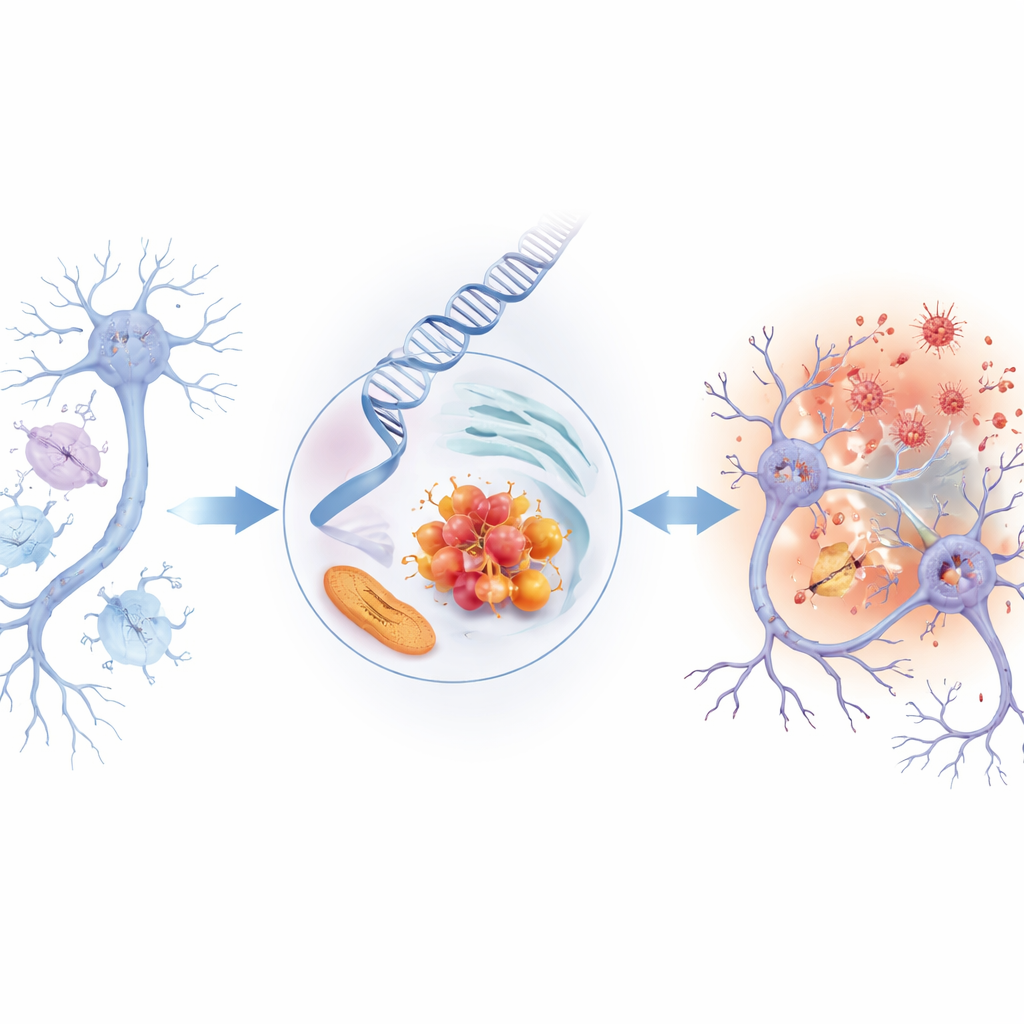
Clues from immune activity and brain cell damage
To zoom in further, the team searched for specific stretches of DNA that seemed to matter for both general cognition and treatment resistance. They identified four previously unreported regions of the genome carrying risk markers for treatment-resistant schizophrenia once cognitive genetics were taken into account. A key gene emerging from this work, called TMX1, helps regulate communication between two vital cell structures: the endoplasmic reticulum and mitochondria, which together control stress responses and energy use. When the researchers examined groups of genes in these regions, they found that many clustered in pathways tied to the brain’s immune machinery, particularly “inflammasomes” and caspases—protein complexes that drive inflammatory responses and programmed cell death. This pattern points toward a blend of chronic inflammation and gradual loss of vulnerable brain cells as part of the biology of treatment resistance.
What this means going forward
In plain terms, the study suggests that the same inherited factors that support stronger thinking skills and longer education may also help protect some people with schizophrenia from developing a form of the illness that does not respond well to current medicines. At the same time, the newly identified genetic regions hint that overactive immune responses and slow, damaging processes in brain cells are especially important in those who do become treatment-resistant. While these findings do not yet translate into immediate new treatments, they sharpen scientists’ picture of treatment-resistant schizophrenia as a distinct, biologically complex condition. In the future, this kind of genetic insight could guide more personalized care—helping identify who is at highest risk early on, and pointing to new therapies that target inflammatory and degenerative processes in the brain.
Citation: Li, C., Zhong, Y., Sham, P.C. et al. Genetic evidence for causal relationship between general cognition and treatment resistance in schizophrenia. Transl Psychiatry 16, 231 (2026). https://doi.org/10.1038/s41398-026-03994-8
Keywords: treatment-resistant schizophrenia, cognition, genetics, inflammation, brain health